FAQ for Freelancers Becoming Employees Under an EOR in the Philippines
Author: Martin English, CEO & Founding Partner
Published: November 24, 2025
Disclosure: This article is for informational purposes only and does not constitute legal or tax advice.
Moving from freelancer or contractor status into EOR employment can feel like a big change.
For Filipino freelancers, the main questions are usually practical: Will my work change? Will my pay change? Who is my employer now? What happens to taxes, benefits, HMO, and 13th month? Do I lose flexibility?
This FAQ answers the questions Filipino freelancers and contractors usually ask when a company moves them into employment through a Philippines Employer of Record.
For companies planning the full conversion process, start here:
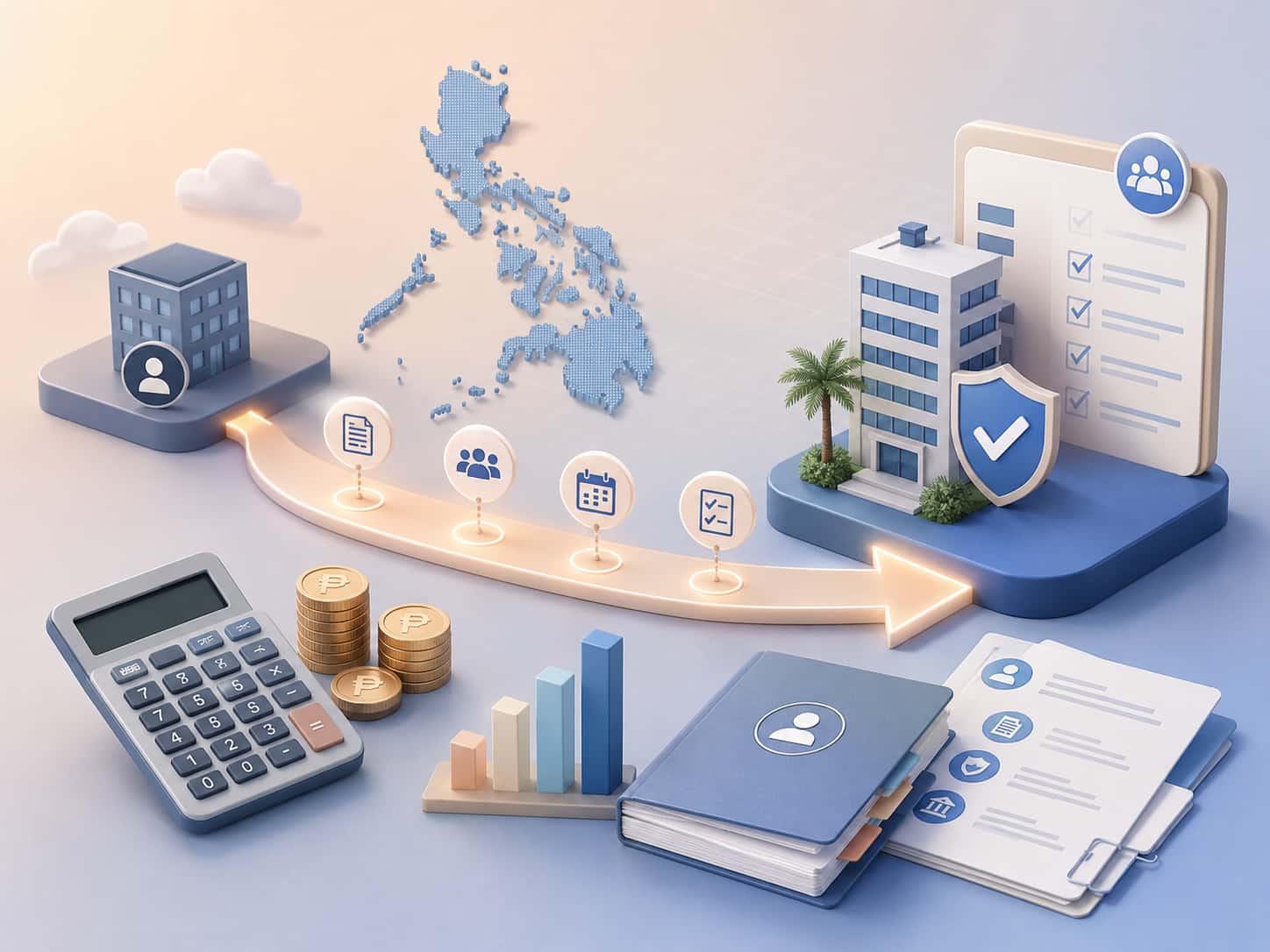
Convert Contractors to Employees Philippines
TL;DR: What changes when a freelancer becomes an EOR employee?
When a Filipino freelancer becomes an employee under an EOR, the day-to-day work may stay the same, but the employment structure changes.
The usual change is:
Same work, same team, clearer employment status.
What often stays the same:
- your client or company relationship
- your manager
- your core tasks
- your tools and systems
- your day-to-day team
- your performance expectations
What changes:
- you become locally employed in the Philippines through the EOR
- you move from invoices to payroll
- you receive payslips
- statutory contributions are handled
- 13th month treatment is included in the employment package
- benefits or HMO may be added, depending on the offer
- HR and payroll support become clearer
- your employment record is easier to document
For companies, this helps reduce contractor misclassification risk. For workers, it can create a more stable and documented employment setup.
Who this FAQ is for
This FAQ is for:
- Filipino freelancers becoming EOR employees
- Filipino contractors being moved onto payroll
- VAs, support agents, developers, finance assistants, marketers, and remote staff
- companies explaining EOR employment to Filipino contractors
- HR and operations teams preparing a contractor-to-employee transition
It answers:
- What is an EOR?
- Why is my company moving me from freelancer to employee?
- Will my pay change?
- What happens to 13th month?
- What happens to SSS, PhilHealth, and Pag-IBIG?
- How do I move from freelancer invoices to payroll?
- What is contractor misclassification risk?
- What documents do I need to provide?
1. What is an EOR in the Philippines?
An Employer of Record, or EOR, is a company that legally employs workers in the Philippines on behalf of another business.
The EOR usually handles:
- employment contracts
- payroll
- payslips
- statutory contributions
- 13th month treatment
- benefits or HMO coordination, if offered
- HR records
- local employment administration
The client company usually continues managing:
- your daily tasks
- your manager relationship
- your tools and systems
- your work priorities
- your performance expectations
In simple terms: the EOR becomes your legal employer in the Philippines, while you continue working with the same company or team day to day.
2. Why is my company moving me from freelancer to EOR employee?
Your company may be moving you to EOR employment because your role has become long-term, regular, or employee-like.
This often happens when a freelancer:
- works fixed hours
- works full-time or close to full-time
- works mainly for one company
- uses company tools and systems
- joins internal meetings
- reports to company managers
- performs core recurring work
- receives regular monthly pay
- has been working with the company for many months or years
The company may want the structure to better match how the work already happens.
A good way to explain it is:
You are already an important part of the team, so we want the employment setup to reflect that properly.
3. What is contractor misclassification risk in the Philippines?
Contractor misclassification risk is the risk that someone is called a freelancer or contractor on paper but treated like an employee in practice.
This can create problems for the company and uncertainty for the worker.
For companies, the risk can include:
- back pay questions
- statutory contribution issues
- 13th month disputes
- benefit claims
- tax or payroll questions
- termination disputes
- audit or investor concerns
For workers, the issue is often that the arrangement lacks the records and structure of formal employment.
Moving into EOR employment can help make the relationship clearer.
4. Does becoming an EOR employee mean my work will change?
Usually, no.
In most EOR transitions, the goal is to keep the work relationship stable while changing the legal and payroll structure.
What usually stays the same:
- your work
- your team
- your manager
- your tools
- your core responsibilities
- your day-to-day communication
What changes is how the relationship is documented and paid.
You should ask your company to confirm any role, schedule, or manager changes before you sign the employment documents.
5. Who will be my employer?
Legally, your employer will be the Employer of Record in the Philippines.
Operationally, you will usually continue working with the same client company or team.
That means:
- the EOR handles employment, payroll, and HR administration
- the client company manages your day-to-day work
- you may have contacts at both the client company and the EOR
Ask for two clear contacts:
- one company contact for role, manager, and work questions
- one EOR contact for payroll, documents, and HR questions
6. Will I still work with the same company?
Usually, yes.
The point of the EOR transition is normally to keep the working relationship but formalise it.
You should still confirm:
- your manager
- your work schedule
- your tasks
- your tools
- your reporting line
- your start date under the EOR
A clear transition should not leave you guessing who you report to or what happens next.
7. Will my take-home pay change?
It may change, depending on how the employment package is structured.
As a freelancer, you may have been paid by invoice, retainer, hourly rate, or project fee.
As an EOR employee, pay is usually handled through payroll. The package may include:
- gross monthly salary
- payroll deductions
- statutory contributions
- 13th month treatment
- benefits or HMO, if offered
- allowances, if applicable
Before the transition, ask for a clear explanation of:
- gross salary
- estimated net pay
- payroll frequency
- deductions
- benefits
- 13th month treatment
Do not rely on a verbal estimate. Ask for the package in writing.
Compare current contractor spend with the estimated monthly, annual and first-year cost of compliant employment with our employment cost calculator.
8. How do I move from freelancer invoices to payroll?
Moving from freelancer invoices to payroll requires a cutover date.
Before the first payroll cycle, confirm:
- final freelancer invoice date
- first EOR payroll date
- payroll cut-off period
- salary amount
- gross-to-net estimate
- payroll frequency
- bank details
- tax or government information needed
- payslip access
- payroll contact person
The goal is to avoid a payment gap or confusion between your final freelancer payment and your first employee payroll.
9. Will I receive payslips?
Yes, under a proper EOR employment setup, you should receive payslips.
Payslips matter because they provide formal proof of income and employment.
They may be useful for:
- loan applications
- rental applications
- visa applications
- proof of income
- employment history
- personal financial records
If payslips are important to you, ask when and how they will be issued.
10. What happens to SSS, PhilHealth, and Pag-IBIG?
Under EOR employment, statutory contribution handling should be part of the employment setup.
Ask the EOR or company to explain:
- what information you need to provide
- when contributions start
- how contributions appear on your payslip
- who to contact if your records need updating
- how contribution proof is handled
If you already have SSS, PhilHealth, or Pag-IBIG records, provide accurate details during onboarding.
11. Will I receive 13th month pay?
13th month treatment should be addressed in the employment package.
Before signing, ask:
- whether 13th month is included
- how it is calculated
- when it is paid
- whether it is accrued
- how partial-year service is handled
Do not assume it is handled the same way as your previous freelancer rate. Ask for the details in writing.
12. Will I get HMO or benefits?
You may receive HMO or other benefits, depending on the package offered by the company and EOR.
Ask:
- whether HMO is included
- when coverage starts
- whether dependents are included
- what plan is offered
- how claims work
- whether there is a waiting period
- who to contact for benefit questions
If HMO is not included, ask whether it may be added later or whether other benefits are available.
13. Will I lose flexibility?
Not necessarily.
Some EOR employees still work remotely or follow flexible schedules, depending on the company’s policy and the role.
What changes is the employment structure, not always the working arrangement.
Ask your manager to confirm:
- work location
- schedule
- time tracking
- leave process
- attendance expectations
- whether side work is allowed
If flexibility matters to you, raise it during your 1:1 conversation before conversion.
14. Can I still do side work?
It depends on your employment agreement, schedule, confidentiality obligations, and the company’s expectations.
If you currently have other clients or side work, disclose it before signing.
Ask:
- whether side work is allowed
- whether there are conflict-of-interest rules
- whether exclusivity applies
- whether the side work affects schedule or confidentiality
- what needs written approval
It is better to clarify this early than create confusion later.
15. What documents will I need to provide?
Typical EOR onboarding documents may include:
- valid ID
- bank details
- tax or government information
- SSS, PhilHealth, and Pag-IBIG details
- emergency contact
- signed employment agreement
- employee information form
- benefits or HMO forms, if applicable
- policy acknowledgements
- confidentiality or data protection documents
The EOR should give you a clear checklist.
16. What happens to my old freelancer contract?
Your old freelancer or contractor arrangement should be closed, replaced, or clearly superseded by the new employment agreement.
Ask:
- final invoice date
- final payment date
- official EOR employment start date
- whether the old contract is terminated or replaced
- whether any confidentiality or IP terms continue
- who confirms the transition in writing
The transition should not leave two conflicting arrangements active at the same time.
17. What should be in my employment package?
Your employment package should explain:
- job title
- salary
- payroll frequency
- manager
- work schedule
- leave entitlement
- statutory contributions
- 13th month treatment
- HMO or benefits, if offered
- allowances, if any
- probation or regularisation terms
- equipment or WFH support, if applicable
- start date
- who to contact for questions
You should understand the package before signing.
18. What if I do not want to become an EOR employee?
If you are not ready to convert, ask for a 1:1 discussion.
You can ask:
- why the company is making the change
- whether the current freelancer arrangement can continue
- what happens if you decline
- whether the role can be restructured
- whether there is a transition period
- how pay, benefits, and flexibility would compare
Some companies may need long-term, full-time roles to move into employment for compliance reasons. If that is the case, ask for the timeline and your options in writing.
19. How should companies convert Filipino contractors into employees?
Companies should not treat conversion as a simple contract swap.
A good conversion process includes:
- Identify which contractors work like employees.
- Choose the pathway: EOR or local entity.
- Define the employment package.
- Explain the change clearly.
- Confirm the final freelancer invoice date.
- Confirm the first payroll date.
- Collect required documents.
- Set up payroll and statutory contributions.
- Confirm benefits and 13th month treatment.
- Run the first payroll and check accuracy.
- Keep a conversion proof pack.
For the full process, read:
Convert Contractors to Employees Philippines
20. What should companies keep as a conversion proof pack?
Companies should keep a proof pack showing what changed and why.
Include:
- old freelancer or contractor agreement
- final invoice or payment record
- worker communication or acknowledgement
- new employment agreement
- salary and benefits summary
- payroll start date
- first payslip
- statutory setup confirmation
- 13th month treatment
- HMO or benefits confirmation
- internal approval record
- issue log from the first payroll cycle
This helps HR, finance, legal, investors, auditors, and enterprise clients understand the transition.
How Smart Outsourcing Solution helps
Smart Outsourcing Solution helps companies move Filipino freelancers and contractors into EOR employment with a clear, practical transition process.
SOS supports:
- contractor conversion planning
- EOR employment setup
- payroll transition
- employment documentation
- benefits and HMO coordination
- 13th month treatment
- statutory contribution administration
- worker communication support
- proof pack preparation
- local Philippines HR support
For Filipino workers, this means a clearer employment setup. For companies, it means a more structured pathway from contractor risk to compliant local employment.
Start with the full conversion guide:
Convert Contractors to Employees Philippines
Final takeaway
Becoming an EOR employee should not feel like a loss of trust or a sudden takeover.
It should feel like a clearer structure around work that already matters.
For freelancers, the key questions are pay, flexibility, benefits, 13th month, and who supports them.
For companies, the key questions are misclassification risk, payroll transition, statutory setup, employee communication, and documentation.
A good transition answers both sides clearly.
Next step:
Read the full guide: Convert Contractors to Employees Philippines
Or speak with Smart Outsourcing Solution about moving Filipino freelancers into EOR employment.
FAQs
What happens when a Filipino freelancer becomes an EOR employee?
The freelancer becomes locally employed in the Philippines through an Employer of Record. They may continue working with the same company and manager, but payroll, payslips, employment documents, statutory contributions, and HR support are handled through the EOR.
Will my work change if I become an EOR employee?
Usually, the day-to-day work stays the same. The main changes are employment status, payroll, documentation, benefits, 13th month treatment, and HR administration.
Will my take-home pay change under EOR employment?
It may change depending on the salary package, payroll deductions, statutory contributions, benefits, and 13th month treatment. Ask for gross salary, estimated net pay, payroll frequency, and deductions in writing before signing.
Will I receive 13th month pay as an EOR employee?
13th month treatment should be included in the employment package and explained before conversion. Ask how it is calculated, accrued, and paid.
Will I get SSS, PhilHealth, and Pag-IBIG contributions?
Under an EOR employment setup, statutory contribution handling should be part of the payroll process. Ask the EOR what information is needed and when contributions start.
How do I move from freelancer invoices to payroll?
Confirm the final freelancer invoice date, first payroll date, salary package, payroll frequency, bank details, tax or government information, payslip access, and payroll contact before the first payroll cycle.
What is contractor misclassification risk in the Philippines?
Contractor misclassification risk is the risk that someone labelled as a freelancer or contractor is treated like an employee in practice. It increases when the person works fixed hours, performs core work, uses company tools, reports to managers, and works mainly for one company.
Can I stay a freelancer instead of becoming an EOR employee?
It depends on the company, the role, and whether the arrangement can remain genuinely independent. Long-term, full-time, controlled, or core roles may need to move into employment.
What documents do I need to become an EOR employee?
You may need ID, bank details, tax or government information, SSS, PhilHealth and Pag-IBIG details, emergency contact information, signed employment documents, and benefits forms.
How do companies convert Filipino contractors into employees?
Companies convert Filipino contractors by identifying employee-like roles, choosing an EOR or local entity pathway, preparing employment packages, moving workers onto payroll, setting up benefits and statutory contributions, and keeping a conversion proof pack.
_________________________________________________________________________________________________________________________________________________
Recommended SOS Reads
- Convert Contractors to Employees Philippines
- Communication Pack: How to Explain an EOR Transition
- Email Script Pack: Announcing EOR Employment
- Are Your Filipino Freelancers Actually Employees?
- Contractor vs Employee in the Philippines
- Contractor-to-Employee Conversion Matrix
- Employer of Record Philippines