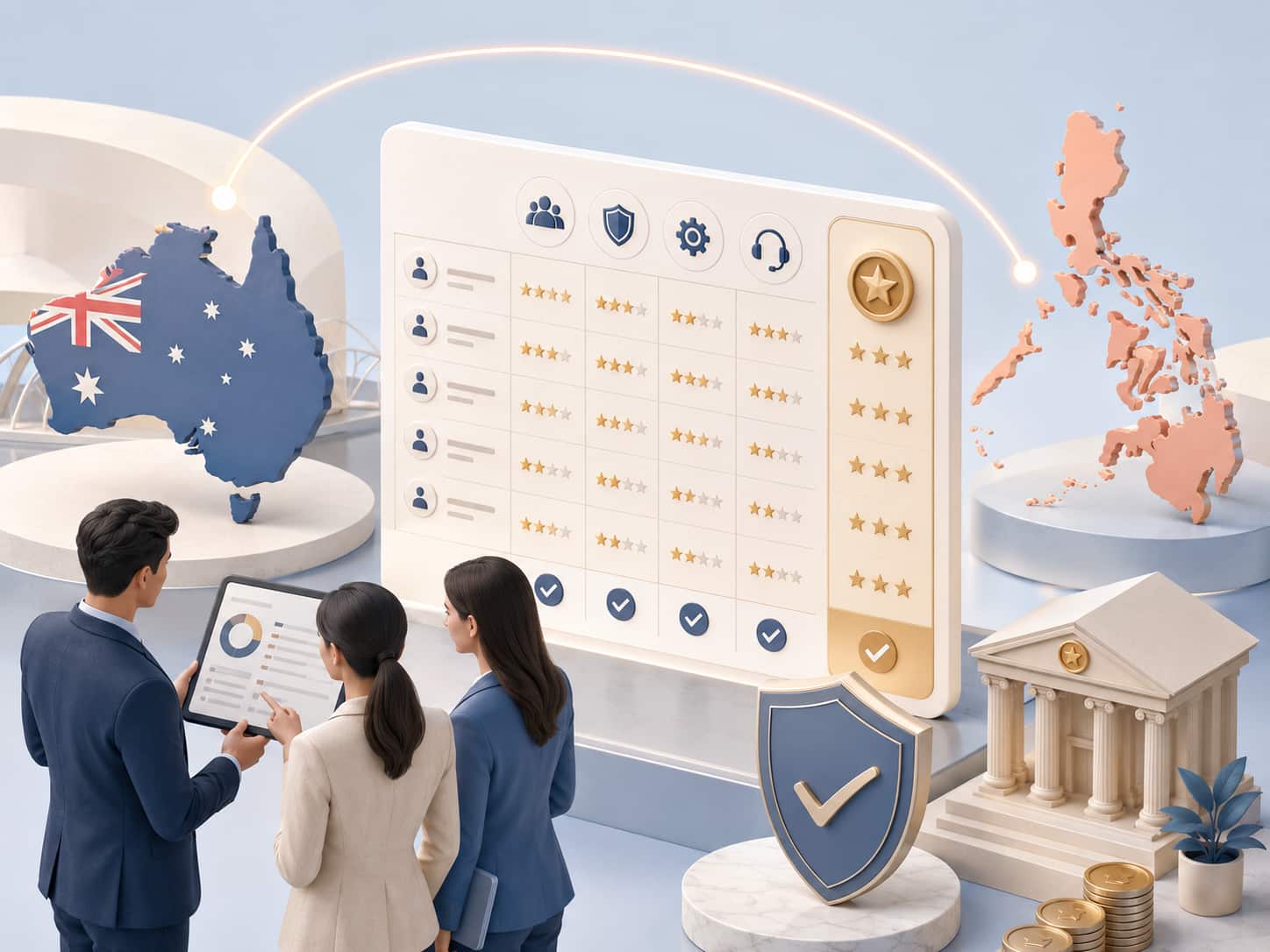
Author: Martin English — CEO & Founding Partner
Published: November 24, 2025
Disclosure: This article is for informational purposes only and does not constitute legal, tax or employment advice.
TL;DR
If your Filipino freelancers already work like employees — full-time schedules, long tenure, company systems access, operational reporting lines, and exclusive work arrangements — your company may already face contractor misclassification risk in the Philippines.
The challenge is often not identifying the risk. The challenge is getting Legal, Finance, HR, and leadership aligned on what happens next.
For most international companies without a Philippine entity, the practical path is to:
- audit contractor risk,
- identify high-risk or business-critical freelancers,
- model payroll and statutory costs,
- align Legal, Finance, and HR internally,
- transition an initial cohort onto payroll through a Philippines Employer of Record (EOR),
- review the first 60–90 days before scaling further.
Most successful contractor-to-EOR transitions begin with a small pilot group rather than an immediate company-wide rollout.
Related guide:
Convert Contractors to Employees Philippines
Why Internal Alignment Matters Before Moving Filipino Contractors to an EOR
Many international companies already rely on Filipino freelancers in ways that closely resemble employment:
- full-time schedules,
- long-term engagements,
- company email addresses,
- Slack or Microsoft Teams access,
- direct management oversight,
- recurring operational responsibilities,
- participation in internal workflows and reporting.
Eventually, internal stakeholders begin raising questions.
Common Internal Questions
Legal Teams Usually Ask:
- Are these contractors still genuinely independent?
- How exposed are we to contractor misclassification risk?
- What happens if there is a labour dispute?
- Are confidentiality and IP protections enforceable?
Finance Teams Usually Ask:
- What will payroll and statutory costs look like?
- Will EOR significantly increase operating costs?
- How predictable will payroll forecasting become?
- What happens to contractor invoicing and FX handling?
HR Teams Usually Ask:
- How do we onboard and support long-term contractors?
- How do leave, benefits, and payroll administration work?
- How do we improve retention and workforce visibility?
Leadership Usually Asks:
- Will the transition disrupt operations?
- Can we phase the rollout gradually?
- How quickly can onboarding happen?
- Will contractors resign during conversion?
This is where many EOR projects stall.
The companies that execute contractor-to-EOR transitions successfully usually treat the process as:
- a compliance initiative,
- a workforce governance initiative,
- and an operational stability initiative,
—not just a payroll change.
How Do You Convert Filipino Contractors into Employees?
Most companies use a phased contractor conversion approach rather than transitioning everyone immediately.
Typical Contractor-to-EOR Transition Process
| Stage | What Happens |
| Contractor Audit | Review freelancer tenure, schedules, exclusivity, and operational dependency |
| Risk Assessment | Identify high-risk contractor relationships |
| Pilot Group Selection | Choose an initial conversion cohort |
| Cost Modelling | Estimate payroll, statutory, and EOR costs |
| Internal Approval | Align Legal, Finance, HR, and leadership |
| Employment Transition | Issue compliant employment contracts |
| Payroll Activation | Launch payroll and statutory remittances |
| Stabilisation Review | Review onboarding, payroll, retention, and operations |
For companies without a Philippine entity, an EOR is often faster and lower risk than building local employment infrastructure internally.
Related resource:
Employer of Record Philippines
What Actually Changes When Moving Contractors to an EOR?
Contractor vs EOR Comparison
| Area | Contractor Model | Philippines EOR Model |
| Employment Status | Independent contractor | Local employee |
| Payroll | Manual invoicing | Structured payroll |
| Statutory Contributions | Usually self-managed | Employer-managed |
| 13th Month Pay | Usually excluded | Required |
| Leave Administration | Informal or inconsistent | Structured policy |
| Contracts | Contractor agreements | Philippine employment contracts |
| Misclassification Exposure | Higher | Reduced |
| HR Support | Limited | Structured onboarding and support |
| Payroll Visibility | Fragmented | Centralised payroll reporting |
| Operational Governance | Inconsistent | More structured |
As offshore teams become operationally embedded, many companies eventually reassess long-term freelancer arrangements.
What Is Contractor Misclassification Risk in the Philippines?
Contractor misclassification risk becomes more serious when freelancers effectively function as employees in practice.
Common Misclassification Red Flags
| Risk Indicator | Why It Matters |
| Full-time schedules | Suggests employer-style control |
| Long-term exclusive work | Indicates economic dependency |
| Company-issued systems access | Shows operational integration |
| Internal reporting structures | Resembles employee management |
| Core operational responsibilities | Suggests workforce dependency |
| Daily supervision | Indicates employee-like oversight |
The more employee-like the relationship becomes, the harder it becomes to justify contractor classification.
Related resource:
Contractor vs Employee in the Philippines (2025): Tests, Red Flags & Fixes via EOR
Signs Your Company Should Consider Moving Freelancers onto Payroll
Most companies begin reassessing contractor arrangements when several of these conditions appear simultaneously.
Contractor Conversion Readiness Checklist
- Contractors have worked continuously for 12+ months
- Freelancers work close to full-time hours
- Contractors work exclusively for one company
- Contractors perform core operational work
- HR lacks workforce visibility
- Finance wants predictable payroll forecasting
- Leadership expects long-term retention
- Legal raises contractor classification concerns
- Enterprise clients request compliance documentation
- Contractors already operate like employees operationally
If several of these apply, a contractor-to-EOR transition may already be overdue.
Related checklist:
Are Your Filipino Freelancers Actually Employees? 10-Question Self-Audit Checklist
How Legal, Finance & HR Usually Evaluate EOR Transitions
Legal Priorities
Legal teams typically focus on:
- contractor misclassification exposure,
- labour law alignment,
- IP ownership,
- confidentiality protections,
- termination procedures,
- documentation consistency,
- cross-border employment risk.
Common Legal Concern
“If these contractors already function like employees, how exposed are we?”
An EOR helps formalise employment through:
- compliant local employment contracts,
- payroll administration,
- statutory contributions,
- onboarding documentation,
- labour-law aligned employment structures.
Finance Priorities
Finance teams usually focus on:
- payroll forecasting,
- total employment cost,
- FX exposure,
- vendor consolidation,
- budget predictability,
- payroll visibility.
Compare current contractor spend with the estimated monthly, annual and first-year cost of compliant employment with our employment cost calculator.
Common Finance Concern
“Will moving contractors onto payroll increase costs?”
Usually, yes — at least initially.
A Philippines EOR structure commonly introduces:
- 13th-month pay,
- employer statutory contributions,
- leave obligations,
- payroll administration costs,
- EOR service fees.
However, Finance often gains:
- cleaner payroll visibility,
- reduced invoice fragmentation,
- more predictable forecasting,
- lower long-term compliance risk.
Related comparison:
Agency vs Freelancer vs EOR in the Philippines
HR Priorities
HR teams commonly focus on:
- onboarding consistency,
- payroll reliability,
- employee retention,
- workforce visibility,
- leave administration,
- employee support.
Common HR Concern
“How do we support workers who technically are not employees today?”
Contractor-heavy teams often create:
- inconsistent onboarding,
- weak documentation,
- informal leave handling,
- retention instability,
- fragmented employee records.
An EOR provides HR with a more structured framework for:
- onboarding,
- payroll,
- leave tracking,
- employee records,
- workforce management.
Real Operational Challenges During Contractor-to-EOR Transitions
The transition is rarely frictionless.
Companies commonly encounter operational issues during the first payroll cycles.
Common Transition Problems
| Issue | Typical Cause |
| Contractors worry about lower take-home pay | Statutory deductions become visible |
| Payroll timing confusion | Contractors are used to invoice-based payments |
| Resistance to employment contracts | Fear of losing flexibility |
| Benefits misunderstandings | Employees assume benefits begin immediately |
| HR workload spikes | High onboarding volume |
| Payroll forecasting gaps | Contractor costs were previously fragmented |
| Manager confusion | Team leads unclear about employment processes |
The companies that handle transitions best usually:
- communicate early,
- explain payroll clearly,
- phase the rollout,
- avoid rushing large-scale conversion.
Related resource:
FAQs for Freelancers Becoming Employees Under an EOR in the Philippines
A Practical Internal Alignment Process
Step 1 — Build a Contractor Risk Snapshot
Prepare an internal overview covering:
- number of Filipino contractors,
- departments and roles,
- tenure,
- weekly hours,
- operational dependency,
- contractor risk classification.
Suggested risk categories:
- low risk,
- medium risk,
- high risk.
Step 2 — Pre-Brief Legal, Finance & HR Separately
Avoid introducing a full proposal in a single meeting without context.
Legal Pre-Read
Include:
- contractor misclassification exposure,
- employment structure overview,
- IP and confidentiality handling,
- termination responsibilities.
Finance Pre-Read
Include:
- contractor spend,
- payroll projections,
- statutory cost modelling,
- EOR pricing structure,
- FX considerations.
HR Pre-Read
Include:
- onboarding process,
- payroll transition planning,
- benefits structure,
- workforce support expectations.
Step 3 — Run a Focused Alignment Session
Suggested Meeting Agenda
| Topic | Estimated Time |
| Current contractor setup | 10 min |
| Risk overview | 10 min |
| EOR structure review | 10 min |
| Legal concerns | 10 min |
| Finance concerns | 10 min |
| HR transition planning | 10 min |
| Pilot proposal | 10 min |
| Ownership and next steps | 10 min |
A smaller pilot group is usually easier to manage than an immediate company-wide rollout.
Step 4 — Define Ownership Clearly
Example RACI Structure
| Function | Responsibility |
| COO / Founder | Executive sponsor |
| Legal | Compliance and contract review |
| Finance | Payroll and budget approval |
| HR / People Ops | Onboarding and communication |
| Team Leads | Contractor selection |
| Procurement | Vendor onboarding |
| IT / Security | Access and data review |
| EOR Partner | Payroll and employment execution |
Many EOR projects slow down because ownership is unclear across departments.
Step 5 — Create a Realistic Rollout Timeline
Example Timeline
| Timeline | Activity |
| Week 1–2 | Contractor audit and risk review |
| Week 3–4 | Cohort selection and compensation planning |
| Week 5–6 | Employment offers and onboarding |
| Week 7–8 | First payroll cycle |
| Week 9–12 | Review retention, payroll, and operational feedback |
Most companies refine their process after the first payroll cycle before scaling further.
Related resource:
Pilot First: How to Run a 90-Day Contractor-to-EOR Conversion Pilot
Governance and Approval Considerations
Larger organisations often involve additional stakeholders before approving an EOR rollout.
These may include:
- Procurement,
- Security,
- IT,
- Finance controllers,
- Legal operations,
- Compliance teams.
Common Enterprise Review Areas
- vendor onboarding,
- data privacy handling,
- payroll approval workflows,
- contract review,
- security documentation,
- cross-border payment controls.
This is one reason phased pilot programs are often easier to approve than immediate large-scale transitions.
How to Move Filipino Freelancers onto Payroll Without Disruption
Most freelancers primarily care about:
- take-home pay,
- payroll timing,
- flexibility,
- benefits,
- job security.
Clear communication early in the process significantly reduces confusion.
Most successful transitions include:
- FAQ documents,
- payroll walkthroughs,
- onboarding support,
- benefits explanations,
- phased implementation.
Companies that rush contractor conversion projects often create avoidable payroll and retention issues during the first 1–2 payroll cycles.
FAQs
How do I convert Filipino contractors into employees?
Most companies:
- audit contractor risk,
- identify long-term or high-risk freelancers,
- model payroll and statutory costs,
- choose an EOR or local employment structure,
- issue compliant contracts,
- transition workers into payroll.
How do I move Filipino freelancers onto payroll?
Companies generally need:
- employment contracts,
- payroll setup,
- statutory contribution handling,
- onboarding workflows,
- leave administration,
- employee records.
A Philippines EOR can usually manage these operational requirements.
What benefits must Filipino employees receive?
Typical Philippine employment obligations include:
- 13th-month pay,
- SSS contributions,
- PhilHealth contributions,
- Pag-IBIG contributions,
- statutory leave entitlements,
- holiday pay compliance.
Some employers also add HMO or supplemental healthcare benefits.
Should companies move all freelancers to an EOR immediately?
Usually not. Most companies start with:
- long-term contractors,
- high-risk roles,
- operationally critical staff.
A phased rollout reduces disruption and allows teams to refine payroll and onboarding processes before scaling further.
Related Resources
- Convert Contractors to Employees Philippines
- Contractor vs Employee in the Philippines (2025): Tests, Red Flags & Fixes via EOR
- Pilot First: How to Run a 90-Day Contractor-to-EOR Conversion Pilot
- FAQ for Freelancers Becoming Employees Under an EOR in the Philippines
What Should Companies Do Next?
Companies usually achieve the best results when they:
- audit their contractor setup,
- identify high-risk or business-critical freelancers,
- model realistic payroll and statutory costs,
- align Legal, Finance, and HR early,
- begin with a manageable pilot group.
A phased contractor-to-EOR rollout is usually easier to approve, easier to operationalise, and easier to refine before expanding across larger teams.
For companies without a Philippine entity, an EOR can provide a faster path to compliant payroll, employment contracts, and workforce management without building local infrastructure internally.
Speak with Smart Outsourcing Solution today about contractor-to-EOR transition planning.