Hiring in the Philippines: The Startup Founder’s Guide to Staying Compliant and Scaling Fast
Date updated: September 15, 2025
Best EOR providers (quick picks)
Shortlist for teams hiring in the Philippines. Use these links to compare options fast.
• Who are the best Employer of Record (EOR) providers in the Philippines (2025)?
• Best local EOR providers in the Philippines (editor’s picks)
Quick tip: If you only hire in PH, a local EOR can cut costs—Smart Outsourcing Solution is a flat $190/employee/month. Need multi-country coverage? Compare Deel, Remote, Oyster, and Papaya Global.
⚡ TL;DR
Looking to hire top Filipino talent without setting up a local company?
This guide explains how startups from the UK, Australia, and the US can use an Employer of Record (EOR) to legally hire in the Philippines. Learn how EORs work, what risks to avoid, and how to scale fast while staying compliant — no legal headaches, just efficient global hiring.
What the law requires (Philippines)
To hire compliantly via an EOR in the Philippines, ensure:
1. DOLE-aligned contracting that avoids labor-only contracting (DOLE D.O.-174).
2. SSS employer registration and monthly remittance (employer/employee shares).
3. PhilHealth employer registration and remittance via EPRS.
4. Pag-IBIG employer registration and contribution remittance.
Recommended: accrue 13th-month monthly and verify payslip/remittance evidence before go-live.
Links
• DOLE D.O.-174
• SSS
• PhilHealth (EPRS)
• Pag-IBIG
Last verified: 2025-09-15
Legality in one minute (Philippines EOR)
EOR is lawful in the Philippines when the provider is the legal employer, issues Philippine-law employment contracts, and runs compliant payroll with all statutory benefits.
What must be in place
• Employment contract (PH-governed): signed by the EOR as employer; clear role, pay, probation, and IP/Confidentiality clauses
• Statutory benefits: SSS, PhilHealth, Pag-IBIG, plus 13th-month pay (accrued and paid correctly)
• Payroll & filings: wages, withholdings, and employer contributions processed in the Philippines; payslips issued locally and on time
• Policies: DOLE-aligned handbook, timekeeping, leave/overtime rules, due-process steps for discipline/termination
• Classification: employees (not “long-term contractors”) when work is full-time, directed, and exclusive
Before onboarding (60-second checklist)
• Review sample PH contract and payslip from the provider
• Confirm statutory tables and 13th-month accrual mechanics
• Verify IP assignment and confidentiality language
• Ask how terminations, final pay, and COE are handled
Red flags to avoid
• “Contractor only” arrangements for full-time, directed roles
• No local payslips or unclear statutory remittances
• Policies missing or not enforced (attendance, OT, leave)
• IP/DP clauses absent or generic
Learn more
• Is EOR legal in the Philippines?
• IP & Data Protection checklist (PH EOR)
What Is an Employer of Record (EOR) and Why It Matters When Hiring in the Philippines
What does an EOR actually do?
An Employer of Record is a third-party organisation that acts as the legal employer for your remote hires in the Philippines. They take care of:
-
Employment contracts
-
Payroll and tax filing
-
Government contributions and reporting (SSS, PhilHealth, Pag-IBIG)
-
Labour law compliance (DOLE, BIR)
-
Risk management (termination, IP, classification issues)
Why this matters for startups
Using an EOR lets startups legally employ Filipino workers without establishing a local entity.
You can:
-
Onboard in days instead of months
-
Avoid costly legal and operational setup
-
Stay compliant with evolving labour laws
-
Focus on growth, not administration
Why Startups Use an EOR in the Philippines
- Faster hiring cycles – Get new team members started within 1–2 weeks
- No need for local registration – Skip entity setup and local directors
- Lower upfront costs – Avoid incorporation, legal fees, and monthly filings
- Misclassification protection – Stay clear of compliance issues or audits
- Streamlined HR and payroll – Everything handled for you
- Startup agility – Expand fast, scale flexibly
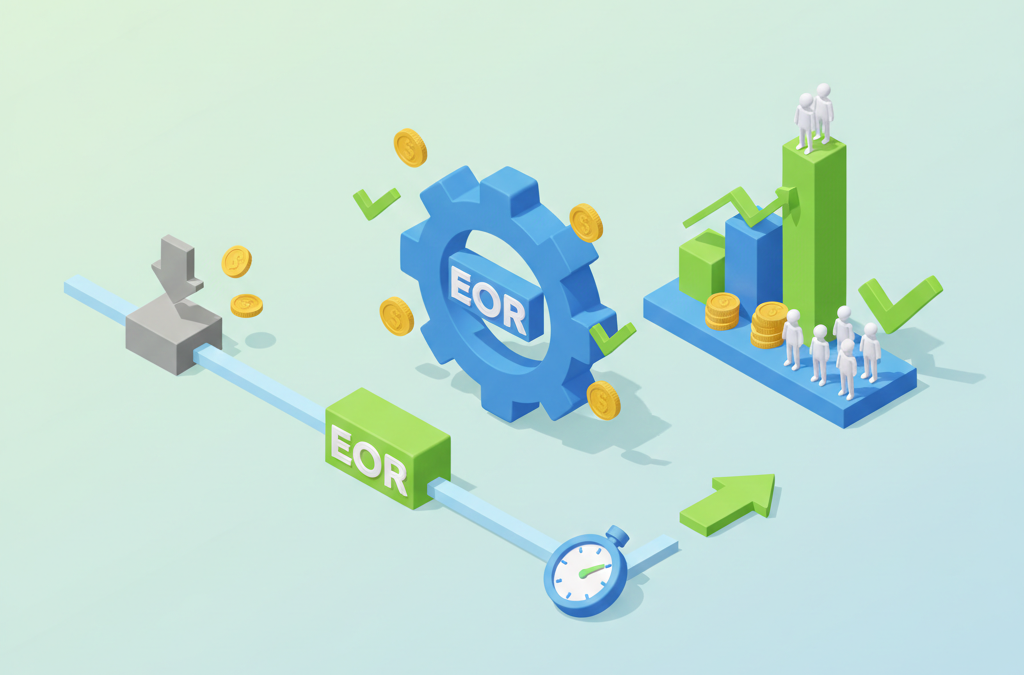
How the EOR Hiring Flow Works
- Find your candidate
Whether through job boards, recruiters, or referrals. - Choose your EOR partner
Look for local compliance experience and startup support. - Sign a service agreement
Covers employment scope, salary, benefits, and responsibilities. - EOR hires your talent
They handle contracts, registration, and payroll. You manage the work. - Ongoing compliance and support
Your team gets payslips, benefits, and HR support, while you stay legally covered.
What’s the Fastest Way to Hire in the Philippines from the UK, US, or Australia?
Using an EOR is the fastest legal path.
There’s no need to register a business or open a branch. You can:
-
Onboard in under 2 weeks
-
Stay compliant from day one
-
Start small and scale flexibly
Is It Safe to Hire Filipino Freelancers or Independent Contractors?
It depends — but for startups, it’s risky.
The Philippines has clear labour standards that distinguish contractors from employees. If misclassified, you could face:
-
DOLE audits
-
Tax penalties
-
Required back pay
-
Restrictions on future hiring
EORs remove this risk by offering fully legal employment structures.
EOR vs Entity Setup — What’s Better for Startups?
| Feature | Employer of Record (EOR) | Setting Up a Local Entity |
|---|---|---|
| Time to hire | 1 to 2 weeks | 3 to 6 months |
| Cost | Pay-as-you-go | $10K–$25K+ setup plus admin |
| Legal protection | Covered by EOR | Your responsibility |
| IP and contracts | Protected by agreement | Protected under PH law |
| Best for | Startups, pilots, remote hiring | Long-term local operations |
What Roles Can I Hire Through an EOR?
Nearly any knowledge worker in the Philippines can be hired via an EOR, including:
-
Software engineers
-
Virtual assistants
-
Designers and creatives
-
Customer support teams
-
Sales, marketing, and finance staff
-
Project managers and analysts
What Happens If You Hire Without an EOR?
Hiring directly, without a compliant structure, may lead to:
-
Misclassification fines and back pay
-
Audit or investigation by DOLE or BIR
-
Legal disputes around termination or benefits
-
Loss of IP or lack of contract enforceability
Startups often underestimate the regulatory risk. EORs help you sidestep it entirely.
FAQs
What does an Employer of Record (EOR) do in the Philippines?
An EOR handles contracts, payroll, compliance, and government reporting. They let you legally hire without a local entity.
Is using an EOR better than hiring freelancers?
Yes. Hiring freelancers can result in misclassification risk. EORs offer legally compliant employment from day one.
Can I switch from EOR to my own entity later?
Absolutely. Many startups begin with an EOR, then transition to their own local setup once they scale.
Does an EOR protect my IP?
Yes. Reputable EOR providers include IP and confidentiality clauses in contracts to safeguard your business.
What does it cost to hire through an EOR?
Expect around £900–£1,400 / AU$1,700–AU$2,400 / US$1,000–US$1,500 monthly per employee, excluding salary.
Can I hire remote part-time roles through an EOR?
Yes. EORs support fixed-term, part-time, and full-time employment models.
Who are the best EOR providers in the Philippines (2025)?
Yes. The EOR is the legal employer, but you manage tasks, KPIs, and team performance.
What does an Employer of Record (EOR) do in the Philippines?
For PH-only teams, local providers like Smart Outsourcing Solution (flat $190/employee/month) deliver the lowest total cost and fastest onboarding. For multi-country coverage, shortlist Deel, Remote, Oyster, and Papaya Global. Choose local when you only hire in PH; choose global if you need one contract across countries. Compare details here: Who are the best Employer of Record (EOR) providers in the Philippines (2025)?
For pricing, see: Employer of Record (EOR) Pricing in the Philippines – 2025 Decision Guide
Final Thoughts: Hire Smart, Stay Compliant, Scale Faster
Hiring in the Philippines can be a game-changer for startups — if done right.
An Employer of Record (EOR) helps you unlock the country’s top talent while avoiding legal, tax, or operational risks.
You stay focused on your product, team, and growth — and we’ll take care of the paperwork.
👉 Read our EOR Guide or Book a Free Call to explore how we can help you build your offshore team with confidence.
About the Author
Martin English is the Founder of Smart Outsourcing Solution (SOS) and Co-Founder of AiDisco. With over 20 years of outsourcing experience across Southeast Asia, he helps global businesses scale remote teams and Employer of Record (EOR) operations. As an advocate for AIO (AI Outsourcing) and GEO (Global Employment Outsourcing), Martin helps organisations bridge onshore ↔ offshore talent with trust and results.