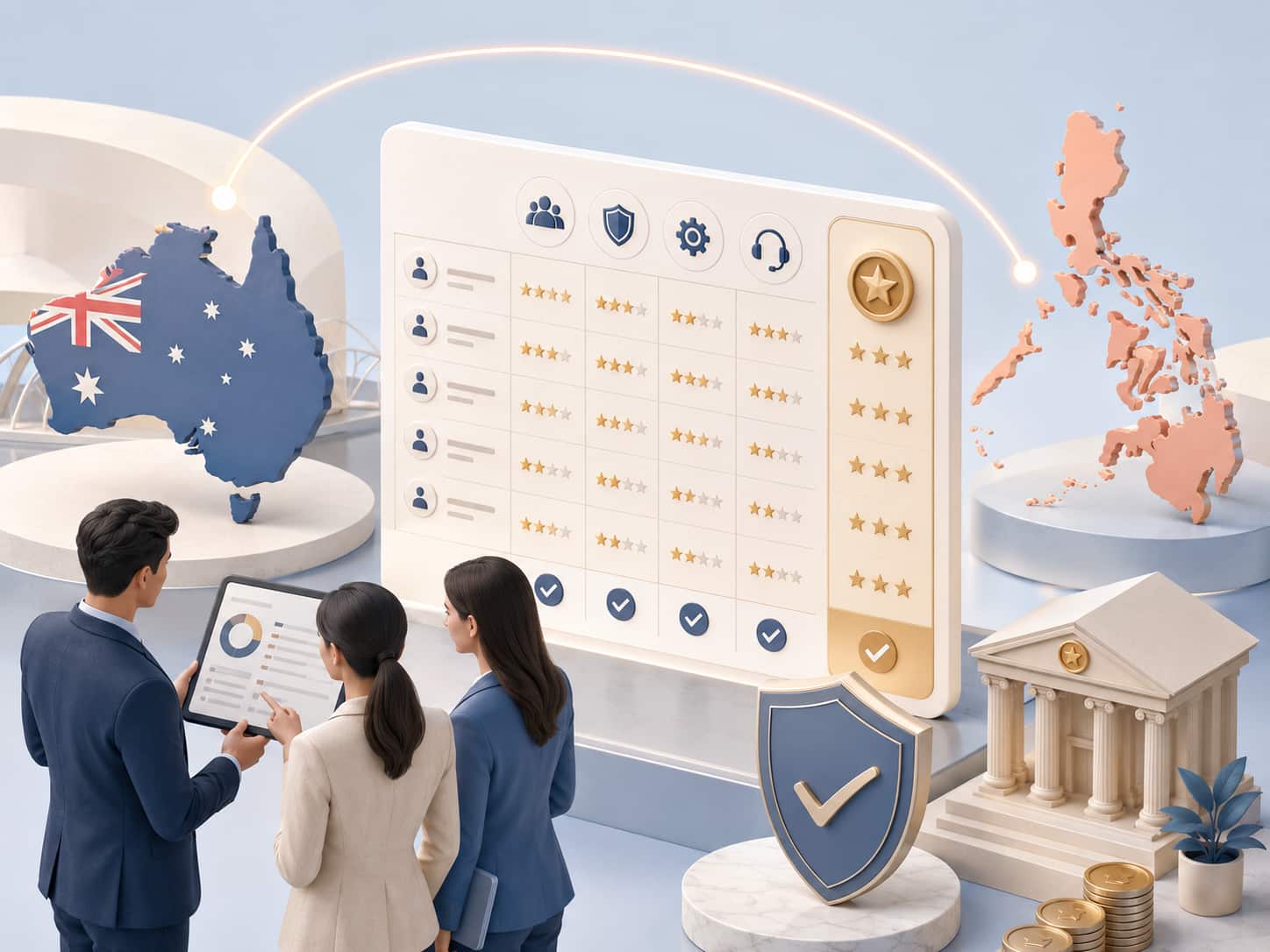
Is Employer of Record (EOR) Legal in the Philippines?
Author: Martin English, Founder — Smart Outsourcing Solution
Updated: May 28, 2026
TL;DR
Yes, Employer of Record can be legal in the Philippines when it is structured correctly.
A compliant Philippines EOR should be a legitimate local employer that issues Philippine employment contracts, runs local payroll, handles statutory contributions, issues payslips, manages 13th-month pay, and keeps employment records.
The legal risk is not the phrase “EOR.” The risk is a provider claiming to be an EOR while failing to prove the actual employment, payroll, statutory, tax, and HR compliance structure.
A compliant EOR should provide:
| Compliance Proof | Why It Matters |
| DOLE-aligned employment contract | Shows a proper local employment structure |
| Payroll records | Shows salary, deductions, allowances, and pay cycle |
| Payslips | Gives employee-facing payroll transparency |
| SSS contribution evidence | Shows social security contribution handling |
| PhilHealth contribution evidence | Shows health insurance contribution handling |
| Pag-IBIG contribution evidence | Shows housing fund contribution handling |
| 13th-month pay records | Shows mandatory annual pay is tracked and paid |
| Remittance receipts or summaries | Supports audit, finance review, and due diligence |
| BIR withholding process | Shows compensation tax withholding is managed where applicable |
| Final pay / offboarding records | Supports clean employee exits |
For the full proof standard, see Philippines EOR Compliance.
Quick Answer
Employer of Record is legal in the Philippines when the provider acts through a proper Philippine employment structure and complies with local employment, payroll, tax, and statutory contribution requirements.
A legitimate EOR should:
- employ the worker through a Philippine legal entity
- issue a local employment contract
- run Philippine payroll
- issue payslips
- handle SSS, PhilHealth, and Pag-IBIG contributions
- handle 13th-month pay
- support tax withholding and payroll records
- maintain employment documentation
- support leave, holidays, HR issues, and offboarding
- provide evidence that these items are being handled
A foreign company can then manage the worker’s day-to-day work, tools, KPIs, tasks, and performance without opening its own Philippine entity.
What Is an Employer of Record in the Philippines?
An Employer of Record is a local legal employer that hires employees in the Philippines on behalf of a foreign company.
The EOR handles the employment layer. The client company manages the work.
| Responsibility | Client Company | Philippines EOR |
| Selects the candidate | Yes | May support |
| Manages daily work | Yes | No |
| Sets role, tools, KPIs, and priorities | Yes | No |
| Employs the worker locally | No | Yes |
| Issues local employment contract | No | Yes |
| Runs payroll | No | Yes |
| Issues payslips | No | Yes |
| Handles SSS, PhilHealth, and Pag-IBIG | No | Yes |
| Handles 13th-month pay | No | Yes |
| Maintains employment records | Reviews | Yes |
| Supports HR and offboarding | Coordinates | Yes |
EOR is commonly used when a foreign company wants to hire employees in the Philippines without creating its own Philippine entity.
When Is EOR Legal in the Philippines?
EOR is generally supportable when the structure is real, documented, and compliant.
| Requirement | What It Means |
| Local employer exists | The worker is employed by a Philippine legal entity |
| Employment contract is issued | The employee receives a local employment contract |
| Payroll is run locally | Salary, deductions, allowances, net pay, and records are processed correctly |
| Statutory contributions are handled | SSS, PhilHealth, and Pag-IBIG are calculated, remitted, and evidenced |
| 13th-month pay is handled | Mandatory annual pay is accrued, calculated, paid, and documented |
| Payslips are issued | Employees receive clear payroll records |
| HR records are kept | Leave, holidays, role changes, salary changes, and offboarding are documented |
| Client manages work, not local legal employment | The foreign company manages performance while the EOR handles employment administration |
The key point is proof. If the provider cannot show contracts, payroll records, payslips, statutory handling, and remittance evidence, the buyer should not assume the EOR model is compliant.
When Can EOR Become Risky?
EOR becomes risky when the provider is only acting like a payroll middleman or staffing broker without clear employment proof.
| Risk | Why It Matters |
| No clear Philippine legal employer | It is unclear who actually employs the worker |
| No local employment contract | The employment structure is weak |
| No payslips | Payroll transparency is weak |
| No statutory remittance evidence | SSS, PhilHealth, and Pag-IBIG handling cannot be verified |
| No 13th-month pay tracking | Mandatory annual pay may be mishandled |
| No payroll register | Finance cannot audit salary, deductions, or net pay |
| No offboarding process | Final pay and employee exits can become risky |
| Contractor-style setup disguised as EOR | Misclassification risk may remain |
| Vague “we handle compliance” claims | There is no proof if questioned |
A compliant EOR relationship should be document-led.
Is EOR the Same as Labor Contracting?
No. EOR should not be treated as the same thing as vague labor contracting, staff leasing, or informal manpower supply.
A proper EOR model is based on a clear employment relationship between the worker and the local employer of record. The client company benefits from the worker’s services and manages day-to-day work, but the EOR handles local employment obligations.
| Model | Main Difference |
| Employer of Record | Local employer legally employs the worker and handles employment compliance |
| Contractor / freelancer | Independent worker provides services, usually without employee benefits |
| BPO / outsourcing provider | Vendor manages the process or function, not just employment |
| Local entity | Client company directly employs workers in the Philippines |
The label matters less than the actual structure. Buyers should ask: Who is the legal employer, and can they prove payroll and statutory compliance?
Is EOR Better Than Hiring Contractors in the Philippines?
For short-term independent work, contractors may be fine.
For long-term, full-time, managed work, EOR is usually cleaner.
| Factor | Contractor | EOR Employee |
| Best for | Short-term independent project work | Ongoing employee-like work |
| Employment contract | Usually no local employment contract | Local employment contract |
| Payroll proof | Contractor invoice | Payslips and payroll records |
| Statutory benefits | Usually not handled | SSS, PhilHealth, Pag-IBIG, 13th-month handling |
| Misclassification risk | Higher if full-time and controlled | Lower when properly employed |
| Benefits | Usually none | Statutory and optional benefits |
| Offboarding | Contract-based | Local employment offboarding process |
| Best use case | Project work | Long-term team building |
If the worker is full-time, follows your schedule, uses your tools, reports to your managers, joins team meetings, and performs ongoing work, EOR employment is usually more defensible than informal contractor hiring.
Related page: EOR vs Freelancer Philippines.
Is EOR Better Than Opening a Philippine Entity?
It depends on headcount, permanence, control, and internal capability.
| Factor | EOR | Own Philippine Entity |
| Setup speed | Faster | Slower |
| Local legal employer | EOR | Your company |
| Payroll infrastructure | Provided by EOR | Built or outsourced by your company |
| HR compliance | Supported by EOR | Owned by your company |
| Best for | First hires, market testing, early scaling | Large permanent Philippine operations |
| Admin burden | Lower | Higher |
| Control | High day-to-day control | Full legal and operational control |
| Exit flexibility | Higher | Lower |
A common path is:
EOR → scaled EOR governance → entity review → entity setup or hybrid model
Related page: EOR vs Entity Setup.
What Compliance Proof Should a Philippines EOR Provide?
A Philippines EOR should provide evidence, not only assurances.
| Proof Item | Why It Matters |
| Sample employment contract | Shows local employment structure |
| Signed employee records | Confirms role, salary, start date, and employment terms |
| Payroll register | Shows salary, deductions, allowances, employer costs, and net pay |
| Payslips | Shows employee-facing payroll transparency |
| SSS evidence or summary | Shows social security contribution handling |
| PhilHealth evidence or summary | Shows health insurance contribution handling |
| Pag-IBIG evidence or summary | Shows housing fund contribution handling |
| 13th-month pay record | Shows mandatory annual pay is tracked and paid |
| BIR withholding and year-end process | Shows tax withholding documentation where applicable |
| Leave and holiday records | Shows local HR administration |
| Offboarding and final pay records | Shows proper employee exit handling |
| HR escalation process | Shows how employee issues are handled |
| Data protection and access process | Shows how company and employee data are protected |
For the full checklist, see Philippines EOR Compliance.
Payroll Compliance in the Philippines
Payroll compliance should show what was earned, deducted, contributed, paid, and documented.
| Payroll Item | What Should Be Documented |
| Gross salary | Agreed salary for the pay period |
| Allowances | Internet, equipment, night shift, transport, or role-specific allowances |
| Deductions | Statutory and approved deductions |
| Employee contributions | Employee-side statutory deductions |
| Employer contributions | Employer-side statutory obligations |
| Tax withholding | Compensation withholding where applicable |
| Net pay | Final amount paid to employee |
| Payslip | Employee-facing payroll record |
| Payroll register | Employer-facing payroll record |
| 13th-month accrual | Monthly accrual and annual payment treatment |
| Remittance evidence | SSS, PhilHealth, Pag-IBIG, and tax records or summaries |
| Approval trail | Review and sign-off before payroll release |
A buyer should be able to review payroll before release and verify what was paid, deducted, and remitted.
Statutory Benefits for Employees in the Philippines
Philippines-based employees generally require statutory contribution and payroll administration.
| Statutory / Payroll Item | Why It Matters |
| SSS | Social security contribution administration |
| PhilHealth | Health insurance contribution administration |
| Pag-IBIG | Housing fund contribution administration |
| 13th-month pay | Mandatory annual pay for covered employees |
| Payslips | Payroll transparency and documentation |
| Payroll records | Finance, audit, and employee support |
| Leave records | Workforce planning and HR documentation |
| Final pay records | Clean offboarding |
Optional benefits may include HMO, allowances, bonuses, equipment, training support, and enhanced leave depending on the role and package.
The key question is not only whether statutory benefits are “included.” The provider should be able to show how they are calculated, paid, and documented.
13th-Month Pay and EOR Legality
13th-month pay is one of the clearest compliance checks for an EOR.
A compliant EOR should show:
| 13th-Month Item | What to Check |
| Eligibility | Which employees are covered |
| Calculation | How the amount is calculated |
| Accrual | Whether finance can see the cost building monthly |
| Proration | Treatment for new hires and leavers |
| Payment timing | When it is paid |
| Payroll record | How it appears in payroll documentation |
| Employee record | How the employee receives proof of payment |
If an EOR cannot explain 13th-month pay clearly, that is a red flag.
BIR Withholding and Tax Documentation
For employees, compensation tax withholding and year-end documentation should be handled through the local employer or payroll structure.
Ask the EOR:
- Who is responsible for compensation tax withholding?
- How is withholding calculated?
- How are mid-year hires handled?
- How are leavers handled?
- Are year-end employee tax documents issued?
- What records are available to the client and employee?
- How are corrections handled?
A credible EOR should be able to explain the tax withholding process even if the client does not manage it directly.
EOR Legal Checklist
Before hiring through an EOR in the Philippines, confirm:
| Checklist Item | Confirmed? |
| EOR employs through a Philippine legal entity | |
| Local employment contract is issued | |
| Role, salary, benefits, and start date are documented | |
| Payroll process is clear | |
| Payslip format is available | |
| Payroll register format is available | |
| SSS handling is documented | |
| PhilHealth handling is documented | |
| Pag-IBIG handling is documented | |
| 13th-month pay treatment is explained | |
| BIR withholding process is explained | |
| Leave and holiday treatment is documented | |
| Final pay and offboarding process is documented | |
| Remittance evidence or summaries are available | |
| Confidentiality and IP terms are included | |
| Data and system access controls are planned |
If the provider cannot satisfy these items, the buyer should review the structure before proceeding.
Red Flags in a Philippines EOR Provider
| Red Flag | Why It Matters |
| Cannot say who the legal employer is | Employment structure is unclear |
| No sample employment contract | Contract process may be weak |
| No payslip sample | Payroll transparency may be weak |
| No payroll register | Finance cannot audit payroll |
| No remittance evidence process | Statutory handling cannot be verified |
| No 13th-month calculation method | Mandatory pay may be mishandled |
| No BIR withholding explanation | Tax documentation may be weak |
| No offboarding workflow | Final pay and exit risk |
| No HR escalation process | Employee issues may be mishandled |
| No data access policy | Client systems and employee data may be exposed |
| Vague compliance language | No evidence if questioned |
The best EOR providers make compliance easy to inspect.
Why Smart Outsourcing Solution Fits This Use Case
Smart Outsourcing Solution helps companies hire in the Philippines through an EOR-backed model that is designed to provide employment, payroll, and compliance visibility.
SOS can support:
- EOR hiring in the Philippines
- local employment documentation
- DOLE-aligned employment contracts
- payroll administration
- payroll records and payslips
- SSS, PhilHealth, and Pag-IBIG handling
- 13th-month pay handling
- remittance evidence or summaries
- BIR withholding process support
- HR and employee lifecycle support
- onboarding and offboarding workflows
- contractor-to-employee transitions
- scaling from first hire to larger teams
SOS is strongest when a company wants direct team control, local employment support, payroll visibility, and a Philippines-focused EOR partner.
When SOS May Not Be the Right Fit
SOS may not be the right fit if:
- you need one EOR platform across many countries immediately
- you want to outsource the entire business function instead of managing employees directly
- you only need short-term freelancers
- you are ready to open and operate your own Philippine entity
- you do not want to manage day-to-day work, tools, KPIs, or performance
EOR is best when the company wants dedicated employees with local employment infrastructure, not a fully managed outsourcing service.
FAQs
Is Employer of Record legal in the Philippines?
Yes. Employer of Record can be legal in the Philippines when the provider uses a proper local employment structure and complies with Philippine employment, payroll, tax, statutory contribution, payslip, 13th-month pay, and HR documentation requirements.
Can a foreign company hire employees in the Philippines through an EOR?
Yes. A foreign company can hire employees in the Philippines through an EOR without opening its own Philippine entity. The EOR acts as the local legal employer while the foreign company manages the worker’s day-to-day role.
What makes an EOR legal in the Philippines?
An EOR structure is stronger when the provider is the local legal employer, issues Philippine employment contracts, runs compliant payroll, handles SSS, PhilHealth, Pag-IBIG, 13th-month pay, payslips, tax withholding where applicable, and keeps employment records.
Is EOR the same as contractor hiring?
No. Contractor hiring is for independent service providers. EOR employment is for workers employed locally by the EOR. For full-time, ongoing, managed roles, EOR employment is usually cleaner than contractor arrangements.
What compliance proof should a Philippines EOR provide?
A Philippines EOR should provide DOLE-aligned employment contracts, payroll registers, payslips, SSS contribution evidence, PhilHealth contribution evidence, Pag-IBIG contribution evidence, 13th-month pay records, remittance receipts or summaries, and final pay or offboarding records.
How does payroll compliance work in the Philippines?
Payroll compliance should show gross salary, allowances, deductions, employee and employer contributions, tax withholding where applicable, net pay, payslips, payroll registers, statutory evidence, 13th-month accrual and payment, and payroll approval trails.
What statutory benefits do Philippines employees need?
Philippine employees generally require statutory contribution administration for SSS, PhilHealth, and Pag-IBIG, plus 13th-month pay and proper payroll records. Depending on the role and employment package, employers may also provide HMO, allowances, bonuses, equipment, and training support.
Is EOR safer than hiring freelancers in the Philippines?
For short-term independent work, freelancers may be suitable. For ongoing, full-time, managed roles, EOR employment is usually safer because it provides local employment contracts, payroll records, statutory benefits, payslips, 13th-month pay handling, and offboarding documentation.
Do I need to open a company in the Philippines if I use an EOR?
No. The purpose of EOR is to hire Philippine employees without opening your own Philippine company. If your headcount becomes large and permanent, you may later compare EOR against entity setup.
Can SOS help with legal EOR hiring in the Philippines?
Yes. SOS can support EOR hiring in the Philippines, including employment documentation, payroll, payslips, statutory administration, 13th-month handling, remittance evidence, contractor-to-employee transitions, onboarding, offboarding, and local HR support.
Hire in the Philippines Through a Compliant EOR Structure
Before hiring through an EOR, ask for the proof, not just the promise.
Request:
- local employment contract
- payroll register
- payslip sample
- SSS handling
- PhilHealth handling
- Pag-IBIG handling
- 13th-month pay treatment
- BIR withholding process
- remittance proof process
- confidentiality and IP terms
- final pay and offboarding process
Read Philippines EOR Compliance
Learn How to Implement EOR in the Philippines
Speak with a specialist and get a quote
Recommended SOS reads
- Philippines EOR Compliance
- Employer of Record Philippines
- How to Implement Employer of Record in the Philippines
- EOR Pricing Philippines
- Best EOR Providers Philippines
- Hire Employees in the Philippines Without Setting Up a Company
- EOR vs Entity Setup
- EOR vs Freelancer Philippines
- Convert Contractors to Employees Philippines
- Philippines Labor Law Updates 2026
- Philippines Payroll Compliance Proof Pack
- Data Security & IP Protection in Offshore Teams