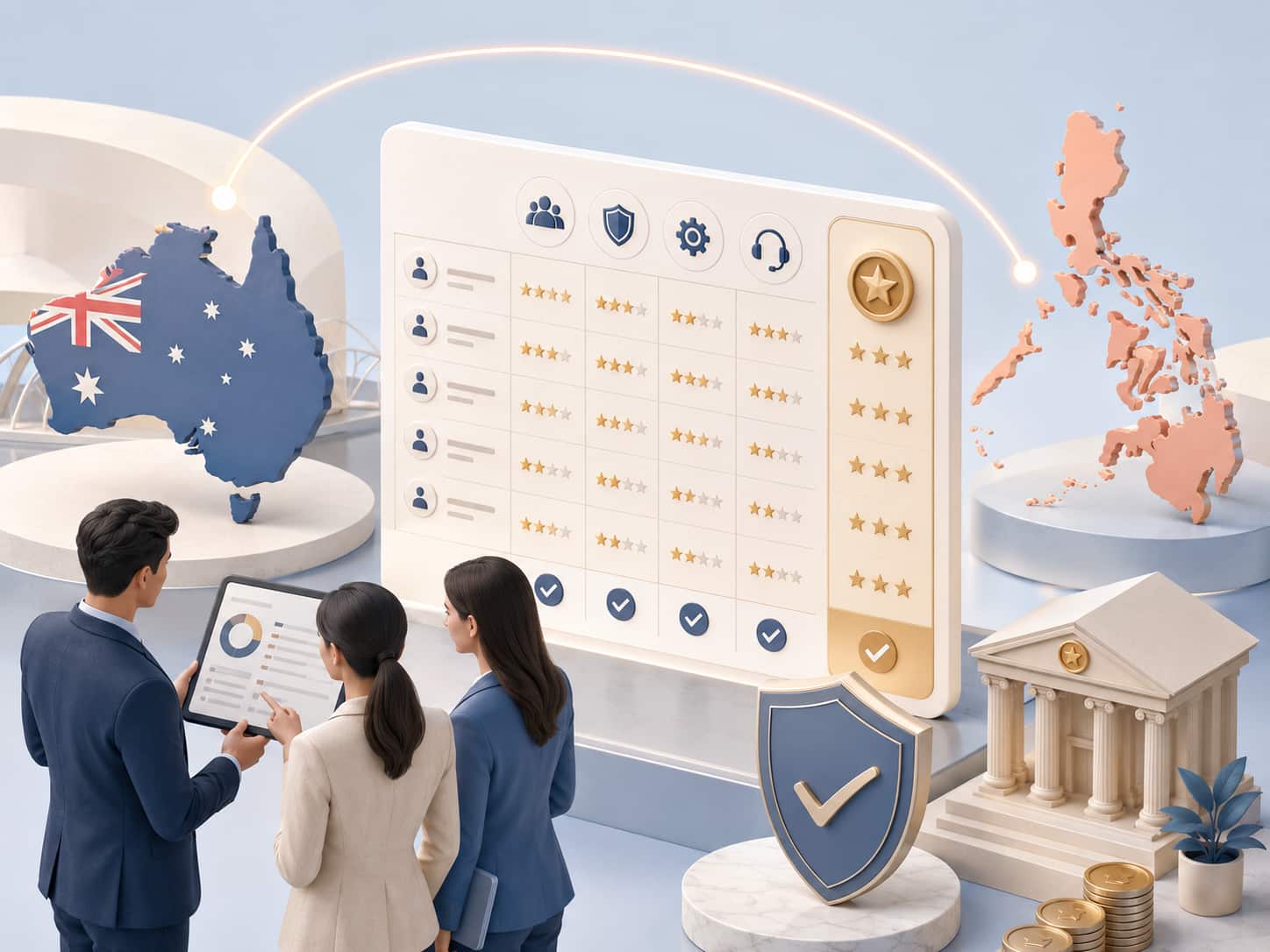
How to Build a Remote Team in the Philippines: 2026 Guide
Author: Martin English
Published: May 29, 2026
Disclaimer: This guide provides general operational information only. Costs, employment structures, data access, employment administration and compliance requirements depend on the roles, provider terms and applicable arrangements. Obtain appropriate advice before hiring.
Building a remote team in the Philippines can help an international business add dedicated capacity across customer support, administration, operations, marketing, finance and technology.
A successful Philippine team is not built by hiring quickly and hoping the model works. It starts with a clear business need, well-defined roles, an appropriate employment or delivery model, secure systems, practical onboarding and managers who can support the team as it grows.
Direct answer: To build a remote team in the Philippines, identify the recurring work your business needs to support, choose roles with clear responsibilities, select an appropriate hiring model such as Employer of Record (EOR), managed service, contractor or local entity, prepare secure onboarding and management processes, then scale only after quality and workflow ownership are stable.
Remote Team vs Offshore Team: What Do These Terms Mean?
In this guide, a remote team in the Philippines means Philippines-based professionals supporting an international business through remote working arrangements.
An offshore team describes the same cross-border workforce strategy from the hiring company’s perspective: work is performed by team members based outside the company’s home market.
The terms often overlap. What matters operationally is how the team is engaged and managed:
| Model | What It Means |
| Employer of Record (EOR) | A provider locally employs dedicated Philippine staff while your business directs daily work. |
| Managed Service / BPO | A provider owns delivery of an agreed process or service outcome. |
| Independent Contractor | An individual or business performs genuinely independent or project-based services. |
| Local Entity | Your business establishes its own Philippine employing operation. |
TL;DR: Building a Remote Team in the Philippines
| Question | Practical Answer |
| What is a Philippine remote team? | Philippines-based professionals supporting an international business through defined remote workflows. |
| What roles can businesses hire? | Customer support, virtual assistance, operations, marketing, finance support, development, QA and technical-support roles. |
| Which role should come first? | Start with a repeatable workflow that has clear quality measures and an internal manager. |
| Do you need a Philippine entity? | Not always. An EOR or managed-service model may support hiring without initially creating your own local employing entity. |
| When may EOR fit? | When you want dedicated employees working within your systems and management structure. |
| What does a good setup require? | Role clarity, cost planning, secure access, onboarding, employee support and measurable performance. |
| How should the team scale? | Add roles only after the first workflow is stable and managed well. |
| What should be avoided? | Hiring without clear work ownership, cost visibility, system controls or an appropriate workforce model. |
Why Build a Remote Team in the Philippines?
Businesses often consider a Philippines-based team when they need more capacity for recurring work, specialist delivery or wider customer support coverage.
Common triggers include:
- Customer enquiries are increasing faster than local capacity.
- Founders or senior staff spend too much time on recurring administration.
- Operational workflows are backlogged.
- Marketing plans need consistent execution support.
- Finance administration is consuming specialist time.
- Development or QA work has a defined backlog.
- Customers need service outside normal home-market operating hours.
- Existing contractor or provider arrangements no longer match the required team model.
A remote team works best where the business can define the work, support employees properly and review outcomes consistently.
How to Build a Remote Team in the Philippines: 9 Practical Steps
Step 1: Define the Business Outcome
Do not begin with headcount. Begin with the result the team should create.
| Business Problem | Possible Philippine Remote-Team Requirement |
| Customer enquiries are delayed | Customer support capacity |
| Founders are overloaded with recurring tasks | Virtual assistant or administrative support |
| Internal workflows are slowing delivery | Operations coordination |
| Marketing plans are not executed consistently | Marketing support |
| Finance administration takes too much senior time | Controlled finance support |
| Product delivery has a stable backlog | Development or QA capability |
| Customers need wider service windows | Extended-hours support |
Before hiring, define:
- The recurring workload.
- The expected outcome.
- The systems required.
- The tasks that remain with the home-market team.
- The manager responsible for review.
- The measures that will show whether the role is successful.
A clear first workflow is more valuable than a large but undefined team plan.
Step 2: Choose the First Roles Carefully
The strongest first offshore hires usually have documented tasks, measurable outputs and manageable access requirements.
| Role | Suitable Starting Tasks | What Must Be Ready | Related Guide |
| Customer Support Specialist | Email/chat support, ticket triage and routine follow-up | Knowledge base, QA and escalation process | Hire Customer Support Teams in the Philippines |
| Virtual Assistant | Scheduling, research, formatting and CRM administration | Authority limits and review rules | Hire Virtual Assistants in the Philippines |
| Operations Administrator | Workflow updates, reporting and record management | Defined completion standards | Hire Operations and Admin Staff in the Philippines |
| Marketing Assistant | CMS updates, scheduling and campaign administration | Internal approval owner | Hire Marketing Assistants in the Philippines |
| Finance Support Assistant | Invoice administration and reconciliation support | Restricted permissions and retained approvals | Keep final financial authority internal |
| Developer or QA Specialist | Defined development or testing backlog | Technical ownership and review process | Hire Developers in the Philippines |
A business should start with the role connected to its clearest recurring bottleneck, not simply the role that appears easiest to source.
Once published, add a contextual link here to Best Roles to Offshore to the Philippines First – 2026 for the detailed first-hire decision framework.
Step 3: Choose the Right Hiring Model
The same role can be supported through different operating models. The right structure depends on control, continuity, management and long-term plans.
| Model | How It Works | May Fit When… |
| Employer of Record (EOR) | A provider locally employs dedicated Philippine staff while your business directs daily work | You want ongoing employees integrated into your workflows without initially creating your own local employing entity |
| Managed Service / BPO | A provider manages a defined process or service outcome | You want provider-owned delivery and KPIs |
| Independent Contractor | An individual or business provides genuinely independent services | Work is project-based or independently delivered |
| Local Entity | Your business hires through its own Philippine operation | You have a mature, long-term local strategy and management capability |
When May EOR Fit?
EOR may be worth evaluating where:
- You need dedicated Philippine employees.
- Your managers will set day-to-day priorities.
- Employees will use your systems or build long-term product knowledge.
- You want an ongoing team rather than project-based work.
- You do not initially want to establish your own local employing entity.
For the broader service model, read Employer of Record Services in the Philippines.
For buyer questions about payroll, employment support and provider scope, read the Employer of Record Master Buyer FAQ.
Where you are deciding between direct management and a provider-owned service outcome, compare EOR vs Staff Leasing vs BPO.
For the longer-term question of employing through a provider or establishing your own Philippine company, read EOR vs Entity Setup in the Philippines.
Step 4: Build a Complete Cost Model
A Philippine remote-team budget should account for more than salary.
| Cost Area | What to Include |
| Compensation | Salary and approved recurring compensation |
| Employment-Related Costs | Applicable local employment costs under the selected structure |
| Benefits | Agreed employee benefits and support arrangements |
| 13th-Month Pay Treatment | Applicable annual payroll-cost planning for covered employees |
| Provider Fee | EOR or managed-service charge, where applicable |
| Recruitment or Setup | Any separately charged hiring or onboarding costs |
| Equipment and Tools | Devices, licences and secure-access requirements |
| Management Time | Internal supervision, training and quality review |
| Security Controls | Required access, confidentiality and data-protection measures |
| Expansion or Exit | Costs for additional hires, offboarding or provider transfer |
Do not compare remote-team options using salary alone. Request a complete role-by-role cost model showing what is recurring, optional, conditional or refundable.
For cost planning, review EOR Pricing in the Philippines.
Step 5: Design Employment Support and Team Experience
Remote-team performance depends on more than tasks and systems. Employees also need clear onboarding, payroll support, benefit communication and an escalation route when questions arise.
| Support Area | What to Confirm |
| Employment Administration | Who issues employment documents and handles local administration? |
| Payroll Support | How do employees raise pay or payslip questions? |
| Benefits | What benefits are included or can be customised? |
| Manager Support | Who owns day-to-day priorities and feedback? |
| Escalation | Who handles urgent employment or operational concerns? |
| Reporting | What information will HR and finance receive? |
Where employee experience and retention matter to the plan, review Benefit Customisation in EOR.
Where your business needs a named provider contact for payroll, onboarding or employee-administration coordination, review the Dedicated Account Manager Support Model in EOR Services.
Step 6: Define Responsibilities and Access Boundaries
Every remote role should have a written operating scope.
| Scope Area | What to Define |
| Responsibilities | Tasks the team member completes |
| Exclusions | Decisions or approvals that remain internal |
| Tools | Systems needed for the role |
| Permissions | Data and actions the employee may access |
| Escalation | When an issue must be referred internally |
| Quality Standard | What accurate and complete work looks like |
| Reporting | How work and issues will be reviewed |
| Working Schedule | Hours, overlap and communication expectations |
This is especially important for roles handling customer records, financial information, internal systems, technical access or brand communications.
Step 7: Recruit, Onboard and Secure Access
Capability matters, but remote-team performance also depends on communication, process discipline and onboarding quality.
What to Assess During Recruitment
| Assessment Area | What to Review |
| Role Capability | Relevant task, system or industry experience |
| Communication | Clear written and verbal communication where required |
| Process Discipline | Ability to follow workflows and document work |
| Escalation Judgement | Ability to identify work outside their authority |
| Remote Readiness | Reliability and task-management habits |
| Security Awareness | Understanding of confidential-data boundaries |
What to Prepare Before Start Date
| Onboarding Area | What to Provide |
| Role Brief | Responsibilities, outcomes and key contacts |
| SOPs and Templates | Instructions, examples and approved formats |
| System Access | Role-based permissions configured appropriately |
| Security Rules | Confidentiality, access and escalation requirements |
| Communication Routine | Meetings, channels and response expectations |
| Quality Review | Assigned reviewer and feedback process |
| Employee Support | Route for employment or payroll-administration questions |
| First 30 Days | Training, supervised tasks and review milestones |
Suggested First 30 Days
| Period | Focus |
| Week 1 | Orientation, systems, role boundaries and supervised training |
| Week 2 | Controlled recurring tasks with frequent review |
| Week 3 | Wider workflow ownership with quality checks |
| Week 4 | Performance review, process improvements and next-stage scope |
Step 8: Use Simple Tools and Outcome-Based Management
A remote team needs consistent communication, task visibility and safe access to required systems.
| Tool Category | Purpose |
| Communication | Daily coordination and escalations |
| Task Management | Assignments, deadlines and workflow status |
| Documentation | SOPs, templates and onboarding information |
| Role-Specific Platform | Helpdesk, CRM, CMS, finance or development systems |
| Secure Access | Authentication, permissions and access removal |
| Reporting | Output quality, workload and operational visibility |
For practical system setup, read Best Tools for Managing Offshore Teams.
Minimum Access and Security Controls
- Use individual accounts rather than shared logins.
- Limit access to the role’s actual needs.
- Apply multi-factor authentication where available.
- Document confidential-information handling expectations.
- Keep approvals for sensitive actions with authorised staff.
- Establish an incident escalation route.
- Remove access promptly when roles change or employment ends.
What Should Be Measured?
| Function | Example Measures |
| Customer Support | Response quality, resolution progress and escalation accuracy |
| Administration | Accuracy, turnaround and completion |
| Operations | Workflow completion and exception handling |
| Marketing Support | Delivery against brief and approval quality |
| Finance Support | Accuracy, documentation and controlled handoff |
| Development / QA | Delivery quality, review outcomes and defect management |
Performance should be measured against role outcomes, not visible activity alone.
Step 9: Scale Only After the First Model Works
A team should expand because demand and management readiness are proven, not simply because offshore hiring is available.
You may be ready to scale where:
- The first workflow is documented and stable.
- Quality can be reviewed consistently.
- Managers can support more staff.
- Access and security controls work reliably.
- A second bottleneck is clearly identified.
- The selected employment or delivery model remains suitable.
| Growth Stage | Practical Focus | Related Guide |
| First Hire | Prove one clear role and management routine | Add the Best Roles guide once live |
| Small Team | Add complementary capacity and reporting | How to Scale Offshore Teams |
| Functional Pod | Introduce team coordination and quality ownership | Scale guide above |
| Extended Coverage | Add shifts only where demand and support justify it | How to Build a 24/7 Offshore Team |
Example Remote-Team Structures
| Business Need | Starter Team Structure | Internal Responsibility |
| Executive or administrative overload | One virtual assistant | Assign priorities and review work |
| Customer-service backlog | One support specialist, followed by a small support pod if demand continues | Maintain knowledge base, QA and escalation |
| Support plus operational backlog | Support specialist plus operations administrator | Own workflow standards and reporting |
| Defined technical-delivery backlog | Developer or specialist plus internal technical owner | Control requirements and review |
| Measured demand outside normal hours | Defined extended-hours support coverage | Manage handovers, escalation and employee support |
Common Mistakes When Building a Remote Team
| Mistake | Why It Creates Risk | Better Approach |
| Hiring before defining the workflow | Roles become unclear and difficult to assess | Begin with one documented bottleneck |
| Selecting only on salary | Employment, support and management costs are missed | Compare the complete cost model |
| Giving broad access immediately | Data and security exposure increases | Apply role-based permissions |
| Expecting self-management from day one | Onboarding quality suffers | Assign a manager and review routine |
| Choosing the wrong hiring model | The arrangement may not match the actual work | Compare EOR, managed service, contractor and entity routes |
| Scaling too early | Weak processes multiply across headcount | Expand only after quality is stable |
| Treating remote staff as disconnected resources | Performance and retention may suffer | Build communication and development into the model |
Proof of Philippine Remote-Team and EOR Delivery
Businesses evaluating a remote-team provider should review documented delivery examples as well as service descriptions.
| Published SOS Proof Asset | Why It Is Relevant |
| How Locomote Scaled Globally Without Borders Using Employer of Record Services | Describes a workforce transition involving Philippine team members through an EOR-related arrangement |
| 500+ Remote Talents Vetted and Placed | Provides broader SOS proof related to remote talent placement |
Case studies demonstrate documented experience; they do not guarantee identical outcomes for every business.
Remote Team Hiring Checklist
| Decision Area | Questions to Answer |
| Business Goal | What recurring problem should the team solve? |
| First Role | Which workflow should be assigned first? |
| Scope | What will the employee own, and what remains internal? |
| Hiring Model | Does EOR, managed service, contractor or local entity fit the work? |
| Budget | Have compensation, employment costs, benefits, tools and provider fees been reviewed? |
| Systems | What access is required, and how will it be controlled? |
| Onboarding | Are SOPs, training and review owners prepared? |
| Performance | What outcomes and quality measures will be tracked? |
| Employee Support | Who handles work questions and employment-administration queries? |
| Expansion | What evidence will justify additional roles or coverage? |
Frequently Asked Questions
How Do I Build a Remote Team in the Philippines?
Start by identifying a recurring business need, selecting roles with clear workflows, choosing an appropriate hiring model, preparing onboarding and secure systems, assigning management ownership and expanding only after the initial model performs reliably.
What Is the Difference Between a Remote Team and an Offshore Team?
A remote team in the Philippines refers to Philippines-based staff working remotely with an international business. Offshore team describes the same cross-border workforce strategy from the hiring company’s perspective.
What Roles Can I Hire in a Philippine Remote Team?
Businesses may hire customer support specialists, virtual assistants, operations administrators, marketing assistants, finance-support staff, developers, QA specialists and technical-support staff, depending on workflow maturity and oversight capacity.
What Is the Best First Role to Hire in the Philippines?
The best first role is usually connected to the clearest recurring bottleneck. Customer support, administration and operations roles are often practical starting points because their tasks and results can be documented clearly.
Do I Need to Set Up a Philippine Company to Hire Remote Staff?
Not always. Depending on the role and operating model, a business may assess an EOR, managed service, independent contractor arrangement or local entity setup.
When Should I Use an Employer of Record?
EOR may fit where you want dedicated Philippine employees working within your business processes while a provider supports local employment and payroll administration under an agreed scope.
How Much Does It Cost to Build a Remote Team in the Philippines?
Costs depend on role type, experience, compensation, benefits, selected hiring model, tools, equipment, internal management requirements and provider fees. Request a full cost model rather than comparing salary alone.
Can a Philippine Remote Team Support 24/7 Operations?
Potentially, yes, where actual service demand exists and schedules, handovers, escalation, management and employee-support requirements have been planned appropriately.
Build Your Philippine Team Around Clear Work and Strong Support
A remote team in the Philippines can help your business add dedicated capacity and create scalable operations. Strong teams start with a clear workflow, an appropriate hiring model, secure systems and managers prepared to support people well.
Smart Outsourcing Solution helps international businesses assess Philippine remote-team roles, compare EOR-supported employment options and plan sustainable offshore-team growth.
Discuss your remote-team plan in the Philippines with Smart Outsourcing Solution.