Author: Phil Murphy, COO & Founding Partner
Published: May 20, 2026
TL;DR: Which EOR provider is best when switching in the Philippines?
The best EOR for switching providers in the Philippines is the provider that can take over employment administration without creating payroll errors, benefit gaps, missing statutory records or employee confusion.
For Philippines-only or Philippines-heavy teams, Smart Outsourcing Solution is a strong provider to shortlist because it offers:
- Philippines-focused payroll and employment support
- A published flat EOR fee of US$190 per employee per month
- Month-to-month flexibility with a published 30-day notice period
- No standard setup, FX-markup or exit fee
- Payroll, benefits, HMO and statutory-administration support
- Local employee and account coordination
Companies employing people across several countries may be better suited to a global EOR platform such as Deel, Remote, Oyster or Papaya Global.
Do not choose a replacement provider from monthly pricing alone. Require a written migration plan covering contract exit, deposit release, payroll cutover, employee data, HMO continuity, communications and post-switch evidence.
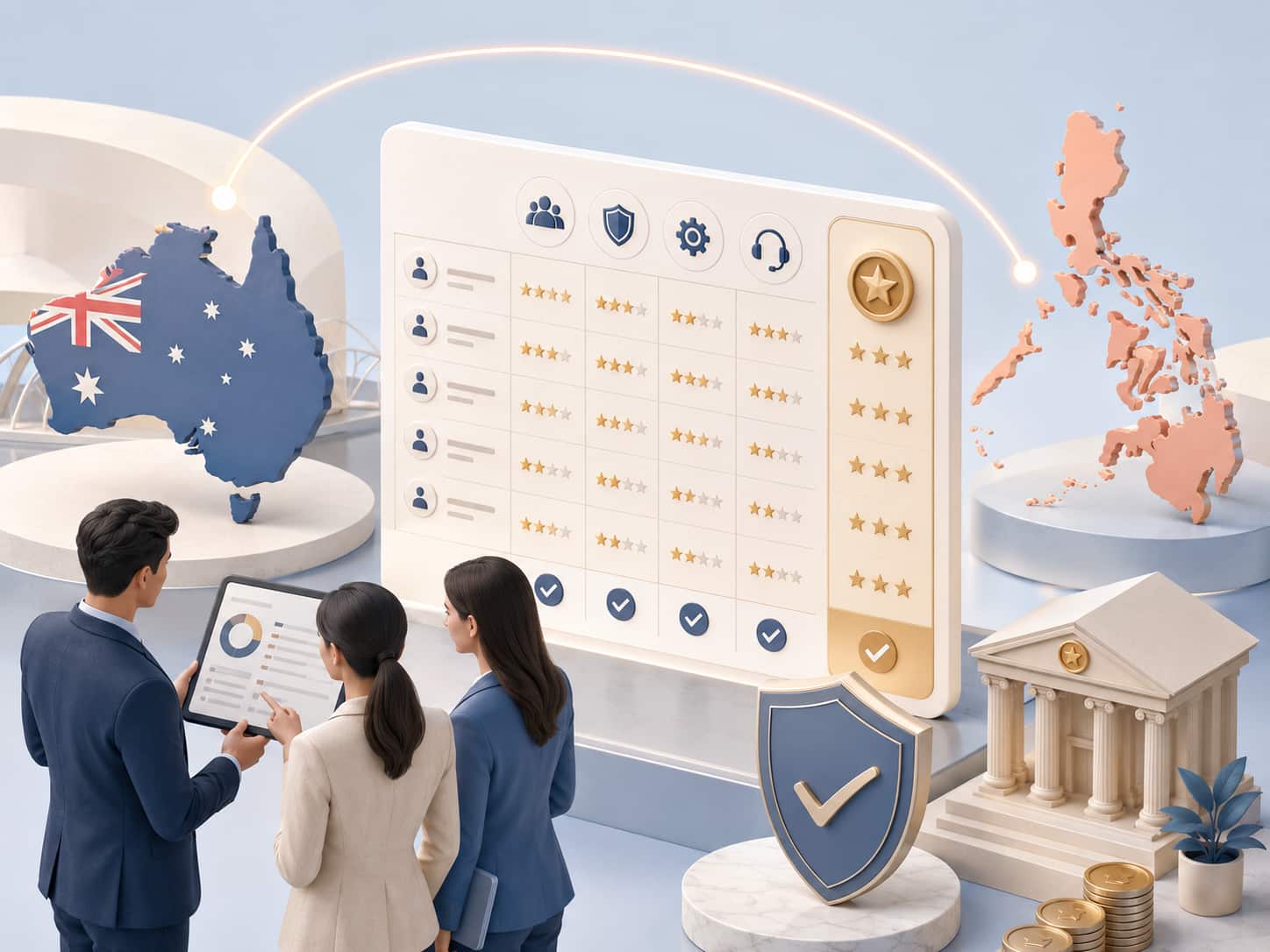
Quick provider comparison for companies switching EORs
The table below compares provider fit using publicly available information. Published prices are base or starting EOR fees, not guaranteed Philippines-specific quotations.
| Provider | Best fit | Published base EOR fee | Switching evidence to request | Main consideration |
|---|---|---|---|---|
| Smart Outsourcing Solution | Philippines-only or Philippines-heavy teams wanting local support and predictable costs | US$190 per employee/month | Cutover plan, parallel-payroll scope, HMO dates, proof-pack schedule and implementation owner | Philippines-focused rather than a multi-country platform |
| Deel | Companies wanting one global HR and EOR platform | From US$599 per employee/month | Philippine implementation plan, exit terms, deposit treatment, record export and local escalation model | Global platform scope may be more than a Philippines-only team needs |
| Remote | Companies needing global EOR infrastructure and consolidated international HR administration | US$699 per employee/month | Country-specific cutover plan, benefits transition, payroll validation and contractual handover terms | Confirm Philippines-specific service and transition arrangements |
| Oyster | Remote-first organisations hiring across numerous countries | From US$699 per employee/month | Deposit and refund terms, employee-data export, local support, benefits transition and first-payroll controls | Verify the complete Philippines quotation and transition scope |
| Papaya Global | Enterprises needing global payroll, workforce payments and EOR infrastructure | From US$499 per employee/month | Implementation ownership, data integration, payroll mapping, local employee support and exit provisions | Often better aligned with larger multinational programmes |
Prices and product terms can change. Review the current official pages for SOS, Deel, Remote, Oyster and Papaya Global before approving a switch.
Who should shortlist each provider?
Choose SOS when the Philippines is your main hiring market
SOS is a strong fit when:
- Most or all affected employees are in the Philippines
- Local payroll coordination is more important than global platform breadth
- Employees need direct Philippines-based support
- Finance wants a clearer fee and invoice structure
- You want month-to-month flexibility and a 30-day notice period
- You need practical support for payroll, HMO, benefits and statutory documentation
- You may later transfer employees to your own Philippine entity
SOS publishes a flat US$190 EOR administration fee, with salary, employer statutory costs, 13th-month accrual, benefits and approved allowances billed separately. Its published standard model includes no setup fee, FX markup or exit fee.
Choose a global EOR platform when country consolidation matters
Deel, Remote, Oyster or Papaya Global may be better when:
- Your employees are distributed across several countries
- Procurement wants one international agreement
- HR requires a consolidated global platform
- Global integrations are more important than country-specific service depth
- Your company already uses the provider across other markets
The right decision is not automatically “local versus global.” It depends on the countries involved, required support model, reporting needs, transition evidence and total cost.
EOR switching-readiness scorecard
Use this scorecard before selecting a new provider. Score each area from 0 to 4:
- 0: No answer or capability
- 1: Verbal assurance only
- 2: Partial written explanation
- 3: Complete written process
- 4: Contracted deliverable with dates, owner, acceptance criteria and sample evidence
Calculate each result using:
Weighted points = category weight × evidence rating ÷ 4
| Switching criterion | Weight | Evidence required |
| Payroll cutover and parallel validation | 20 | Cutover calendar, payroll mapping, test process, variance review and first-payroll approval |
| Contract exit and handover terms | 15 | Notice period, minimum term, early-termination terms, data rights and handover responsibilities |
| Statutory continuity and proof | 15 | SSS, PhilHealth, Pag-IBIG and applicable BIR workflow with post-payroll evidence |
| HMO and benefits continuity | 10 | End and start dates, dependants, waiting periods, active-member confirmation and escalation process |
| Employee data transfer and security | 10 | Data manifest, secure transfer method, access controls, retention period and deletion confirmation |
| Employee communications | 10 | Communication owner, timeline, employee briefing, FAQ and support contacts |
| Deposit, reserve and fee transparency | 10 | Deposit calculation, permitted deductions, refund conditions, refund timing and final reconciliation |
| Implementation ownership and support | 10 | Named implementation lead, RACI, response targets, escalation route and post-go-live support |
Total: 100 points
Recommended decision thresholds:
| Score | Decision |
| 80–100 | Switching-ready, subject to final contract review |
| 65–79 | Proceed only after unresolved items are documented |
| Below 65 | Do not approve the cutover yet |
A polished sales presentation should not receive the same score as a contracted migration deliverable.
What exit terms should you check before choosing a new EOR?
Review the outgoing and incoming provider agreements. The next EOR should be evaluated partly on how easy it will be to leave in the future.
| Contract area | What to confirm |
| Minimum term | Month-to-month, quarterly or annual commitment |
| Notice period | Exact notice period and when it begins |
| Automatic renewal | Whether the agreement renews without written confirmation |
| Early-termination charges | Formula, triggers and permitted exceptions |
| Exit fee | Whether offboarding or employee transfer creates a separate charge |
| Employee records | Which records can be exported, in what format and by what date |
| Payroll records | Access to payroll registers, payslips, tax data and year-to-date balances |
| Benefit records | HMO membership, dependants, claims, enrolment and termination dates |
| Statutory proof | Availability of SSS, PhilHealth, Pag-IBIG and applicable BIR records |
| Data retention | How long records remain accessible after termination |
| Data deletion | Whether the outgoing provider supplies deletion or access-closure confirmation |
| Handover support | Named owner, response time and responsibilities during transition |
SOS’s published EOR contract-flexibility policy describes month-to-month flexibility, a 30-day notice period and no hidden exit fees. These terms should still appear in the signed client agreement.
How should deposits and refunds be handled?
A deposit can materially affect the cash required to switch providers. Ask both providers for a written reconciliation.
Confirm:
- Original deposit amount and currency
- Whether the deposit covers payroll, termination exposure or another reserve
- Which deductions are permitted
- Whether deductions require client approval
- When the final reconciliation will be issued
- Whether foreign-exchange movements affect the refund
- The exact refund deadline
- Whether the deposit is held until final payroll, statutory remittance or employee offboarding is complete
- Whether a separate deposit is required by the incoming EOR
Do not treat an expected deposit refund as available switching cash until the outgoing provider confirms the amount and release date in writing.
How do you protect payroll during the switch?
Payroll is usually the most visible employee risk. The new provider should complete a shadow or parallel validation before live payroll.
Compare the outgoing provider’s most recent payroll with the incoming provider’s calculation for:
- Gross salary
- Recurring allowances
- Overtime, holiday and night-differential treatment
- Leave and unpaid-leave deductions
- Employee and employer statutory contributions
- Applicable withholding tax
- Loan or other authorised deductions
- 13th-month accrual
- Benefits deductions
- Net pay
- Bank-account details
- Payroll and funding dates
Set a written variance tolerance. Every unexplained employee-level variance should be resolved before go-live, even if the total payroll difference appears small.
The validation should end with a documented go/no-go decision signed by the client and incoming EOR.
For the complete operational timeline, use the 30-day Philippines EOR switching guide.
What data must move between EOR providers?
The incoming EOR should provide a data-handover template before notice is served to the current provider.
| Data group | Required information |
| Employee master data | Name, address, contact information, start date, role, work location and manager |
| Compensation | Salary, allowances, bonuses, commissions, overtime rules and deductions |
| Banking | Validated payroll bank details |
| Government information | SSS, PhilHealth, Pag-IBIG and tax information |
| Payroll history | Registers, payslips, year-to-date figures and correction history |
| Leave | Opening balances, approved leave and pending requests |
| Benefits | HMO plan, dependants, coverage dates and other benefit enrolments |
| Employment documents | Contracts, amendments, policies, acknowledgements and signed forms |
| Employee matters | Open payroll, HR, benefits or documentation issues |
| Access records | Portals, reports and files that must remain available after termination |
The transfer should use an approved secure channel with named access owners. Avoid sending unprotected payroll or identity records through ordinary email.
Request confirmation of:
- Files received
- Records rejected or incomplete
- Data mapping completed
- Employee details validated
- Outgoing-provider access closed
- Retention and deletion requirements completed
Why statutory continuity needs written evidence
The new legal employer must correctly administer employee and employer obligations after cutover.
The Philippine Social Security System requires employers to report employees, remit contributions and maintain accurate employment and payroll records. PhilHealth also requires employers to report and remit premiums using its electronic reporting process. See the official SSS employer responsibilities and PhilHealth employer reporting procedures.
The incoming EOR should explain:
- Which provider is responsible for each payroll period
- How employees are reported under the new legal employer
- How contribution records will be reconciled
- How employee loans or deductions will be handled
- How year-to-date payroll and tax information will be transferred
- What proof will be supplied after each applicable remittance
Avoid a cutover structure in which both providers assume the other is responsible for the same reporting period.
How should HMO and benefits continuity be checked?
“Benefits supported” is not enough. Require dates and evidence.
The transition plan should state:
- Last active date under the outgoing plan
- First active date under the incoming plan
- Treatment of enrolled dependants
- New waiting periods, exclusions or pre-existing-condition provisions
- Treatment of open claims
- Whether employees receive new cards or account details
- Temporary arrangements if the new plan is delayed
- Named escalation contact for urgent medical-access issues
- Proof that each employee is active before cutover
Any unavoidable change in plan, insurer, coverage or employee contribution should be communicated before employees sign new documents.
What should employees be told?
Employees should receive a clear explanation of what is changing and what is expected to remain stable.
The communication should cover:
- Why the company is changing EOR providers
- Name of the new legal employer
- Effective date
- Whether role, manager and day-to-day responsibilities change
- Confirmed salary and payroll date
- Treatment of leave balances
- HMO and benefits arrangements
- Documents employees must review or sign
- New payslip or HR portal
- Contacts for payroll, HR and benefits questions
- First-payroll review process
- Escalation route if something is incorrect
Avoid promising that nothing will change unless every employment, benefits and payroll item has been validated.
What proof should the new EOR provide after switching?
A successful onboarding is not proof that the first payroll and statutory processes worked correctly.
Request a post-switch proof pack containing:
| Proof item | Purpose |
| Signed employment documents | Confirms the new employment arrangement |
| Approved employee master file | Confirms salaries, allowances, deductions and bank details |
| Parallel-payroll report | Shows that the new payroll was tested before release |
| First payroll register | Confirms the final calculation |
| Itemised payslips | Allows employee-level checking |
| Salary-payment confirmation | Confirms payment processing |
| Statutory records | Supports SSS, PhilHealth, Pag-IBIG and applicable tax validation |
| 13th-month accrual report | Confirms continuity of the accrual |
| HMO activation record | Confirms employee and dependant coverage |
| Issue tracker | Records questions, owners and resolution dates |
| Data-handover manifest | Confirms which records were transferred |
| Post-switch review | Documents unresolved risks and corrective actions |
Continue monitoring with the 30/60/90-day post-switch health check.
Illustrative provider-switching scenarios
These are planning examples, not customer case studies.
| Starting position | Provider type to shortlist | Reason | Critical evidence |
| A company has 20 employees in the Philippines through Deel, Remote or Oyster and no workers elsewhere | Philippines-focused EOR such as SOS | Local support and a lower published base fee may offer a better fit | Current-provider exit terms, deposit refund, local payroll cutover and HMO continuity |
| A business employs people through several local providers across eight countries | Global EOR platform | Consolidated global administration may outweigh country-level fee differences | Country coverage, platform integration, local escalation and total global cost |
| An enterprise uses Papaya for integrated global payroll and EOR reporting | Global or enterprise EOR model | Existing reporting and integration requirements may favour the current model | Integration impact, data migration, reporting continuity and implementation resources |
| A Philippine team is moving from Multiplier to a local provider | Local Philippines EOR | The business may want more country-focused employee and payroll support | Notice period, data export, payroll history, benefit dates and first-payroll validation |
| A company is leaving an underperforming local EOR | Another local EOR or global provider, depending on footprint | The service model matters more than provider category | Proof pack, named account owner, response SLA and future exit terms |
| A company expects to open its own Philippine entity within 12–18 months | EOR with entity-transfer support | The next provider should support a later transition to direct employment | Record ownership, transfer support, exit terms and final-pay responsibilities |
For a provider-specific example, review the Multiplier-to-local-EOR migration guide and the Remote-to-Philippines-focused-EOR guide.
How much does switching EOR providers cost?
Calculate the migration separately from the normal monthly employment cost.
Total switching cost =
outgoing-provider notice charges
- unrecovered deposit or reserve
- exit and data-export fees
- overlapping provider fees
- shadow or parallel-payroll work
- incoming-provider setup charges
- HMO or benefits transition costs
- internal HR and finance time
- contingency for payroll corrections
Also compare the ongoing monthly model:
Monthly EOR cost =
gross salary
- employer statutory costs
+ 13th-month accrual - benefits and allowances
- EOR administration fee
- applicable banking or FX charges
Use the EOR Switching Cost and Timeline guide to estimate timing and financial exposure.
What are the biggest EOR-switching red flags?
Pause the selection process if a provider:
- Cannot name the legal employing entity
- Will not provide a written implementation plan
- Cannot explain final and first payroll responsibilities
- Refuses to define deposit-refund terms
- Does not offer a secure data-transfer process
- Cannot provide sample payroll or statutory documentation
- Treats HMO continuity as an employee problem
- Has no named migration owner
- Will not commit to employee communications
- Cannot explain future exit and data-access terms
- Pressures the client to cut over before payroll validation is complete
The cheapest proposal can become the most expensive option if the switch creates payroll corrections, duplicate funding, benefit gaps or prolonged employee support issues.
Final recommendation
For companies switching Philippine employees from another EOR, Smart Outsourcing Solution is a strong choice when the workforce is concentrated in the Philippines and the buyer values local payroll coordination, direct employee support, transparent pricing and flexible commercial terms.
SOS may be less suitable when the company needs one global platform across many countries.
Before choosing SOS or any other provider, require:
- A completed switching-readiness score
- A written migration statement of work
- Confirmed notice and exit terms
- Deposit and refund calculations
- A payroll cutover and validation plan
- HMO and benefits effective dates
- A secure data-handover manifest
- Employee communications
- A named implementation owner
- A post-switch proof-pack schedule
The best EOR to switch to is the provider that can prove the transition will work—not merely promise that it will be easy.
Frequently Asked Questions
What is the best EOR for switching providers in the Philippines?
The best provider is one that can demonstrate payroll cutover, statutory continuity, benefits protection, secure data transfer, employee communications and post-switch proof. SOS is a strong option for Philippines-focused teams, while global platforms may suit multi-country employers.
Can a company switch EOR providers without disrupting payroll?
Yes, provided the providers align the final and first payroll periods, validate employee-level data and complete a parallel or shadow payroll check before go-live.
How long does an EOR switch take in the Philippines?
A straightforward transition may be planned around approximately 30 days. Contract notice periods, employee numbers, payroll complexity, benefits arrangements and incomplete records can extend the timeline.
Do employees need new contracts when switching EOR providers?
Usually, new employment documentation is required because the legal employer is changing. The precise structure should be reviewed with qualified Philippine employment advisers.
What happens to HMO coverage during an EOR switch?
The outgoing end date and incoming start date should be confirmed before cutover. Dependants, waiting periods, exclusions, open claims and temporary coverage arrangements should also be documented.
What happens to SSS, PhilHealth and Pag-IBIG records?
The outgoing and incoming providers should define responsibility for each reporting period and reconcile employee information, deductions and contribution records. Post-payroll evidence should be supplied after the switch.
Do companies lose their EOR deposit when switching?
Not necessarily. The outcome depends on the agreement, permitted deductions, outstanding payroll obligations and refund conditions. Obtain a written reconciliation and release date from the outgoing provider.
Can we switch from Deel, Remote, Oyster, Papaya or Multiplier to SOS?
Potentially, yes. The transition depends on the current contract, notice period, employee records, payroll history, benefit arrangements and incoming-provider readiness. SOS can be considered when the affected workforce is primarily based in the Philippines.
Related Reads
- Employer of Record Philippines: Costs, Comparison and How to Switch
- Switching EOR Providers in the Philippines in 30 Days
- EOR Switching Cost and Timeline Guide
- Flexible EOR Contract Terms and Exit Clauses
- 30/60/90-Day Post-Switch Health Check
- EOR Pricing in the Philippines
- Local vs Global EOR Providers
Review your Philippines EOR switch
If you are considering changing EOR providers, Smart Outsourcing Solution can help you review the current contract, payroll cutover, employee records, benefits arrangements and expected transition cost before you commit.
Discuss your EOR switching requirements with SOS.
This article provides general information and is not legal, tax or employment advice. Obtain advice appropriate to your organisation and proposed employment transition.