Author: Martin English, CEO & Founding Partner
Published: March 20, 2026
Disclosure: This article is for informational purposes only and does not constitute legal or tax advice.
US startups often start hiring in the Philippines through freelancers, contractors, VAs, support agents, developers, marketers, finance assistants, or operations staff.
At first, the setup feels simple: pay invoices, avoid entity setup, and move fast.
But as the team grows, those contractors may start working like employees. They work full-time hours, use your tools, join internal meetings, report to your managers, handle customer or company data, and work mainly for your startup.
That is where contractor misclassification risk begins.
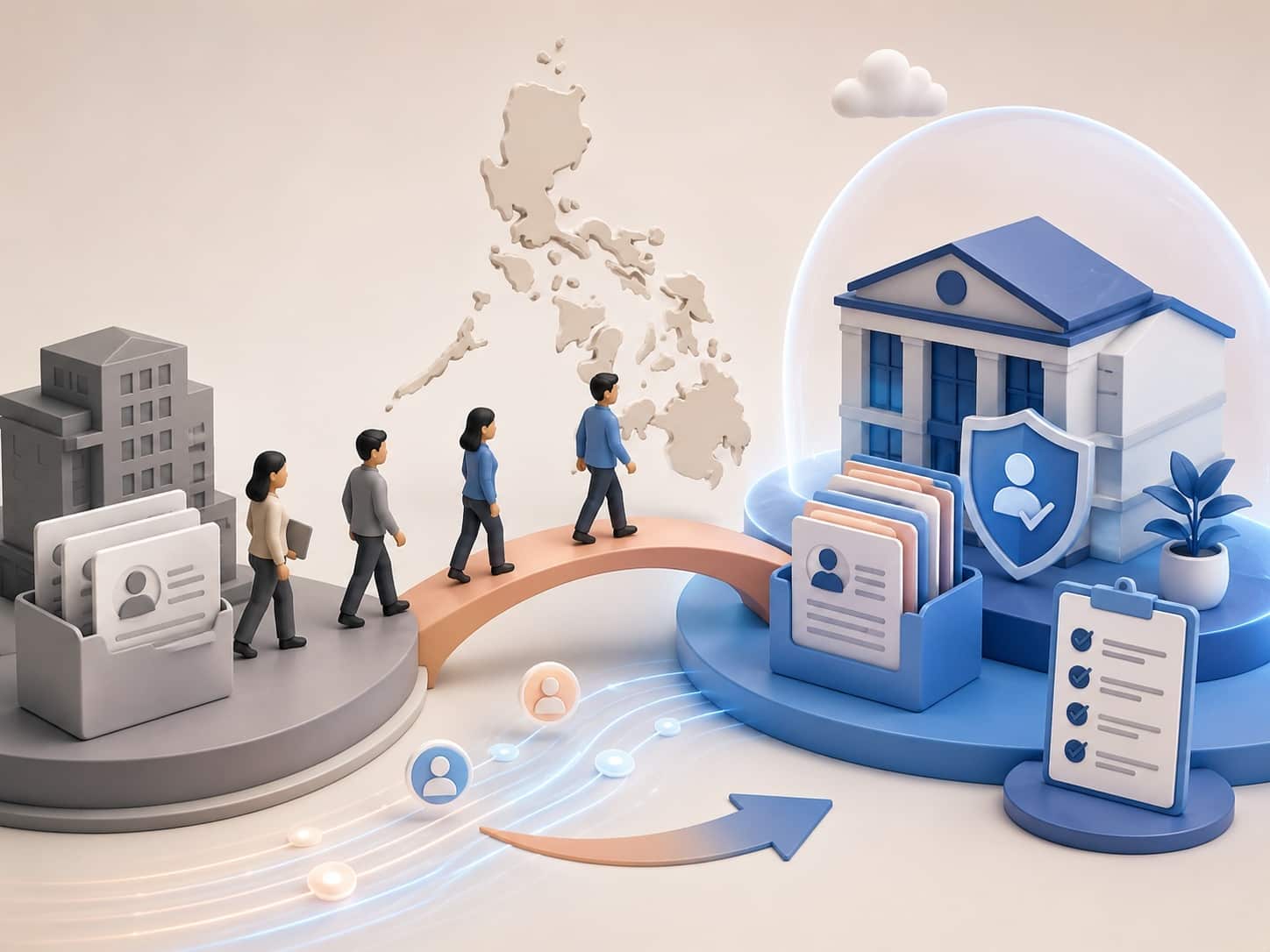
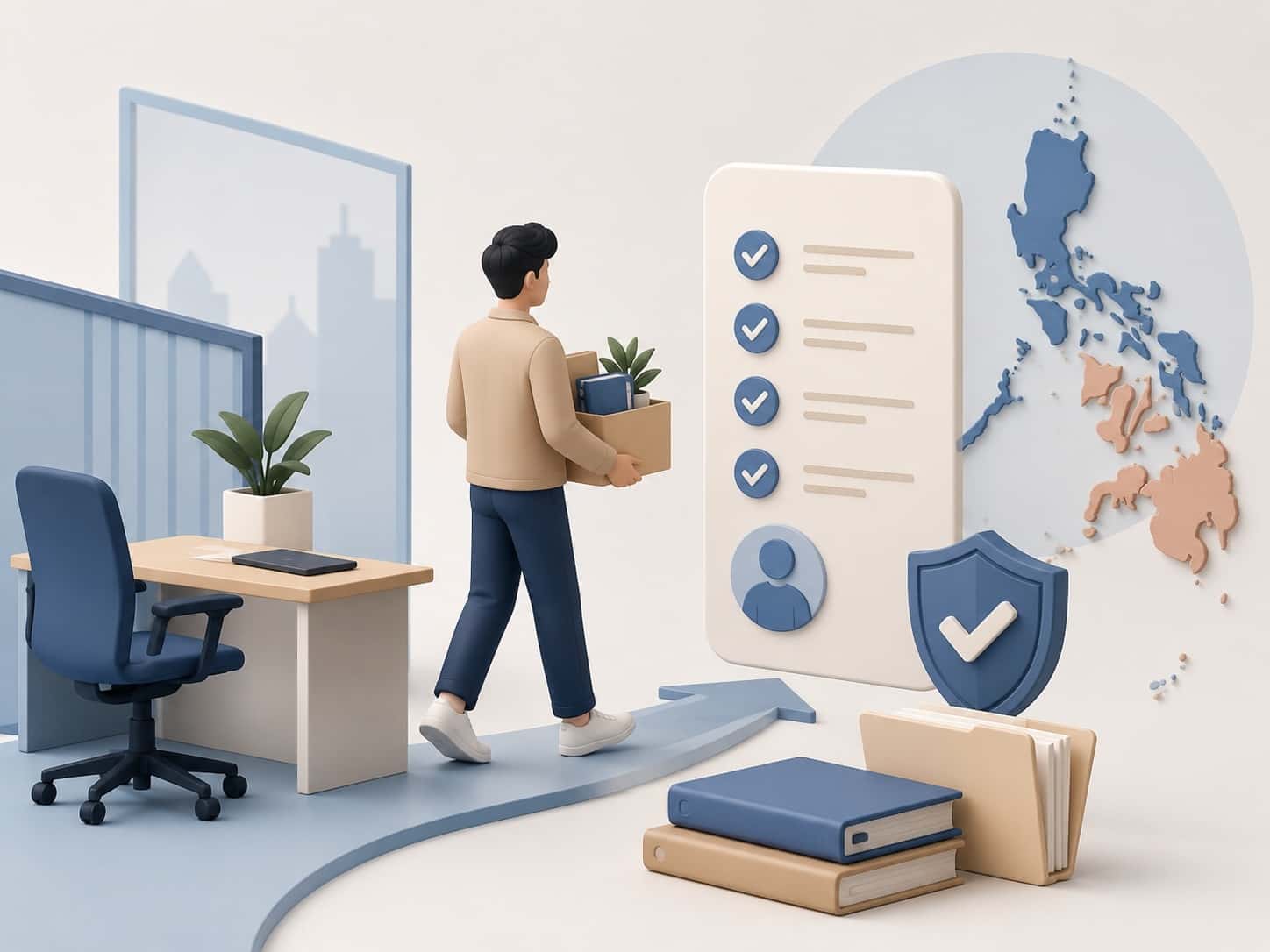
A Philippines Employer of Record helps US startups move Filipino contractors into local employment without opening a Philippine entity. The EOR becomes the local legal employer, handles payroll and employment administration, and your US startup keeps managing the day-to-day work.
Planning a wider contractor conversion? Start here:
Convert Contractors to Employees Philippines
TL;DR: How can US startups convert Filipino contractors to employees via EOR?
US startups can convert Filipino contractors to employees by identifying which contractors already work like employees, choosing a Philippines EOR, converting contractor pay into an employment package, moving workers onto payroll, setting up benefits and 13th month treatment, and keeping a clear proof pack.
The practical process is:
- Audit your Filipino contractor base by role, hours, tenure, control, system access, and business value.
- Prioritise high-risk, high-value contractors who are full-time, long-term, embedded, and core to operations.
- Choose a Philippines EOR pathway if you do not want to open a Philippine entity.
- Convert contractor pay into an employment package covering salary, benefits, HMO, leave, 13th month, and statutory contributions.
- Plan payroll transition from invoices or retainers to employee payroll.
- Communicate clearly so contractors understand what changes and what stays the same.
- Run first payroll and post-conversion checks.
- Keep a conversion proof pack for finance, HR, legal, investors, auditors, and future due diligence.
For US startups preparing for fundraising, enterprise sales, audit, or acquisition, EOR creates a cleaner offshore employment story than long-term contractors on invoices.
Who this guide is for
This guide is for:
- US startup founders
- CFOs and finance leaders
- COOs and operations leaders
- People and HR teams
- General Counsel or legal teams
- startups with Filipino contractors, VAs, support staff, developers, finance assistants, marketers, or data workers
- companies that want local Philippines employment without setting up a Philippine entity
It is especially useful if you are asking:
- How do US startups convert Filipino contractors to employees via a Philippines EOR?
- How do I convert Filipino contractors into employees?
- How do I move Filipino freelancers onto payroll?
- What is contractor misclassification risk in the Philippines?
- Can a Philippines EOR help clean up offshore contractor risk before fundraising or diligence?
Why US startups start with Filipino contractors
Most startups do not begin with a formal global employment structure.
They start with practical hiring needs:
- one Filipino VA
- a freelance customer support person
- a part-time finance assistant
- a developer or data contractor
- a marketing or creative contractor
- an operations assistant
Over time, the arrangement grows.
What started as flexible contractor support can become a semi-permanent offshore team.
Common patterns include:
- contractors working 30 to 40+ hours per week
- long-term engagements of 12 to 36+ months
- contractors working only or mainly for the startup
- access to Slack, email, CRM, finance tools, codebases, customer data, or internal systems
- recurring manager check-ins, KPIs, and performance expectations
- informal promises to “make it official later”
That is when the structure needs review.
What is contractor misclassification risk in the Philippines?
Contractor misclassification risk is the risk that someone labelled as a freelancer or contractor is treated like an employee in practice.
This risk increases when a contractor:
- works fixed hours
- works full-time or close to full-time
- works mainly or only for your startup
- performs core recurring work
- uses company tools and systems
- reports to company managers
- attends recurring internal meetings
- follows KPIs or performance reviews
- receives fixed monthly pay
- has worked with you for many months or years
- cannot send a substitute
- depends on your startup for most of their income
For US startups, the issue is not only local classification. It is also how the arrangement looks during fundraising, audit, enterprise customer review, board reporting, or acquisition diligence.
A long-term Filipino “contractor” who works like a full-time employee can become hard to explain.
Why misclassification risk matters to US startups
For startups, contractor risk is rarely just a legal technicality.
It affects:
- investor confidence
- board-level risk reporting
- audit trail quality
- enterprise customer trust
- M&A readiness
- IP and confidentiality posture
- data security controls
- HR consistency across countries
- offshore team retention
- ability to scale cleanly
If your US employees are formally employed but your Philippines team is doing similar long-term work as “freelancers,” the offshore structure can look inconsistent.
A Philippines EOR gives you a clearer explanation:
Our Filipino team members are employed locally in the Philippines through an Employer of Record, with payroll, payslips, statutory contributions, benefits administration, employment records, and local HR support.
How a Philippines EOR works for US startups
A Philippines Employer of Record acts as the local employer for your Filipino workers.
There are three parties:
| Party | Role |
| US startup | Manages the work, tools, priorities, KPIs, team structure, and performance expectations |
| Philippines EOR | Acts as local legal employer, issues employment documents, runs payroll, and handles local HR administration |
| Filipino employee | Works for your US startup while being employed locally in the Philippines |
The EOR typically handles:
- employment contracts
- onboarding documents
- payroll
- payslips
- statutory contribution administration
- 13th month treatment
- benefits or HMO coordination
- HR records
- basic employment support
- offboarding administration
Your startup continues managing:
- day-to-day work
- product, client, or operational priorities
- tools and systems
- reporting lines
- performance standards
- career expectations
This creates local employment without requiring your company to open a Philippine entity.
Who should US startups convert first?
Start with a contractor audit.
For each Filipino contractor, capture:
- role
- function
- manager
- hours per week
- tenure
- current pay
- contract type
- whether they work only for you
- tools and system access
- customer, finance, code, or data access
- business criticality
- current benefits, if any
Then rate each person on two axes:
- Misclassification risk — how employee-like the relationship is.
- Business value — how important the role is to operations, customers, revenue, delivery, product, or compliance.
Prioritise:
- high-risk, high-value contractors
- high-risk, medium-value contractors
- full-time VAs
- customer support and success staff
- developers with repository or production access
- finance and accounting workers
- data or AI operations staff
- contractors handling sensitive client, customer, code, finance, or business data
For the matrix tool, use:
Contractor-to-Employee Conversion Matrix
Contractor-to-employee conversion checklist for US startups
Use this checklist before moving Filipino contractors under a Philippines EOR.
- List all Filipino contractors and freelancers.
- Identify who works full-time or close to full-time.
- Confirm who works mainly or only for your startup.
- Review roles, tenure, pay, manager control, and system access.
- Prioritise high-risk, high-value workers.
- Choose the employment pathway: EOR or Philippine entity.
- Confirm job title, salary, schedule, manager, and role scope.
- Define benefits, HMO, leave, and 13th month treatment.
- Prepare employment documents, confidentiality terms, and IP terms.
- Set the final contractor invoice date.
- Set the first payroll date.
- Move the worker onto payroll.
- Check payslip accuracy and benefits setup.
- Keep a conversion proof pack.
For the full step-by-step process, read:
Convert Contractors to Employees Philippines
How do you move Filipino freelancers onto payroll?
Moving Filipino freelancers onto payroll is a payroll, benefits, documentation, and communication transition.
Before the first payroll cycle, confirm:
- final freelancer invoice date
- first EOR payroll date
- payroll cut-off period
- salary package
- gross-to-net impact
- payroll frequency
- bank details
- tax or government information
- SSS, PhilHealth, and Pag-IBIG setup
- benefits or HMO eligibility
- 13th month treatment
- leave entitlement
- payslip access
- payroll approval process
- worker communication plan
- payroll support contact
For US startups, also confirm:
- billing currency
- FX assumptions
- EOR invoice process
- cost-centre allocation
- tax-accounting treatment with your own advisers
- board or finance reporting format
The goal is to avoid a gap between the last contractor invoice and the first payroll cycle.
Compare current contractor spend with the estimated monthly, annual and first-year cost of compliant employment with our employment cost calculator.
Designing a US-startup-friendly employment package
Before speaking to contractors, design a clear employment package.
Confirm:
- job title
- role scope
- salary
- work schedule
- US time zone overlap
- manager
- payroll frequency
- leave entitlement
- statutory contributions
- 13th month treatment
- HMO or benefits, if offered
- internet or WFH allowance, if offered
- night shift or schedule allowance, if applicable
- probation or regularisation terms
- payroll start date
Typical structures include:
- salary set in PHP, with EOR invoicing in USD
- salary pegged to a USD-equivalent band but paid locally in PHP
- benefits and allowances adjusted by role, seniority, schedule, and market expectations
A good EOR partner should help benchmark roles against the Philippines market so you do not confuse contractor rates with employee compensation.
Benefits, HMO, and 13th month after conversion
Once a Filipino contractor becomes an employee, the employment package should clearly explain:
- base salary
- payroll frequency
- statutory contributions
- 13th month treatment
- paid leave
- HMO or health benefits, if offered
- dependent coverage, if offered
- internet or WFH allowance, if applicable
- night shift or time zone allowance, if applicable
- tax or withholding treatment
- payslip format
- certificate of employment process
- final pay process if employment ends
This is often the most sensitive part of conversion.
Contractors may focus on net pay. Finance may focus on total cost. Legal may focus on risk. People teams may focus on fairness and retention.
A clear written package helps all sides understand the change.
For pay messaging, use:
FAQ: Will My Take-Home Pay Change?
IP, confidentiality, and data considerations
US startups often convert contractors to EOR because offshore workers have access to valuable or sensitive systems.
Review whether Filipino contractors access:
- codebases
- product roadmaps
- customer records
- CRM data
- finance systems
- analytics tools
- AI datasets
- support platforms
- internal documentation
- personal data
- proprietary workflows
EOR employment can support cleaner employment documentation, but your documents and workflows should still address:
- IP assignment
- confidentiality
- acceptable use
- data handling
- device and access policies
- offboarding and access removal
- use of AI tools
- client or customer data restrictions
EOR is not a substitute for strong security governance. It is a cleaner employment structure that makes governance easier to enforce.
30/60/90 conversion plan for US startups
Use a staged plan instead of trying to convert every contractor at once.
| Timeline | Focus | What to do |
| Days 0–30 | Audit and align | Build contractor roster, score risk, align Legal, Finance, People, and managers, choose EOR partner |
| Days 31–60 | Design and communicate | Confirm salary, benefits, 13th month, payroll dates, documents, communication pack, and pilot group |
| Days 61–90 | Convert and validate | Sign documents, move workers onto payroll, check payslips, confirm benefits, track issues, store proof pack |
By day 90, leadership should know:
- who was converted
- actual cost per converted employee
- whether payroll ran cleanly
- whether employees understood the change
- whether Legal and Finance are more comfortable with the structure
- whether the model should expand to the next wave
Run a 5–10 person EOR pilot first
US startups do not need to convert every Filipino contractor immediately.
A 5–10 person pilot is often the cleanest first move.
Choose contractors who are:
- high-risk and high-value
- full-time or near full-time
- long-tenured
- core to delivery
- working only or mainly for you
- handling sensitive systems or data
- important to customer, product, or operational continuity
Track:
| Area | What to measure |
| Risk | Number of high-risk contractor roles converted |
| Finance | All-in cost per employee vs old contractor cost |
| Payroll | First payroll accuracy and timing |
| People | Acceptance rate, questions, concerns, satisfaction |
| Operations | Manager feedback, handover quality, continuity |
| Diligence | Cleaner documentation and proof pack completeness |
If the pilot improves risk posture, predictability, and employee experience, expand to the next wave.
Common US startup use cases
Customer support team
A US SaaS company has Filipino support contractors working fixed shifts, using the helpdesk, joining stand-ups, and handling customer tickets.
EOR path: convert core support contractors to EOR employees, document shifts, payroll, benefits, access controls, and customer-data handling.
Virtual assistants and operations staff
A founder has two long-term Filipino VAs running inboxes, scheduling, admin workflows, customer ops, and vendor coordination.
EOR path: convert long-term VAs into EOR employees with clear job titles, salary, benefits, payroll records, and HR support.
Developers and technical staff
A startup uses Filipino developers who join sprint rituals, access repositories, review code, and support product delivery.
EOR path: move core developers into EOR employment with IP terms, confidentiality terms, payroll, benefits, and access-control documentation.
Finance and bookkeeping support
A US startup uses Filipino finance contractors for AP, AR, bookkeeping, reconciliation, payroll support, or reporting.
EOR path: prioritise workers with sensitive finance access, add stronger employment documentation, payroll proof, confidentiality terms, and access controls.
What changes and what stays the same?
A good EOR conversion should feel like an employment-structure upgrade, not an operational disruption.
| Area | What usually happens |
| Work | Usually stays the same |
| Manager | Usually stays the same |
| Team | Usually stays the same |
| Tools | Usually stay the same |
| Legal employer | Changes to the Philippines EOR |
| Pay method | Changes from invoice to payroll |
| Payslips | Added |
| Benefits | Added or clarified |
| 13th month | Added or structured |
| Statutory contributions | Handled through payroll |
| HR support | Clearer local support |
The clearest message to workers is:
Same work. Same team. Clearer employment status.
Use the communication guide:
Communication Pack: How to Explain an EOR Transition
What should be in a conversion proof pack?
For each converted worker, keep:
- contractor risk review
- old contractor agreement
- final invoice or payment record
- new employment agreement
- confidentiality and IP terms
- salary and benefits summary
- payroll start date
- first payslip
- statutory setup confirmation
- 13th month treatment
- HMO or benefits confirmation
- worker acknowledgement
- internal approval record
- first payroll issue log
For US startups, this proof pack is especially useful for:
- board reporting
- investor diligence
- enterprise customer reviews
- M&A preparation
- HR documentation
- finance controls
- legal risk tracking
How Smart Outsourcing Solution helps
Smart Outsourcing Solution helps US startups convert Filipino contractors into local employees through a Philippines EOR.
SOS supports:
- contractor risk reviews
- conversion matrix planning
- EOR employment setup
- payroll transition
- benefits and HMO coordination
- 13th month treatment
- statutory contribution administration
- employment documentation
- worker communication support
- proof pack preparation
- local Philippines HR support
For US startups, SOS provides a practical route from “contractors on invoices” to a cleaner EOR-backed employment model.
Start with the full guide:
Convert Contractors to Employees Philippines
Final takeaway
US startups can move quickly with Filipino contractors, but the structure needs to mature as the team becomes core to the business.
If contractors work full-time hours, use your systems, report to your managers, handle sensitive data, and work mainly for your startup, the freelancer label may no longer fit the reality.
A Philippines EOR gives startups a practical way to reduce contractor risk without opening a local entity.
The best path is simple:
audit the team, prioritise high-risk roles, design employment packages, move workers onto payroll, explain the change clearly, and keep a conversion proof pack.
Next step:
Read the full guide: Convert Contractors to Employees Philippines
Or speak with Smart Outsourcing Solution about moving Filipino contractors under a Philippines EOR.
FAQs
How can US startups convert Filipino contractors to employees via a Philippines EOR?
US startups can convert Filipino contractors by auditing who works like an employee, choosing a Philippines EOR, defining employment packages, setting final invoice and first payroll dates, moving workers onto payroll, setting up benefits and statutory contributions, and keeping a conversion proof pack.
What is contractor misclassification risk in the Philippines?
Contractor misclassification risk is the risk that someone labelled as a freelancer or contractor is treated like an employee in practice. It increases when the person works fixed hours, performs core work, uses company systems, reports to managers, and works mainly for one company.
How does a Philippines EOR help US startups?
A Philippines EOR becomes the local legal employer, issues employment documents, runs payroll, provides payslips, handles statutory contributions, supports benefits and 13th month treatment, and keeps HR records while the US startup manages daily work.
How do I move Filipino freelancers onto payroll?
Confirm the final freelancer invoice date, first payroll date, salary package, payroll frequency, bank details, government information, SSS, PhilHealth, Pag-IBIG setup, benefits, 13th month treatment, payslip access, and payroll approval process.
Do US startups need a Philippine entity to employ Filipino workers?
Not always. A Philippines EOR allows US startups to employ Filipino workers locally without setting up their own Philippine entity.
What happens to benefits and 13th month after conversion?
Benefits, HMO, leave, statutory contributions, and 13th month treatment should be explained in the employment package before conversion. The EOR should confirm how payroll, deductions, and benefits will work.
Which contractors should US startups convert first?
Convert high-risk, high-value contractors first. These are usually full-time, long-tenured, core workers who use company systems, report to managers, handle sensitive data, and work mainly for one company.
Can some Filipino contractors stay as contractors?
Yes. Genuine project-based, short-term, independent contractors may stay contractors. Conversion is most important for long-term, full-time, core, controlled, or economically dependent roles.
Is EOR more expensive than contractors?
EOR may cost more upfront because it includes employment administration, payroll, statutory handling, benefits, and EOR fees. For long-term roles, it can be better value because it reduces risk, improves retention, and creates stronger documentation.
What should be included in a conversion proof pack?
Include the risk review, old contractor agreement, final invoice, new employment agreement, salary and benefits summary, payroll start date, first payslip, statutory setup confirmation, 13th month treatment, benefits confirmation, worker acknowledgement, and internal approval record.
Related Resources:
- Convert Contractors to Employees Philippines
- Contractor vs Employee in the Philippines
- Contractor-to-Employee Conversion Matrix
- Are Your Filipino Freelancers Actually Employees?
- FAQ: Will My Take-Home Pay Change?
- Communication Pack: How to Explain an EOR Transition
- Email Script Pack: Announcing EOR Employment
- Australian Companies: Move Filipino Contractors to Employees
- UK & EU Scaleups: Reduce Misclassification Risk
- Employer of Record Philippines