Author: Martin English
Published: June 8, 2026
TL;DR: Should you use a local Philippines EOR or a global EOR?
Use a local Philippines EOR if your workforce is mainly or only in the Philippines and you want stronger local payroll support, clearer statutory documentation, faster employee coordination, and a provider focused on Philippine employment administration.
Use a global EOR if you are hiring across several countries and need one platform or provider to manage multi-country employment, payroll, compliance, and reporting.
Neither model is automatically better. The right choice depends on your hiring footprint, support needs, cost expectations, employee experience, and how much local proof you need for payroll, benefits, SSS, PhilHealth, Pag-IBIG, BIR, and 13th month pay.
If you already have employees under a global provider and are considering a move, see Switching EOR Providers in the Philippines in 30 Days.
Quick answer: which EOR model is better for hiring in the Philippines?
A local Philippines EOR is usually better when your team is Philippines-heavy and your main priorities are local payroll accuracy, employee support, statutory contribution handling, benefits coordination, cost clarity, and practical compliance documentation.
A global EOR is usually better when your workforce is spread across multiple countries and you need one provider for broad international employment coverage.
The safest decision is to compare the full operating model, not only the headline monthly fee. Look at payroll support, statutory proof, employee experience, benefits continuity, FX, admin costs, data access, and the provider’s ability to handle Philippines-specific issues quickly.
Who is this guide for?
This guide is for companies comparing whether to use a local Philippines EOR or a global EOR provider for Filipino employees.
It is especially relevant for:
- Australian, UK, US, Singapore, or global companies hiring in the Philippines
- companies with a Philippines-heavy offshore team
- businesses currently using a global EOR and reviewing local alternatives
- finance teams comparing total employment cost
- HR teams needing stronger local employee support
- founders deciding whether to use EOR, BPO, contractors, or an entity
- companies that need clear statutory proof and payroll documentation
If your team is still spread across many countries, a global EOR may be the better fit. If your team is concentrated in the Philippines, a local EOR comparison is worth doing.
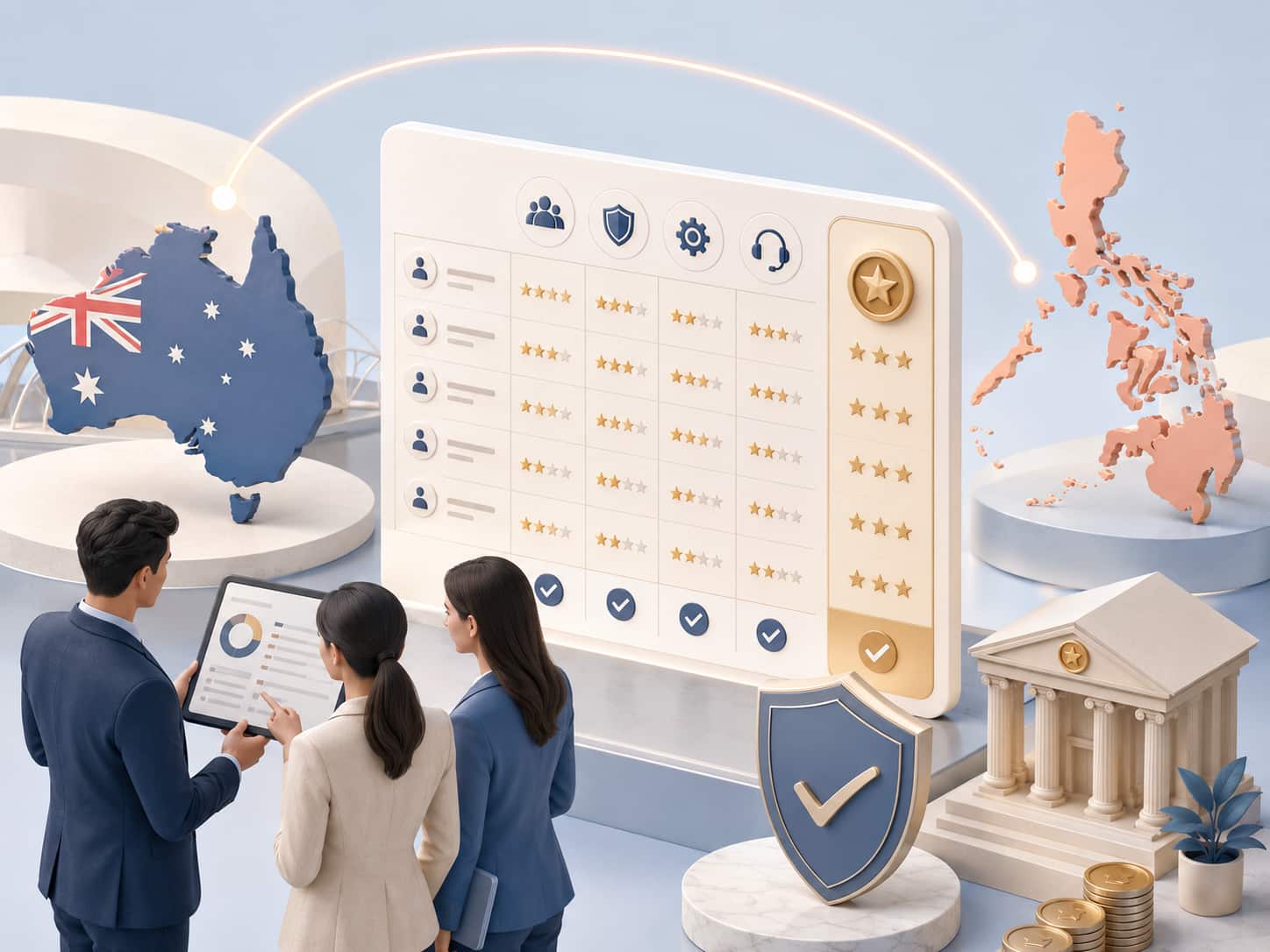
Local Philippines EOR vs global EOR: side-by-side comparison
A local Philippines EOR focuses on Philippine employment administration. A global EOR focuses on multi-country coverage.
| Comparison area | Local Philippines EOR | Global EOR provider |
| Best fit | Companies hiring mainly or only in the Philippines | Companies hiring across several countries |
| Main strength | Local payroll, HR support, statutory handling, and employee coordination | Broad international coverage and centralised workflows |
| Support model | Local account management and Philippines-specific support | Platform-led, regional, or global support model |
| Cost model | Often simpler for Philippines-only teams | Often varies by country, plan, and service scope |
| Employee experience | More localised support for Filipino employees | Standardised global process |
| Statutory proof | Easier to request local payroll and contribution records | May require global support or ticket escalation |
| Payroll handling | Focused on Philippine payroll cycles and requirements | Designed for multi-country payroll administration |
| Best question to ask | “Do we need stronger local execution?” | “Do we need broad global coverage?” |
The right choice is not about local versus global as a slogan. It is about whether the provider model fits your actual workforce.
When is a local Philippines EOR the better choice?
A local Philippines EOR may be the better choice when your hiring needs are concentrated in the Philippines.
This is often the case if:
- most or all of your employees are in the Philippines
- you want direct support for payroll and HR questions
- employees need help with payslips, benefits, tax forms, or government contributions
- you need clear documentation for SSS, PhilHealth, Pag-IBIG, BIR, and 13th month pay
- you want a simpler local cost model
- you do not need broad global platform add-ons
- you are scaling a long-term offshore team
- you want provider-to-provider migration support
- you need local account management rather than generic ticketing
A local EOR is usually strongest when the problem is local execution: payroll accuracy, employee communication, statutory records, benefits coordination, and Philippine employment administration.
When is a global EOR the better choice?
A global EOR may be the better choice when your company needs one provider across several countries.
This is often the case if:
- your workforce is spread across many jurisdictions
- you want one global employment platform
- you need standardised multi-country reporting
- you hire small teams in several markets
- your HR team prefers one provider relationship
- you need global contractor, payroll, or workforce tools
- the current provider is accurate, responsive, and cost-transparent
- switching would create more disruption than benefit
A global EOR is not automatically a poor fit for the Philippines. It may still be the right choice if your company values global consolidation more than local specialisation.
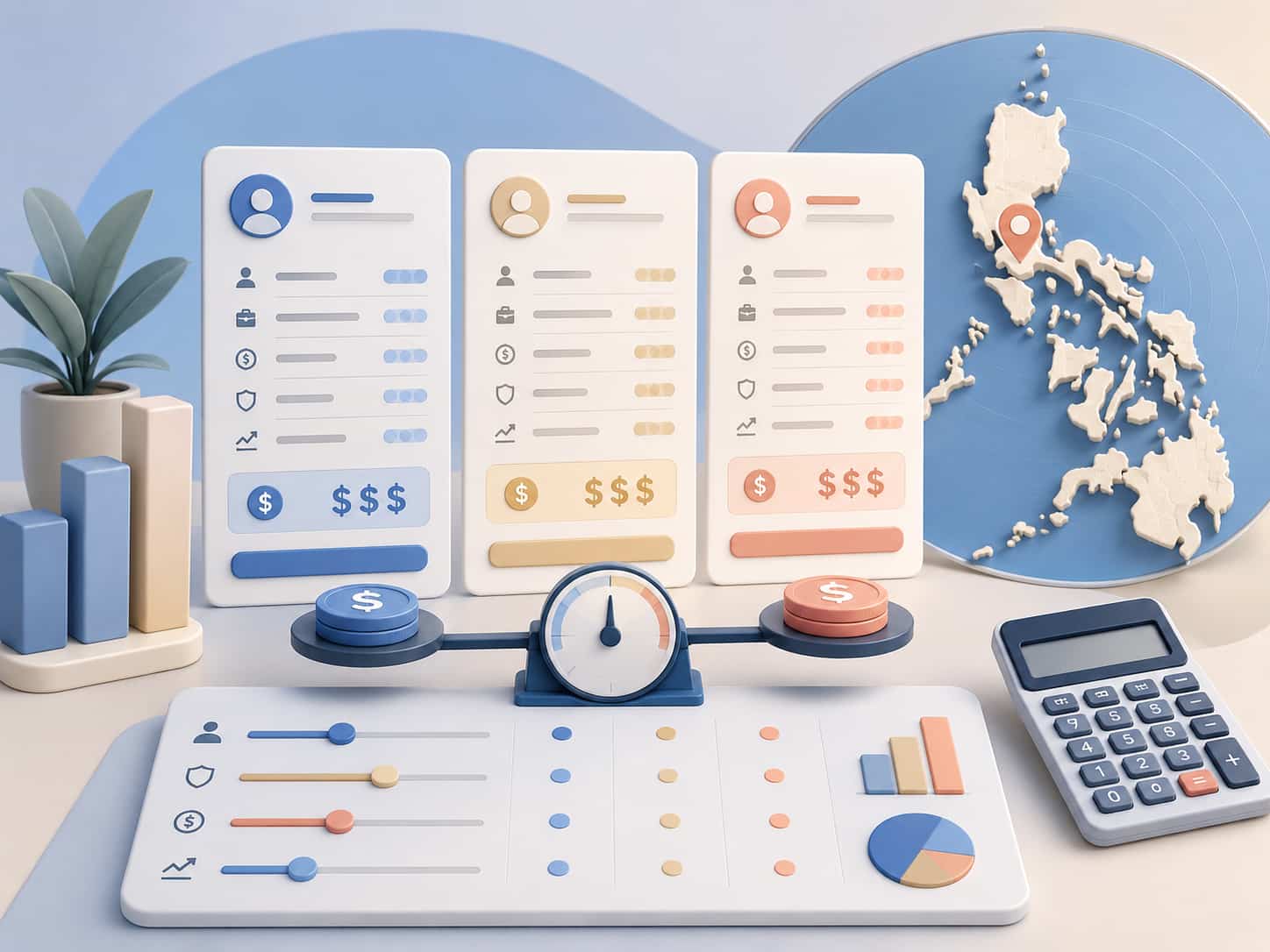
Cost comparison: local Philippines EOR vs global EOR
Cost should be compared line by line, not by headline fee alone.
A global EOR may include broader infrastructure, platform access, international support, multi-country compliance, or extra workflow tools. A local Philippines EOR may offer a simpler model because it focuses on one country.
For a deeper pricing breakdown, see EOR Pricing in the Philippines.
| Cost item | What to compare |
| EOR admin fee | Monthly fee per employee, inclusions, billing currency, and service scope |
| Employee salary | Salary in PHP and billing currency |
| Employer statutory contributions | SSS, PhilHealth, Pag-IBIG, and other employer-side costs |
| 13th month accrual | Whether it is accrued monthly, billed separately, or included in estimates |
| HMO and benefits | Coverage, dependants, waiting periods, and claims support |
| FX and billing currency | Conversion rates, spread, timing, and invoice predictability |
| Platform add-ons | HRIS, contractor tools, equipment, reporting, or premium support |
| Transition costs | Onboarding, offboarding, final pay, contract setup, or payroll correction fees |
| Proof documents | Payslips, payroll registers, statutory contribution summaries, and tax records |
For Philippines-heavy teams, the better-value provider is often the one that gives clearer cost visibility, faster support, and stronger statutory proof — not necessarily the lowest monthly fee.
Salary is only one part of the employment budget. Estimate salary, statutory costs, 13th-month pay, benefits and EOR fees with our EOR cost calculator.
Support comparison: local help vs global ticketing
Support is one of the biggest differences between local and global EOR models.
A global EOR may route questions through a platform, regional team, or ticketing workflow. That can work well for standard requests. But it may feel slow when the issue is urgent, local, or employee-specific.
A local Philippines EOR can often provide more direct support for:
- payroll cut-off questions
- payslip issues
- statutory contribution concerns
- HMO and benefits questions
- leave balance checks
- employee documentation
- final pay coordination
- 13th month pay clarification
- local HR support
This matters because EOR support affects employee trust. If employees do not know who to contact, or if payroll questions take too long to resolve, the employment setup can feel unstable.
Compliance and statutory proof comparison
In the Philippines, employment compliance is not only about having a contract. Companies also need practical evidence that payroll and statutory obligations are being handled correctly.
A strong EOR should be able to provide:
- signed employment documents
- payroll registers
- payslips
- SSS contribution records
- PhilHealth contribution records
- Pag-IBIG contribution records
- BIR withholding documentation status
- 13th month pay records
- benefits enrolment confirmation
- leave balance records
- issue logs during migration or payroll correction
Global providers may be able to provide these documents, but the request may go through broader support channels. A local EOR should be able to explain and produce Philippines-specific proof more directly.
Employee experience comparison
From the employee’s point of view, the provider matters most when something goes wrong.
Employees care about:
- being paid on time
- understanding payslips
- knowing who to contact
- having benefits explained clearly
- seeing government contributions handled properly
- getting leave and reimbursement questions answered
- receiving clear employment documents
- having confidence during onboarding or provider switches
A local Philippines EOR may create a better employee experience when most questions are local. A global EOR may still work well if the support process is responsive and the employee experience is clear.
Provider-switching comparison
If you are moving employees from one EOR to another, provider-switching experience matters.
Ask whether the provider can help with:
- reviewing notice periods
- planning payroll cutover
- coordinating final pay
- confirming 13th month treatment
- protecting benefits continuity
- preparing employee communications
- issuing new employment documents
- transferring payroll data
- validating first payroll
- preparing a post-switch proof pack
For a broader market view, see Employer of Record Providers in the Philippines.
Decision checklist: local Philippines EOR or global EOR?
Use this checklist to decide which model fits your team.
| Question | If yes, this points towards |
| Are most employees in the Philippines? | Local Philippines EOR |
| Are employees spread across many countries? | Global EOR |
| Do you need one platform for global HR and payroll? | Global EOR |
| Do you need faster local payroll support? | Local Philippines EOR |
| Do you need clear Philippine statutory proof? | Local Philippines EOR |
| Do you use global contractor, HRIS, or reporting tools heavily? | Global EOR |
| Are EOR costs hard to explain for a Philippines team? | Local Philippines EOR |
| Is your current global provider working well? | Stay with global EOR |
| Are payroll or support issues recurring? | Review local EOR options |
| Would switching disrupt employees more than it helps? | Stay or delay switch |
A provider switch is most justified when the issue is repeated, material, and affects payroll confidence, employee trust, compliance visibility, or management time.
Questions to ask before choosing an EOR model
Before choosing between a local Philippines EOR and a global EOR, ask:
- Where are most of our employees based?
- Do we need global coverage or local execution?
- What is included in the monthly EOR fee?
- Can the provider show a line-by-line cost model?
- Who handles employee payroll questions?
- How are SSS, PhilHealth, Pag-IBIG, BIR, and 13th month pay handled?
- What proof documents are included?
- How fast are payroll issues resolved?
- What happens during offboarding or provider switching?
- Can the provider support a clean payroll cutover?
These questions help compare actual operating fit, not just pricing.
Why Smart Outsourcing Solution for a local Philippines EOR?
Smart Outsourcing Solution is a Philippines-first EOR and outsourcing partner for companies that want local employment support without setting up a Philippine entity.
For Philippines-heavy teams, SOS can support:
- local Philippine employment administration
- compliant employment contracts
- payroll processing and payslips
- SSS, PhilHealth, and Pag-IBIG handling
- BIR withholding support
- 13th month pay administration
- employee communication
- benefits coordination
- provider-to-provider migration support
- dedicated local account management
- clear Philippines EOR pricing
SOS is best suited for companies that want Philippines-specific employment administration, payroll support, statutory documentation, and employee coordination rather than a broad global EOR platform replacement.
To compare the local employment model, see Employer of Record Services in the Philippines.
Related resources
- Cheapest EOR Provider in the Philippines
- Contractor vs Employee in the Philippines
- Convert Contractors to Employees Philippines
- Employer of Record vs BPO Philippines
FAQs
Is a local Philippines EOR better than a global EOR?
A local Philippines EOR is usually better if most of your employees are in the Philippines and you need stronger local payroll support, statutory proof, and employee coordination. A global EOR is usually better if you are hiring across several countries and need one provider or platform.
When should I use a global EOR provider?
Use a global EOR provider when your workforce is spread across several countries, your HR team wants one global system, and your current provider offers accurate payroll, responsive support, and clear pricing.
When should I use a local Philippines EOR?
Use a local Philippines EOR when your workforce is Philippines-heavy and your main needs are local payroll accuracy, benefits support, statutory contribution handling, employee communication, and practical compliance documentation.
Is a local EOR cheaper than a global EOR?
Not always. A local EOR may be more cost-effective for Philippines-heavy teams because the service model is focused on one country. But the better comparison is total cost, support quality, statutory proof, and employee experience.
What should I compare before switching from a global EOR to a local EOR?
Compare the current contract, notice period, payroll calendar, 13th month accrual, benefits continuity, statutory records, employee data handover, costs, support process, and first payroll validation.
Can employees move from a global EOR to a local Philippines EOR without disruption?
Yes, if the switch is planned properly. The key is to align payroll dates, communicate clearly with employees, issue new employment documents, protect benefits continuity, and validate the first payroll.
What proof should a Philippines EOR provide?
A Philippines EOR should be able to provide signed employment documents, payslips, payroll registers, statutory contribution summaries, benefits confirmation, tax documentation status, and leave records.
Should I switch EOR providers just to save money?
Not necessarily. Switching only for a lower fee can create risk if payroll, support, compliance proof, or employee experience suffers. Switch when the new provider offers better overall value and a safer operating model.
Final takeaway
A local Philippines EOR and a global EOR solve different problems.
A global EOR is often the better choice when you need broad international coverage and one provider across several countries. A local Philippines EOR is often the better choice when your workforce is concentrated in the Philippines and you need stronger local payroll support, clearer statutory proof, better employee coordination, and a simpler cost model.
The best EOR is not the biggest provider or the cheapest provider. It is the provider that fits how your team actually operates.
Ready to compare local and global EOR options?
Hiring mainly in the Philippines or reviewing a global EOR setup? Contact Smart Outsourcing Solution to compare your current provider model, payroll support, statutory proof, and Philippines EOR options before making a decision.