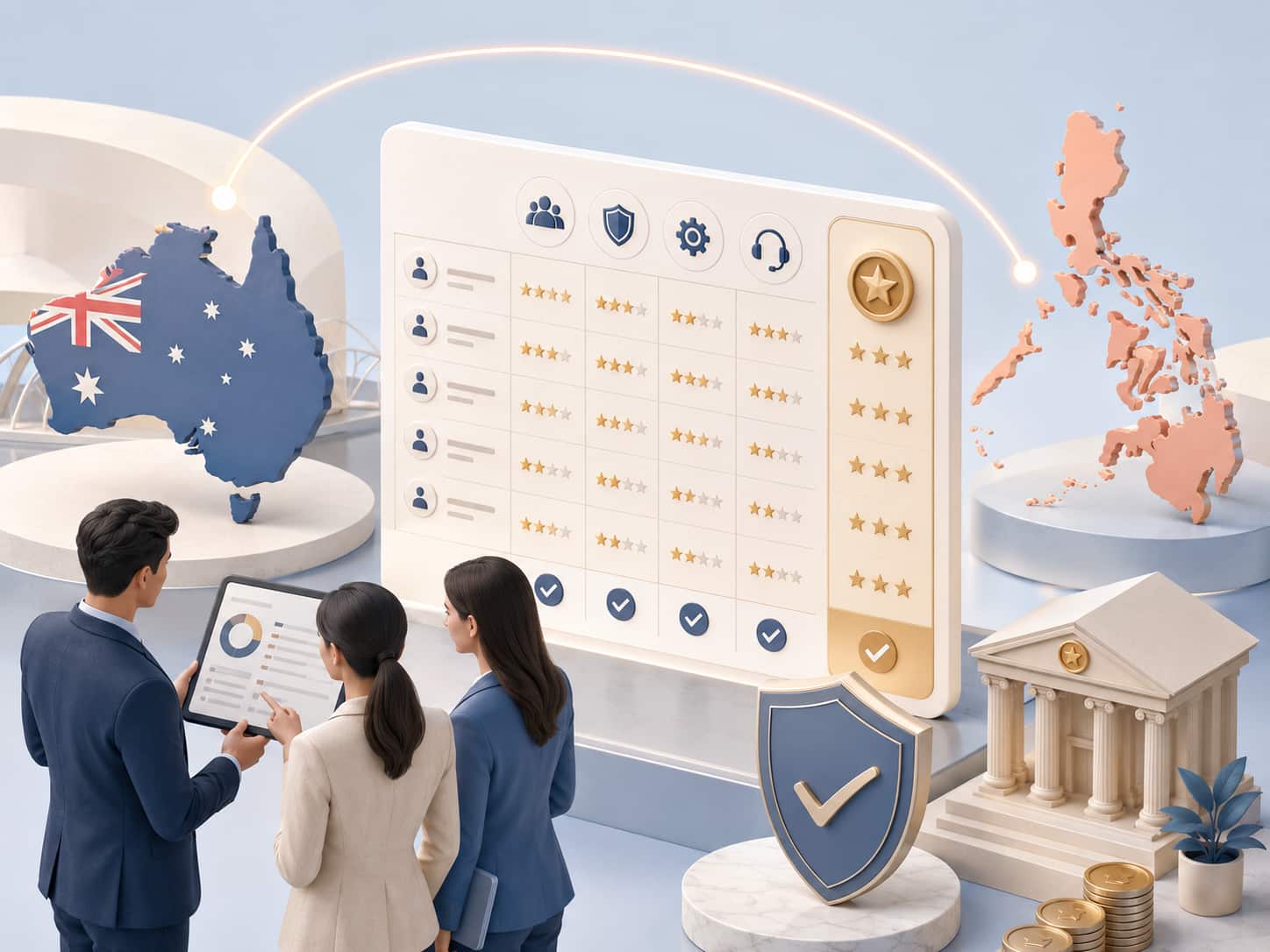
How to Move Marketing & Creative Freelancers to an Employer of Record (EOR) in the Philippines
Author: Martin English — CEO & Founding Partner
Published: November 26, 2025
Last Updated: June 1, 2026
TL;DR
If your Philippines-based marketing freelancers or contractors now operate like embedded team members, it may be time to move them onto a compliant Employer of Record (EOR) structure in the Philippines.
This usually applies when freelancers:
- Work with you continuously for 6–12+ months
- Join internal marketing meetings and campaign planning
- Work primarily or exclusively for your business
- Access ad accounts, CRM systems, analytics, or customer data
- Own recurring campaign execution or creative operations
- Influence strategy, reporting, or growth performance
At that point, the arrangement may create:
- Contractor misclassification risk
- IP and confidentiality exposure
- Operational instability
- Payroll fragmentation
- Access-control and offboarding risks
- Retention and continuity problems
A Philippines EOR structure helps companies:
- Convert contractors into compliant employees
- Move Filipino freelancers onto payroll
- Provide statutory benefits and 13th month pay
- Improve retention and accountability
- Standardize onboarding and HR processes
- Build stable offshore marketing and creative teams without opening a local entity
Key Takeaway
For most companies, the transition from freelancers to EOR employees happens once offshore marketing becomes an always-on operational function rather than short-term project support.
Who This Guide Is For
This guide is designed for:
- CMOs and growth leaders
- Founders scaling offshore marketing operations
- Agency owners building Philippines-based delivery teams
- Businesses relying on Filipino creatives, VAs, media buyers, or content specialists
- Companies asking:
- “How do I convert Filipino contractors into employees?”
- “How do I move Filipino freelancers onto payroll?”
- “What is contractor misclassification risk in the Philippines?”
- “Can I legally hire Filipino marketers without opening a local entity?”
- “When should freelancers become long-term EOR employees?”
Why Marketing & Creative Teams Often Start With Freelancers
Most companies begin with freelancers because the model is:
- Fast
- Flexible
- Low-risk initially
- Easy to test
Typical progression:
- Hire a freelance designer or copywriter
- Add paid media support or a marketing VA
- Expand into a distributed offshore creative team
- Depend operationally on long-term freelancers
- Realize the business now has an embedded offshore marketing department without formal employment structures
This model works well early on.
Problems begin once freelancers become responsible for:
- Ongoing campaign execution
- Brand consistency
- Customer acquisition
- Marketing operations
- Reporting and analytics
- Revenue-critical systems
At that point, the relationship may no longer resemble a genuinely independent contractor arrangement.
How Do You Know It’s Time to Convert Freelancers Into Employees?
1. Marketing Has Become “Always-On”
Freelancers are often functioning like employees when they continuously handle:
- Paid media management
- SEO and content operations
- Lifecycle email marketing
- Creative production
- Social scheduling
- Funnel optimization
- Campaign reporting
This is operational ownership, not isolated project work.
2. Contractors Behave Like Internal Team Members
Warning signs include:
| Operational Signal | Why It Matters |
| Fixed working hours | Indicates employee-like control |
| Daily Slack/Teams participation | Suggests embedded operations |
| Mandatory meetings | Reflects operational supervision |
| Internal KPIs and reporting lines | Mimics employee management |
| Exclusive or near-exclusive work | Weakens contractor independence |
| Company-issued email/accounts | Creates employee-style integration |
| Long-term recurring work | Suggests ongoing employment relationship |
These are common indicators associated with contractor misclassification risk.
3. Losing Them Would Disrupt Revenue Operations
Your freelancers are likely core employees if losing them would impact:
- Campaign launches
- Lead generation
- CAC/CPA performance
- ROAS optimization
- Content velocity
- Brand consistency
- Reporting continuity
This is especially common in scaling SaaS, ecommerce, agency, and growth-stage companies.
4. They Control Sensitive Systems or Data
Examples include:
- Meta Ads
- Google Ads
- GA4
- HubSpot
- Klaviyo
- CRM systems
- Revenue dashboards
- Figma libraries
- Brand asset repositories
- Customer databases
The deeper the operational access, the more important formal employment frameworks become.
What Is Contractor Misclassification Risk in the Philippines?
Contractor misclassification happens when workers are treated operationally like employees while remaining classified as independent contractors.
This can create compliance and operational risk when companies:
- Control schedules and workflows
- Require daily availability
- Integrate freelancers into core operations
- Maintain long-term exclusive arrangements
- Supervise contractors like permanent staff
Potential risks may include:
- Labour disputes
- Claims for unpaid statutory benefits
- Payroll and tax exposure
- HR and termination complications
- IP ownership disputes
- Confidentiality and access-control issues
Quick Definition
If a contractor works like an employee operationally, regulators and labour authorities may view them as an employee relationship regardless of the contractor label.
Marketing and creative teams are especially exposed because long-term freelancers often become deeply integrated into daily business operations.
Related reading:
Agency vs Freelancer vs EOR in the Philippines
Common Misclassification Scenarios in Marketing Teams
Scenario 1: The “Full-Time Freelancer” Media Buyer
A contractor:
- joins daily meetings,
- manages ad spend continuously,
- works exclusively for one company,
- and follows internal performance targets.
Operationally, this resembles an employee relationship.
Scenario 2: The Embedded Creative Team
A distributed offshore design team:
- works inside internal systems,
- follows company SOPs,
- uses company branding standards,
- and operates indefinitely without project boundaries.
This often functions more like a long-term employment structure.
Scenario 3: The Marketing VA With Administrative Control
A VA handling:
- CRM administration,
- reporting,
- campaign coordination,
- scheduling,
- and internal communications
may create elevated operational and compliance exposure if treated as a contractor long term.
Related reading:
- How to Move Virtual Assistants to an EOR in the Philippines
- EOR Contract Flexibility in the Philippines
Freelancer vs Agency vs EOR Employee: What Changes?
| Area | Freelancer | Agency | EOR Employee |
| Employment relationship | Independent | Vendor relationship | Formal employment |
| Payroll structure | Invoice-based | Agency billing | Local payroll |
| 13th month pay | Usually not included | Not direct | Included |
| Statutory compliance | Varies | Managed by agency | Managed by EOR |
| IP ownership clarity | Often inconsistent | Depends on contract | Stronger employment protections |
| Operational control | Limited | Shared | High |
| Long-term retention | Unstable | Variable | Stronger |
| Team continuity | Fragile | Depends on agency | More predictable |
| Access governance | Often informal | Shared | Structured |
| Career progression | Limited | Limited visibility | Easier to formalize |
Freelancer vs EOR vs Local Entity: Setup Timeline
| Structure | Typical Setup Timeline | Best For |
| Freelancer | Immediate | Short-term or experimental work |
| EOR | Days to weeks | Long-term offshore teams without entity setup |
| Local Philippines Entity | Weeks to months | Large-scale permanent operations |
Key Takeaway
EOR is often used as a bridge between informal contractor relationships and a future local entity structure.
How Do You Move Filipino Freelancers Onto Payroll?
Step 1: Audit Existing Contractors
Map:
- tenure,
- spend,
- hours,
- business dependency,
- systems access,
- campaign ownership,
- and reporting responsibilities.
Identify freelancers who:
- have worked with you 6–12+ months,
- operate close to full-time,
- own recurring deliverables,
- or carry critical operational knowledge.
Step 2: Evaluate EOR Readiness
Assess:
| Area | Questions |
| Operational dependency | Would campaigns break if they left? |
| Compliance exposure | Are they treated like employees already? |
| Payroll predictability | Are monthly invoices already recurring? |
| Retention risk | Are you vulnerable to sudden exits? |
| IP/security | Do they control sensitive assets or accounts? |
Step 3: Build the Employment Structure
Define:
- salary bands,
- role titles,
- reporting lines,
- KPIs,
- onboarding requirements,
- benefits,
- probation expectations,
- and equipment policies.
Benchmark these against current contractor spend.
Step 4: Transition Contractors to Payroll
Under a Philippines EOR model:
- the EOR becomes the legal employer,
- contractors transition onto payroll,
- employment contracts replace contractor agreements,
- and statutory contributions are managed locally.
This usually includes:
- SSS
- PhilHealth
- Pag-IBIG
- 13th month pay
- payroll administration
- HR documentation
The client company still manages:
- performance,
- workflows,
- campaigns,
- priorities,
- approvals,
- and day-to-day operations.
Step 5: Standardize Onboarding and Governance
Once employees are onboarded:
- standardize access management,
- document SOPs,
- centralize passwords and permissions,
- implement onboarding/offboarding workflows,
- improve asset ownership controls,
- and formalize reporting structures.
Typical Onboarding Timeline
| Stage | Typical Timing |
| Role and compensation approval | 1–5 days |
| Employment documentation | 2–7 days |
| Payroll and statutory setup | Several business days |
| Systems onboarding | 1–5 days |
| Full operational transition | Usually within several weeks |
This is one of the biggest operational upgrades companies experience after moving away from fragmented freelancer setups.
Payroll, Benefits, and 13th Month Pay in the Philippines
One major difference between freelancers and EOR employees is structured payroll compliance.
Philippines employment commonly includes:
| Employment Component | Typically Included Under EOR |
| Salary payroll | Yes |
| 13th month pay | Yes |
| SSS contributions | Yes |
| PhilHealth | Yes |
| Pag-IBIG | Yes |
| Employment contract | Yes |
| HR administration | Yes |
| Local payroll compliance | Yes |
Quick Definition
13th month pay is a mandatory Philippines employment benefit typically equivalent to one month of salary paid annually to eligible employees.
Related reading:
Switching EOR Providers in the Philippines
Many companies initially assume EOR employment will dramatically increase costs.
In practice, long-term freelancer setups often already involve:
- recurring invoices,
- retention bonuses,
- operational inefficiency,
- coordination overhead,
- and turnover risk.
A stable payroll structure frequently improves predictability and retention.
Example: When EOR Starts Making Operational Sense
A company spending:
- US$8,000–12,000/month across
- media buyers,
- designers,
- copywriters,
- VAs,
- and freelance coordinators
may discover that consolidating into:
- 3–5 EOR-backed full-time employees
creates:
- better continuity,
- stronger accountability,
- lower turnover,
- improved onboarding,
- and more predictable campaign execution.
The decision is often operational, not just financial.
Governance, Security, and IP Protection
This is one of the most overlooked areas in offshore marketing operations.
Long-term freelancers often control:
- ad accounts,
- analytics,
- creative libraries,
- automation systems,
- reporting dashboards,
- customer data,
- and brand assets.
Without formalized employment structures, companies may face:
- inconsistent IP ownership,
- unclear confidentiality obligations,
- access-management problems,
- and difficult offboarding situations.
An EOR structure helps standardize:
- confidentiality obligations,
- onboarding documentation,
- offboarding processes,
- access revocation,
- HR escalation pathways,
- equipment handling,
- and employment policies.
Common Governance Mistakes
- Allowing freelancers to own ad accounts
- Sharing passwords informally
- Missing IP assignment clauses
- Failing to revoke access immediately after offboarding
- Running long-term campaigns without documented ownership structures
For enterprise and investor-backed companies, this operational governance layer matters significantly.
30/60/90-Day Freelancer-to-EOR Transition Plan
Days 0–30: Audit and Risk Mapping
Review:
- freelancers,
- agencies,
- spend,
- workflows,
- access,
- dependencies,
- and operational exposure.
Identify:
- high-risk,
- high-dependency,
- long-tenured contractors.
Days 31–60: Design the Future Team
Build:
- org structure,
- salary models,
- payroll forecasts,
- onboarding plans,
- governance policies,
- and reporting structures.
Prepare internal communication around:
- why the transition is happening,
- what changes operationally,
- and what improves for the team.
Days 61–90: Convert and Stabilize
Transition selected freelancers onto payroll through the EOR.
Then measure:
- campaign continuity,
- onboarding speed,
- retention,
- launch velocity,
- operational stability,
- and stakeholder satisfaction.
Related reading:
Post-Switch EOR Health Check Philippines
When Should You NOT Use EOR Yet?
Freelancers may still make sense when:
- work is genuinely short-term,
- campaigns are experimental,
- output is highly specialized,
- or operational dependency remains low.
Examples:
- one-off branding projects,
- temporary motion graphics work,
- campaign microsites,
- isolated audits,
- or seasonal creative support.
If a contractor can easily be replaced without disrupting operations, project-based arrangements may still be appropriate.
Contractor-to-EOR Conversion Checklist
Operational Review
- Audit freelancers and agencies
- Map operational dependencies
- Identify long-term contributors
- Review systems and account access
Compliance Review
- Review contractor agreements
- Assess misclassification exposure
- Evaluate IP ownership protections
- Review confidentiality processes
Payroll & HR Planning
- Benchmark salary ranges
- Forecast payroll costs
- Plan 13th month allocations
- Define benefits structure
- Prepare onboarding documents
Governance & Security
- Centralize passwords and access
- Review ad-account ownership
- Formalize offboarding workflows
- Implement asset-control procedures
Transition Execution
- Issue employment offers
- Execute employment contracts
- Register payroll details
- Onboard employees through the EOR
- Launch the new operational structure
FAQs
How do I convert Filipino contractors into employees?
Many companies use an Employer of Record (EOR) to legally employ workers in the Philippines without opening a local entity. The EOR manages payroll, contracts, statutory compliance, and HR administration while the client company manages day-to-day work.
How do I move Filipino freelancers onto payroll?
The freelancer transitions from invoice-based contractor work into local payroll employment under the EOR. This typically includes employment contracts, payroll setup, statutory contributions, and 13th month pay.
What benefits do Filipino employees legally receive?
This commonly includes:
- 13th month pay,
- SSS,
- PhilHealth,
- Pag-IBIG,
- payroll compliance,
- and employment protections under local labour regulations.
Additional private benefits depend on the employer package.
Can I hire Filipino marketers without opening a Philippines entity?
Yes. An EOR structure allows companies to hire employees in the Philippines without establishing a local corporation.
What is contractor misclassification risk in the Philippines?
Misclassification risk occurs when contractors operate operationally like employees. Long-term exclusivity, embedded workflows, fixed schedules, and management oversight may increase exposure.
How long can freelancers work before misclassification risk increases?
There is no universal timeframe, but risk often increases when contractors work continuously for 6–12+ months while functioning operationally like permanent team members.
Will freelancers accept becoming EOR employees?
Many do, especially if they already work long-term with one company. Employment often provides:
- greater stability,
- predictable payroll,
- statutory benefits,
- and clearer career progression.
Can we still use agencies and freelancers alongside EOR employees?
Yes. Many businesses operate hybrid models where:
- core operational roles become EOR employees,
- while specialist or short-term work remains project-based.
Can EOR act as a bridge before setting up our own entity?
Yes. Many companies use EOR to validate offshore operations before establishing their own Philippines entity later.
Next Steps
If your offshore marketing freelancers now operate like long-term team members, it may be time to evaluate a more compliant and stable EOR structure in the Philippines.
Start by:
- Mapping long-term contractors and operational dependencies
- Identifying potential misclassification risks
- Comparing contractor spend against structured payroll models
Talk to SOS about assessing contractor risk and converting marketing freelancers into long-term EOR hires: Contact Smart Outsourcing Solution