How to Move from a BPO to an EOR in the Philippines: 2026 Guide
Author: Martin English
Published: June 8, 2026
TL;DR: How do you move from a BPO to an EOR in the Philippines?
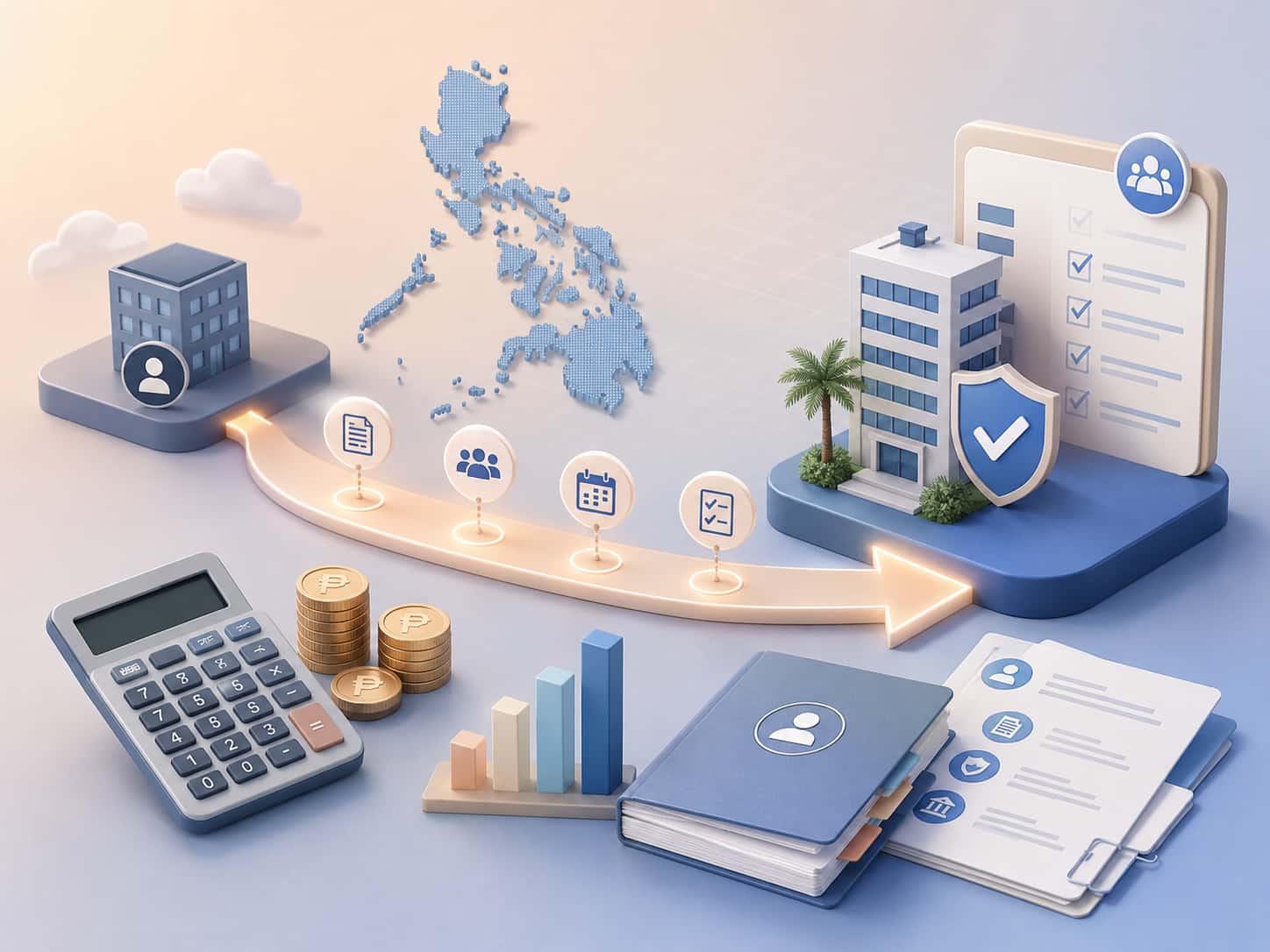
To move from a BPO to an Employer of Record in the Philippines, first decide whether you are moving the work, the people, or both. Then review your BPO contract, map roles and current staff, confirm who can transfer, design the employment package, align payroll cutover, prepare employee communications, issue new employment documents, set up benefits and statutory handling, and run post-transfer checks.
A BPO can be useful for outsourced service delivery, especially when you need fast capacity, managed operations, supervisors, QA, or transactional support. An EOR is usually better when you want dedicated Filipino employees who operate like your own team, while a local provider handles employment, payroll, payslips, statutory contributions, benefits coordination, and HR administration.
The safest move is usually phased. Start with the roles that are most strategic, brand-sensitive, data-sensitive, or retention-critical. Keep commodity or overflow work with the BPO if that still works, and move core team members into an EOR structure when you need more control, continuity, and employment proof.
For teams already changing providers or employment structures, use the broader guide: Switching EOR Providers in the Philippines in 30 Days.
Quick answer: when should you move from a BPO to an EOR?
You should consider moving from a BPO to an EOR in the Philippines when the team is no longer just outsourced capacity. If the people are now core to your business, use your tools, follow your KPIs, handle customer or financial data, represent your brand, and need long-term retention, an EOR model may give you more control and continuity.
You should not move from a BPO to an EOR only because you want lower cost. The better reason is operational fit: you want dedicated employees, direct management, clearer payroll documentation, local statutory proof, benefits control, and stronger team ownership.
A BPO is a vendor-managed service model. An EOR is an employment model. That difference matters.
Who is this guide for?
This guide is for founders, COOs, CFOs, HR leaders, operations teams, CX leaders, finance teams, SaaS companies, agencies, and professional-services firms that currently use a BPO in the Philippines but are reviewing whether an EOR model would be a better fit.
It is especially useful if you are asking:
- How do we move from a BPO to an EOR in the Philippines?
- Should we keep using a BPO or build our own team?
- Can we transfer BPO staff into our own dedicated EOR team?
- What happens to payroll, benefits, and contracts during the transition?
- Is EOR better than BPO for long-term offshore teams?
- How do we reduce vendor dependency and improve team continuity?
- How do we get clearer payroll and statutory proof?
- Can we keep some work with the BPO and move core roles to EOR?
If your BPO arrangement is working well, employees are not central to your internal operations, and you prefer vendor-managed delivery, staying with a BPO may still make sense. If you want a more embedded team, an EOR structure is worth reviewing.
BPO vs EOR in the Philippines: what is the real difference?
A BPO provides outsourced services. The BPO usually manages hiring, supervision, operations, workflows, HR, payroll, and delivery. You buy an outcome, seat, process, or managed service.
An EOR provides local employment infrastructure. Your workers are employed in the Philippines through the EOR, while you manage the day-to-day work, tools, KPIs, training, culture, and priorities.
For a broader comparison of employment and service models, see Employer of Record vs Staff Leasing vs BPO.
| Factor | BPO model | Philippines EOR model |
| Main purpose | Outsourced service delivery | Local employment for your dedicated team |
| Who manages daily work? | Usually the BPO | Your company |
| Who employs staff? | BPO or its local entity | EOR as local legal employer |
| Control over hiring | Limited or shared | Higher |
| Control over tools and process | Depends on BPO contract | Higher |
| Payroll proof | Usually BPO invoice-level | Employee payslips and payroll records |
| Statutory proof | Usually managed by BPO internally | Can be requested at employee/payroll level |
| Brand alignment | Can feel outsourced | More like your own team |
| Best fit | Transactional, high-volume, outsourced workflows | Long-term, dedicated, embedded teams |
| Main risk | Vendor dependency and limited visibility | Requires stronger internal management |
When is a BPO still the better model?
A BPO can still be the better model when the work is repeatable, transactional, high-volume, and easier to manage as an outsourced service.
A BPO may make sense for:
- overflow customer support
- basic ticket handling
- simple back-office processing
- temporary campaigns
- seasonal volume
- standardised data entry
- script-based support
- managed QA and supervision
- processes where your company does not want to manage people directly
A BPO is often useful when you need fast scale, vendor-managed supervision, and limited internal management burden.
The trade-off is that you may have less visibility into employee-level payroll, retention, training, benefits, statutory documentation, and day-to-day people management.
When is an EOR the better model?
An EOR is usually the better model when you want dedicated team members who operate like part of your company.
A Philippines EOR may be better when:
- the roles are long-term and business-critical
- you want to select and retain specific people
- employees use your tools, systems, and workflows
- the work affects customers, revenue, data, or quality
- you need stronger brand voice and product knowledge
- you want direct coaching, KPIs, and performance management
- you need clearer employment, payroll, and statutory records
- you want better continuity than a vendor-managed seat model
- you are building an offshore team, not just buying outsourced labour
For companies that want to employ in the Philippines without opening a local entity, see Employer of Record Services in the Philippines.
Decision framework: should you move from BPO to EOR?
Use this table to decide whether the transition is worth exploring.
| Question | If yes, this points towards |
| Do you want to choose and retain specific staff? | EOR |
| Do you want direct management of daily work? | EOR |
| Is the work brand-sensitive or customer-sensitive? | EOR |
| Is the work data-sensitive or compliance-sensitive? | EOR |
| Do you need payroll and statutory proof? | EOR |
| Do you mainly need overflow capacity? | BPO |
| Do you want the vendor to manage supervisors and QA? | BPO |
| Is the process scripted and transactional? | BPO |
| Do you want lower internal management effort? | BPO |
| Do you want to build long-term offshore capability? | EOR |
For many companies, the answer is not all BPO or all EOR. A hybrid model can work: keep overflow, commodity, or short-term work with the BPO, and move core, strategic, or sensitive roles into an EOR-backed team.
Three transition paths: transfer, rebuild, or hybrid
There are three main ways to move from a BPO model to an EOR model. The right path depends on your BPO contract, staff availability, business continuity needs, risk tolerance, and how quickly you need the new structure in place.
| Transition path | Best for | Risk level | What to watch |
| Direct staff transfer | When the BPO allows release, buyout, or transfer and employees want to move | Medium-high | Non-solicit clauses, buyout fees, employee consent, notice periods, continuity of pay and benefits |
| New EOR hiring | When BPO staff cannot transfer or the relationship should remain separate | Medium | Recruitment timeline, knowledge rebuild, training, process documentation, ramp-up time |
| Hybrid BPO + EOR model | When service continuity matters and some work should stay outsourced | Lower to medium | Clear role split, duplicate costs during transition, SOP ownership, management structure |
A direct staff transfer can preserve knowledge, but it is not always contractually possible. New hiring may be cleaner but takes longer to stabilise. A hybrid model can reduce risk by keeping BPO capacity while building a dedicated EOR team.
Can you transfer BPO staff to an EOR?
Sometimes, but not automatically.
Whether you can transfer BPO staff to an EOR depends on the BPO contract, employee consent, non-solicitation clauses, notice periods, data access, current employment terms, and whether the individuals want to move.
Before planning a direct transfer, check:
- Does the BPO contract restrict hiring or approaching its staff?
- Are there placement fees, buyout terms, or non-solicit clauses?
- Who is the current legal employer?
- Do the staff members want to move?
- What notice period applies?
- Can current salary, benefits, tenure, and role data be shared?
- Will the BPO cooperate with a handover?
- What happens if some people decline the move?
Do not approach, solicit, or offer roles to BPO staff until the BPO agreement has been reviewed for non-solicitation, non-circumvention, transfer, replacement, and buyout clauses. A direct transfer should be handled carefully, transparently, and with employee consent.
What if the BPO will not release the staff?
If the BPO will not release staff, you still have options.
You may decide to:
- keep the current BPO arrangement until the contract ends
- negotiate a release, buyout, or transition fee
- recruit replacement staff into an EOR structure
- start with a pilot EOR team for new roles
- run BPO and EOR teams in parallel during transition
- move only future hires into the EOR model
A difficult BPO exit should not force a rushed transition. The safest approach is to protect service continuity first, then move towards the model that gives better control.
BPO to EOR transition roadmap
A clean BPO-to-EOR transition should protect customers, employees, payroll, systems, benefits, and service quality.
| Phase | Goal | Key actions |
| Phase 1: Assess | Decide whether EOR is the right model | Review roles, costs, service quality, data access, vendor dependency, and management capacity |
| Phase 2: Contract review | Understand exit limits | Check notice, non-solicit, transfer terms, minimums, data handover, and exit fees |
| Phase 3: Role mapping | Decide what moves | Identify core roles, overflow work, sensitive tasks, managers, tools, and KPIs |
| Phase 4: People plan | Confirm who can move | Review consent, availability, replacement hiring, salary packages, and onboarding needs |
| Phase 5: Payroll plan | Avoid payment disruption | Align final BPO billing, first EOR payroll, benefits start date, and statutory setup |
| Phase 6: Operations handover | Protect service continuity | Transfer knowledge, access, documentation, SOPs, QA, and escalation paths |
| Phase 7: Stabilise | Confirm the new model works | Validate first payroll, check employee experience, review KPIs, and fix gaps |
Step-by-step: how to move from a BPO to an EOR in the Philippines
Step 1: Define why you are moving
Start with the business reason.
Common reasons include:
- better control over hiring
- stronger retention
- clearer payroll proof
- direct employee management
- better brand alignment
- improved data controls
- less vendor dependency
- clearer cost visibility
- stronger employee experience
- more stable offshore team structure
Do not move to EOR just because BPO feels expensive. Move because the EOR model better fits the team you are trying to build.
Step 2: Review the BPO contract
Before speaking to staff or planning a transfer, review the BPO agreement.
Check:
- minimum term
- notice period
- seat commitments
- early termination fees
- non-solicitation clauses
- staff transfer or buyout terms
- data ownership
- knowledge transfer obligations
- equipment terms
- confidentiality clauses
- exit support
This review determines whether you can move existing staff, need to hire replacements, or should run a phased transition.
Step 3: Map the current team and workflows
Create a full picture of the current BPO setup.
Document:
- role titles
- names, if available and permitted
- queues or workstreams
- schedules and coverage
- tools used
- access permissions
- KPIs and SLAs
- quality scores
- customer or client exposure
- data handled
- supervisors and escalation paths
- current costs
- current pain points
This helps identify which work should move first.
Step 4: Decide what moves to EOR first
You do not need to move everything at once.
Prioritise roles that are:
- customer-facing
- quality-sensitive
- brand-sensitive
- long-term
- hard to replace
- data-sensitive
- deeply trained
- strategically important
- better managed directly
Keep transactional, overflow, seasonal, or low-risk work with the BPO if that still makes sense.
Step 5: Confirm the EOR employment package
Before moving people into an EOR structure, define the employment package clearly.
Confirm:
- job title
- salary
- work schedule
- manager
- role scope
- KPIs
- leave treatment
- benefits or HMO eligibility
- 13th month treatment
- statutory contribution handling
- payroll frequency
- start date under the EOR
- equipment or WFH support
- confidentiality or data requirements
This avoids confusion between the old BPO cost, old employee wage, and the new EOR employment package.
For cost modelling, use EOR Pricing in the Philippines.
Step 6: Plan payroll cutover
Payroll cutover is one of the most sensitive parts of the transition.
Align:
- final BPO billing period
- first EOR payroll period
- employee salary start date
- unpaid amounts or adjustments
- bank details
- payroll funding deadline
- payslip release date
- benefits or HMO start date
- 13th month accrual start
- payroll approval process
A clean cutover prevents double payment, missed salary, employee confusion, and disputes.
Step 7: Prepare employee communication
Employees should hear a clear and calm explanation.
Explain:
- why the structure is changing
- what stays the same
- what changes
- who the new legal employer will be
- who manages daily work
- when contracts will be issued
- how payroll will work
- how benefits will work
- who to contact for questions
Do not frame the move as a negative comment about the BPO. Focus on continuity, clarity, and the future team structure.
Step 8: Issue EOR employment documents
The EOR should prepare compliant employment documentation before the first payroll cycle.
This may include:
- employment agreement
- job description
- compensation schedule
- benefits summary
- confidentiality clauses
- data protection acknowledgements
- payroll forms
- bank details
- tax or government information
- company policy acknowledgements
Employees should have time to review, ask questions, and sign before the transition date.
Step 9: Transfer tools, SOPs, and access
A BPO-to-EOR move is not only an HR change. It is an operations change.
Prepare:
- SOPs
- scripts
- customer templates
- tool access
- CRM or helpdesk permissions
- shared inbox access
- reporting dashboards
- QA scorecards
- escalation paths
- security permissions
- data handling rules
- manager check-ins
This is especially important when customer support, finance, operations, or regulated workflows are moving from vendor-managed delivery to your direct management.
Step 10: Validate first payroll and first 30 days
After the first payroll, confirm:
- gross salary
- net pay
- deductions
- payslips
- benefits enrolment
- statutory setup
- leave balances
- 13th month accrual
- employee questions
- tool access
- work quality
- SLA or KPI continuity
The transition is not complete when contracts are signed. It is complete when payroll, employee support, and operational performance are stable.
BPO to EOR 30/60/90-day transition plan
| Timeline | Focus | What to do |
| Days 1–30 | Planning and risk review | Review BPO contract, map roles, select transition scope, compare costs, choose EOR, prepare communication |
| Days 31–60 | Employment and payroll setup | Confirm employment package, issue documents, prepare payroll cutover, set up benefits, transfer tools and SOPs |
| Days 61–90 | Stabilisation | Validate payroll, review employee support, check KPIs, confirm statutory proof, fix process gaps |
For larger teams, treat the first 90 days as a controlled stabilisation period rather than a simple handover.
Cost comparison: BPO vs EOR in the Philippines
BPO and EOR pricing are not directly comparable because the models are different.
A BPO fee may include vendor management, supervisors, infrastructure, QA, recruitment, and delivery overhead. An EOR cost model usually separates salary, employer costs, benefits, EOR fee, tools, and management responsibility.
| Cost item | BPO model | EOR model |
| Staff salary | Usually hidden inside vendor fee | Visible as employee salary |
| Employer costs | Managed inside BPO model | Itemised or modelled separately |
| 13th month | Usually handled internally by BPO | Included in employment planning |
| Benefits | BPO-controlled | Defined in employment package |
| Management | BPO may include supervisors | Your company manages daily work |
| Tools and systems | BPO tools or shared systems | Your systems and access controls |
| Provider fee | Bundled service fee | EOR admin fee |
| Cost visibility | Lower | Higher |
| Scalability | Fast seat scaling | Structured team scaling |
The lowest visible cost is not always the best value. The better model depends on whether you want outsourced delivery or a long-term embedded team.
Risk checklist before moving from BPO to EOR
| Risk | Why it matters | How to reduce it |
| Non-solicit breach | Could create contract dispute | Review BPO agreement before approaching staff |
| Payroll gap | Damages employee trust | Align final BPO billing and first EOR payroll |
| Benefits gap | Creates employee anxiety | Confirm HMO or benefits start dates |
| Loss of knowledge | Affects service quality | Transfer SOPs, templates, QA, and process docs |
| Access disruption | Breaks operations | Plan tool permissions before cutover |
| Role confusion | Creates performance issues | Define job titles, managers, KPIs, and scope |
| Cost confusion | Causes budget disputes | Build a line-by-line cost model |
| Employee uncertainty | Hurts retention | Communicate early and clearly |
| Weak proof pack | Reduces compliance confidence | Keep contracts, payslips, payroll records, and statutory proof |
What should be in a BPO-to-EOR proof pack?
A proof pack gives HR, finance, legal, leadership, and auditors a clear record of the transition.
Include:
- BPO contract review notes
- approved transition plan
- role and workforce mapping
- employee consent or acknowledgement records
- new employment agreements
- salary and benefits summary
- payroll start date
- first payslips
- payroll register
- statutory setup or contribution summaries
- benefits or HMO confirmation
- 13th month treatment
- tool access records
- SOP handover checklist
- issue log and resolution notes
A good proof pack makes the move easier to explain later.
Can you keep a hybrid BPO and EOR model?
Yes. Many companies do not need to leave the BPO completely.
A hybrid model may look like this:
| Work type | Best-fit model |
| Overflow support | BPO |
| Seasonal campaigns | BPO |
| Transactional back office | BPO |
| Core customer support | EOR |
| Technical support | EOR |
| Finance or billing support | EOR |
| Dedicated operations roles | EOR |
| Brand-sensitive roles | EOR |
| Data-sensitive workflows | EOR |
A hybrid approach can reduce risk because you keep operational capacity while building a more embedded team.
Common mistakes when moving from BPO to EOR
Avoid these mistakes:
- assuming BPO staff can be transferred automatically
- approaching BPO staff before reviewing non-solicit clauses
- ignoring non-circumvention, replacement, or buyout terms
- comparing BPO seat cost with EOR salary only
- failing to model benefits, 13th month, and employer costs
- moving too many roles at once
- not preparing employee communications
- starting EOR payroll before contracts are signed
- failing to protect benefits continuity
- losing SOPs and process knowledge during handover
- not validating first payroll
- failing to keep a proof pack
- treating EOR as a managed service when your company must manage daily work
The last point is important. EOR gives you more control, but it also requires stronger internal management.
Questions to ask before moving from BPO to EOR
Before choosing the EOR pathway, ask:
- Why do we want to move away from the BPO model?
- Which roles should move first?
- Are we legally and contractually allowed to approach existing BPO staff?
- Will we transfer people, rebuild the team, or run a hybrid model?
- What does the new employment package include?
- How will salary, 13th month, benefits, and statutory costs be modelled?
- Who manages daily work after the move?
- What SOPs and tool access must be transferred?
- How will payroll cutover be handled?
- What proof pack will we keep after transition?
Why Smart Outsourcing Solution for BPO-to-EOR transitions?
Smart Outsourcing Solution is a Philippines-first EOR and offshore team partner for companies that want local employment support without setting up a Philippine entity.
For companies moving from BPO to EOR, SOS can help compare whether to transfer existing BPO staff, rebuild the team under EOR, or run a hybrid BPO/EOR model during transition.
SOS can support:
- transition planning
- BPO contract and role-risk review
- transfer, rebuild, or hybrid transition planning
- role and team mapping
- local EOR employment setup
- employment documents
- payroll onboarding
- payslips
- SSS, PhilHealth, and Pag-IBIG handling
- BIR withholding support
- 13th month pay administration
- benefits coordination
- employee communication support
- post-transfer checks
- dedicated local account management
SOS is best suited for companies that want to move from vendor-managed outsourcing to a more dedicated Philippines team structure with local employment, payroll support, statutory documentation, and employee coordination.
Related resources
- Convert Contractors to Employees Philippines
- Contractor vs Employee in the Philippines
- Contractor Misclassification Philippines
- Cheapest EOR Provider in the Philippines
FAQs
How do you move from a BPO to an EOR in the Philippines?
To move from a BPO to an EOR, review the BPO contract, map the current team and workflows, decide what should move, confirm the employment package, prepare payroll cutover, issue EOR employment documents, transfer SOPs and tools, and validate the first payroll.
Is EOR better than BPO in the Philippines?
EOR is better when you want dedicated employees who work like part of your own team. BPO is better when you want outsourced delivery, vendor-managed supervision, and less internal people management.
Can BPO employees transfer to an EOR?
Sometimes, but not automatically. You need to review the BPO contract, non-solicitation clauses, employee consent, notice terms, and any transfer or buyout conditions before planning a direct move.
What is the biggest risk when moving from BPO to EOR?
The biggest risks are contract restrictions, payroll disruption, employee uncertainty, loss of process knowledge, benefits gaps, and unclear role ownership. These can be reduced with a staged transition plan.
Is moving from BPO to EOR cheaper?
Not always. BPO and EOR costs are structured differently. BPO pricing is usually bundled, while EOR costs are more itemised. EOR can be better value when you need long-term dedicated staff, direct management, and clearer employment proof.
Can we keep some work with the BPO and move some roles to EOR?
Yes. Many companies keep overflow, transactional, or seasonal work with the BPO while moving core, strategic, brand-sensitive, or data-sensitive roles to an EOR model.
What documents are needed for a BPO-to-EOR transition?
Prepare the BPO contract, role map, employee roster, current pay details, schedules, SOPs, tool access records, benefits information, employment documents, bank details, government information, and payroll cutover plan.
How long does it take to move from BPO to EOR?
A simple transition can often be planned around 30 to 60 days. Larger teams, contract restrictions, complex benefits, or direct staff transfers may require a 90-day phased plan.
What happens to 13th month pay after moving to EOR?
13th month treatment should be included in the new employment package and payroll plan. The EOR should explain how it is accrued, calculated, and paid.
Who manages the team after the move to EOR?
Your company manages the team’s daily work, tools, KPIs, training, performance, and culture. The EOR handles local employment, payroll, statutory administration, and HR documentation.
Final takeaway
Moving from a BPO to an EOR in the Philippines is not just a vendor change. It is a shift from outsourced service delivery to a dedicated employment model.
A BPO can still be useful for outsourced capacity, overflow, seasonal work, and transactional processes. An EOR is usually stronger when you want long-term Filipino employees who are embedded in your team, managed by your company, and supported through local employment, payroll, benefits, and statutory documentation.
The safest transition starts with a contract review, role mapping, payroll cutover plan, employee communication, benefits continuity, SOP handover, first payroll validation, and a clean proof pack.
Ready to move from BPO to EOR?
Planning to move from a BPO model to a dedicated Philippines EOR team? Contact Smart Outsourcing Solution to review your BPO contract risks, payroll cutover plan, employee communication, and local EOR setup before making the move.