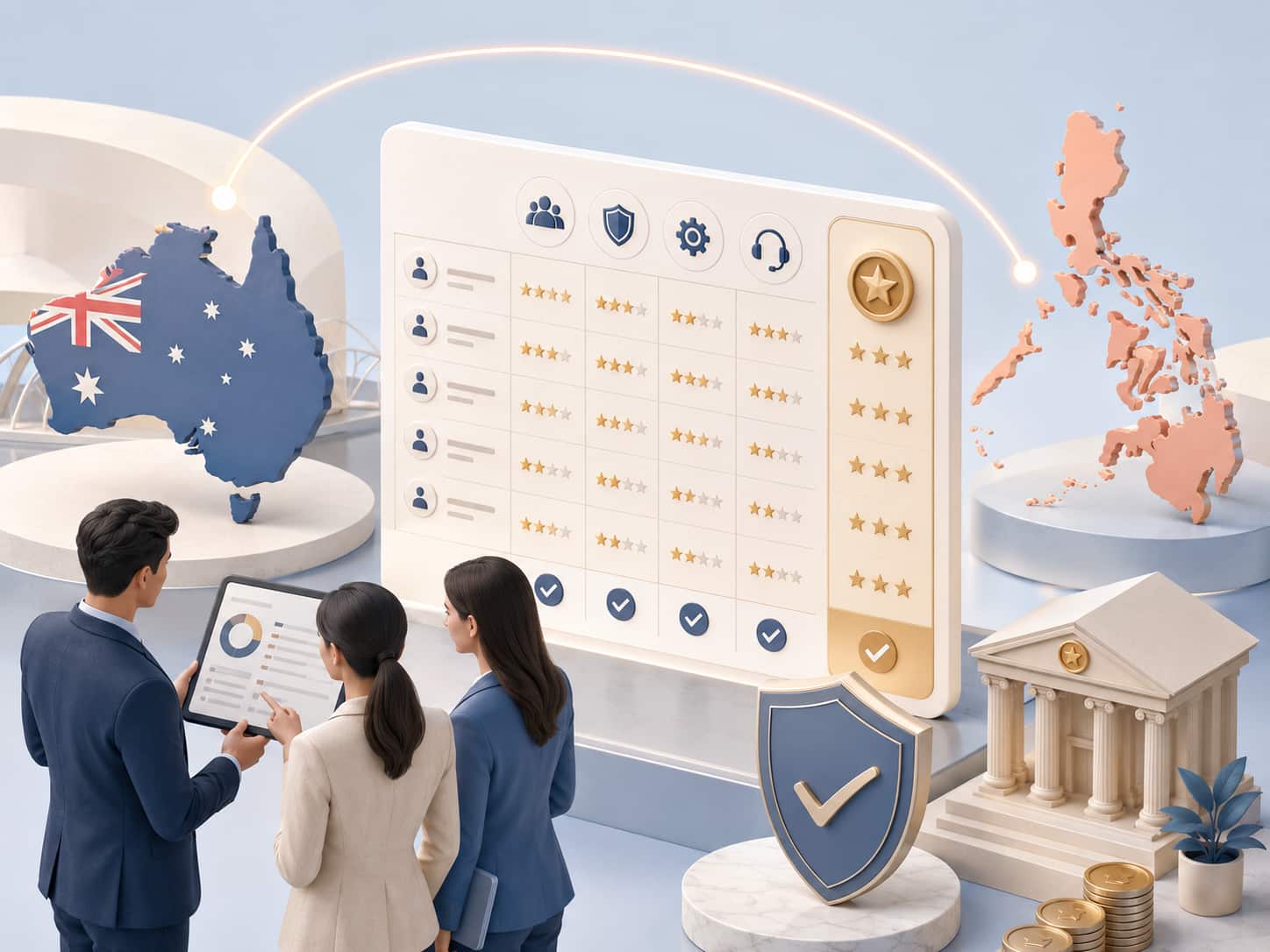
Remote vs Offshore vs Outsourcing: Which Hiring Model Is Best?
How do remote work, offshore hiring, and outsourcing compare — and which model is best for scaling teams in the Philippines?
Author: Martin English, CEO & Founding Partner
Published: May 28, 2026
TL;DR
Remote, offshore, and outsourcing are not interchangeable hiring models.
- Remote describes where employees work
- Offshore describes where employees are hired
- Outsourcing describes who manages the work
For companies building long-term operational capacity, offshore hiring in the Philippines usually provides the best balance of:
- cost efficiency
- team control
- scalability
- retention
- operational flexibility
Most modern businesses now combine:
- remote work structures,
- offshore hiring,
- and selective outsourcing for specialised functions.
Companies that want to hire quickly without setting up a Philippine entity often use an Employer of Record (EOR) model instead of traditional outsourcing.
What Is the Difference Between Remote, Offshore, and Outsourcing?
What is remote work?
Remote work refers to employees working outside a traditional office environment.
This can include:
- local employees working from home
- hybrid teams
- globally distributed workforces
- offshore employees working remotely
Remote describes how people work, not how they are hired.
Common remote team structures
- fully remote local teams
- remote offshore teams
- hybrid office + remote teams
- distributed international departments
Remote work improves:
- hiring flexibility
- access to wider talent pools
- employee retention
- business continuity
What is offshore hiring?
Offshore hiring means employing staff in another country as dedicated members of your company.
In the Philippines, offshore teams are commonly built for:
- customer support
- software development
- accounting and finance
- recruitment
- operations
- virtual assistants
- marketing
- healthcare administration
- eCommerce support
Key characteristics:
- employees work exclusively for your business
- workflows are controlled internally
- teams integrate into your company culture
- management remains under your control
Example
An Australian SaaS company hiring a dedicated customer support team in the Philippines through an EOR provider.
Offshore hiring is primarily a scalable workforce strategy.
See more:
Build Offshore Teams in the Philippines
What is outsourcing?
Outsourcing means transferring work or operational responsibility to a third-party provider.
Instead of managing employees directly, you purchase a managed service outcome.
Examples include:
- outsourced customer support
- managed BPO operations
- outsourced bookkeeping
- outsourced IT support
- outsourced marketing services
Key characteristics:
- provider manages staffing and workflows
- lower operational visibility
- faster short-term deployment
- less direct team integration
Outsourcing is designed around service delivery, not internal team ownership.
Remote vs Offshore vs Outsourcing — Quick Comparison
| Model | What It Means | Control | Cost Efficiency | Scalability | Team Ownership |
| Remote | Employees work outside an office | High | Medium | High | Internal |
| Offshore | Hiring employees in another country | High | High | High | Internal |
| Outsourcing | External provider manages work | Low–Medium | Medium | Medium | External |
The largest operational difference is ownership and control.
Remote vs Offshore: What’s the Difference?
Remote and offshore are often confused because offshore employees frequently work remotely.
However:
- Remote refers to work location
- Offshore refers to hiring geography
You can have:
- local remote employees
- remote offshore employees
- office-based offshore employees
Example
A finance analyst in Manila working remotely for a UK company is:
- remote in work structure
- offshore in hiring structure
These are not competing models — they are often used together.
Offshore vs Outsourcing: What’s the Real Difference?
The difference comes down to operational ownership.
| Factor | Offshore Team | Outsourcing |
| Team management | Managed by you | Managed by provider |
| Hiring control | Direct or via EOR | Vendor-controlled |
| Workflow ownership | Internal | External |
| Team integration | Strong | Limited |
| Scalability | High | Medium |
| Cost visibility | Transparent | Often bundled |
| Process flexibility | High | Lower |
Offshore teams behave like internal employees.
Outsourced teams behave like external vendors.
Which Model Is Best for Your Business?
Choose remote if:
- your workforce is geographically distributed
- location is not tied to operations
- you already have internal hiring systems
- flexibility is the priority
Choose offshore if:
- you want long-term operational scalability
- you want lower labour costs
- you need dedicated employees
- you want direct management control
- you are building repeatable operations
Choose outsourcing if:
- you need rapid deployment
- the function is temporary or non-core
- you do not want to manage employees internally
- you prefer outcome-based service delivery
Why Companies Build Offshore Teams in the Philippines
The Philippines remains one of the world’s most established offshore hiring destinations.
Key advantages include:
- strong English proficiency
- Western business alignment
- mature EOR and outsourcing ecosystem
- lower labour costs
- strong professional talent pools
- high compatibility with US, UK, and Australian businesses
Companies commonly offshore:
- support teams
- finance departments
- developers
- recruiters
- operations teams
- virtual assistants
- healthcare admin teams
- eCommerce operations
What Roles Should You Offshore First?
The best offshore roles are:
- process-driven,
- scalable,
- communication-heavy,
- or operationally repetitive.
Common first offshore hires
Customer support
Ideal for:
- ticket handling
- chat support
- email support
- customer success operations
Finance and bookkeeping
Common offshore finance functions:
- accounts payable
- reconciliation
- payroll support
- reporting assistance
Virtual assistants
Common VA tasks:
- admin support
- scheduling
- CRM updates
- reporting
- inbox management
Software development
Common offshore technical hires:
- frontend developers
- backend developers
- QA engineers
- DevOps support
Recruitment and operations
Many businesses offshore:
- sourcing
- interview coordination
- onboarding support
- operations administration
See more:
Virtual Assistants to EOR Philippines
How to Build an Offshore Team in the Philippines
Step 1: Identify offshore-compatible roles
Start with:
- operationally repeatable work
- clearly documented workflows
- measurable KPIs
- support-heavy functions
Avoid offshoring undefined roles initially.
Step 2: Choose your hiring structure
Most companies choose between:
- local entity setup
- Employer of Record (EOR)
- outsourcing provider
EOR
Best for:
- fast hiring
- compliance management
- lower operational risk
- scaling gradually
Local entity
Best for:
- large-scale expansion
- permanent Philippine operations
- enterprise-level growth
Outsourcing
Best for:
- temporary execution
- specialised projects
- non-core functions
Step 3: Recruit and onboard employees
Typical onboarding includes:
- sourcing and recruitment
- interviews
- contracts
- payroll setup
- equipment provisioning
- account setup
- workflow training
- KPI alignment
Strong onboarding directly impacts retention and performance.
Step 4: Operationally integrate the offshore team
High-performing offshore teams require:
- documented SOPs
- communication systems
- clear reporting lines
- KPI ownership
- management accountability
- regular feedback loops
The businesses that fail offshore usually fail operationally — not geographically.
Offshore Hiring Philippines vs EOR
What is an EOR?
An Employer of Record (EOR) legally employs workers on your behalf in the Philippines.
The EOR handles:
- payroll
- benefits
- tax compliance
- statutory contributions
- HR administration
- employment contracts
- local labour compliance
You still manage:
- performance
- workflows
- operations
- culture
- day-to-day management
EOR vs Local Entity vs Outsourcing
| Factor | EOR | Local Entity | Outsourcing |
| Setup speed | Fast | Slow | Medium |
| Compliance handling | Managed | Internal responsibility | Provider-managed |
| Operational control | High | High | Lower |
| Dedicated employees | Yes | Yes | Not always |
| Entity required | No | Yes | No |
| Scalability | High | High | Medium |
| Administrative burden | Low | High | Low |
Typical Offshore Hiring Timelines
| Hiring Structure | Typical Timeline |
| EOR | 1–4 weeks |
| Outsourcing provider | 2–8 weeks |
| Local entity setup | 3–9 months |
EOR structures are typically the fastest path for compliant offshore hiring.
How Payroll and Compliance Work in Offshore Hiring
One of the biggest differences between offshore hiring and informal remote hiring is compliance management.
Key areas include:
- payroll processing
- tax withholding
- statutory contributions
- employment classification
- benefits administration
- local labour law compliance
In the Philippines, this commonly includes:
- SSS
- PhilHealth
- Pag-IBIG
- mandatory employment protections
Using an EOR helps reduce:
- misclassification risk
- payroll errors
- compliance exposure
- local employment liability
Security and Governance Considerations
Enterprise buyers increasingly evaluate offshore hiring based on governance and operational security.
Key considerations include:
- NDA enforcement
- access controls
- device management
- cybersecurity policies
- IP protection
- role-based permissions
- secure onboarding/offboarding
Strong offshore operations require the same governance standards as local teams.
Common Offshore Hiring Risks
Choosing outsourcing when control is required
This often creates:
- workflow visibility issues
- inconsistent quality
- scalability limitations
Hiring too quickly without operational systems
Common problems include:
- weak onboarding
- unclear KPIs
- communication breakdowns
- poor retention
Treating offshore employees like external vendors
High-performing offshore teams require:
- integration,
- accountability,
- and internal management ownership.
Ignoring compliance obligations
Improper offshore hiring structures can create:
- tax exposure
- labour compliance issues
- payroll risks
- contractor misclassification problems
See more:
Convert Contractors to Employees Philippines
Signs You’ve Outgrown Traditional Outsourcing
Businesses often transition from outsourcing to offshore hiring when they need:
- more operational control
- dedicated employees
- stronger culture integration
- long-term scalability
- clearer performance accountability
- lower long-term operating costs
A common progression is:
- outsourcing initially,
- then moving to dedicated offshore teams as operations mature.
See more:
Switch EOR Providers Philippines in 30 Days
Cost Comparison Across Models
| Model | Typical Cost Structure | Long-Term Outcome |
| Local remote employees | Full local salaries + benefits | Highest cost |
| Offshore hiring | Lower salaries + compliance costs | Strong long-term efficiency |
| Outsourcing | Bundled vendor pricing | Often higher over time |
Offshore hiring typically delivers the strongest long-term cost-to-control ratio.
Frequently Asked Questions
Is offshore the same as outsourcing?
No. Offshore hiring means building your own team in another country. Outsourcing means paying another company to manage the work for you.
Can offshore teams be remote?
Yes. Most offshore teams today operate remotely or in hybrid setups.
What is the best way to hire offshore staff in the Philippines?
For many companies, using an EOR is the fastest and lowest-risk way to hire offshore employees compliantly without opening a local entity.
Is offshore hiring cheaper than outsourcing?
Long-term, offshore hiring is often more cost-efficient because you avoid bundled vendor margins and maintain direct operational control.
Can I hire employees in the Philippines without setting up a company?
Yes. An EOR structure allows companies to legally hire Philippine employees without establishing a local entity.
How long does offshore hiring take?
With an EOR structure, many companies can onboard employees within 1–4 weeks.
What roles should companies offshore first?
Most companies start with:
- support,
- finance,
- admin,
- recruitment,
- or operational support roles.
What is the biggest advantage of offshore teams?
The biggest advantage is combining:
- lower labour costs,
- dedicated employees,
- scalability,
- and operational control.
Final Thoughts
Understanding the difference between remote, offshore, and outsourcing is critical when building scalable global operations.
- Remote defines how employees work
- Offshore defines where employees are hired
- Outsourcing defines who manages the work
For companies scaling teams in the Philippines, offshore hiring — especially through an EOR structure — often provides the best balance of:
- flexibility,
- compliance,
- scalability,
- operational control,
- and long-term cost efficiency.
Ready to Build an Offshore Team in the Philippines?
Whether you are evaluating offshore hiring, comparing outsourcing models, or exploring EOR solutions in the Philippines, choosing the right operational structure matters.
Talk to Smart Outsourcing Solution about:
- offshore hiring strategy
- EOR setup
- offshore team scaling
- compliance management
- transitioning from outsourcing to dedicated offshore teams