Why Companies Leave Global EOR Providers: 2026 Guide
Author: Martin English
Published: June 8, 2026
TL;DR: Why do companies leave global EOR providers?
Companies usually leave global EOR providers when the provider no longer matches how their team operates. The most common reasons are slow support, unclear fees, payroll errors, weak local compliance proof, poor employee experience, limited local knowledge, and difficulty getting practical answers during urgent payroll or HR issues.
A global EOR can be useful when a company is hiring across many countries and wants one platform for international employment. But if most employees are in one country, such as the Philippines, a local EOR may offer stronger payroll support, clearer statutory documentation, faster employee coordination, and better country-specific guidance.
Leaving a global EOR should not be a rushed decision. A provider switch is most justified when the issue is repeated, material, and affects payroll confidence, employee trust, compliance visibility, or management time.
For a practical migration framework, see Switching EOR Providers in the Philippines in 30 Days.
Quick answer: when should you consider leaving a global EOR provider?
You should consider leaving a global EOR provider if payroll problems are recurring, support is slow, costs are unclear, employees are frustrated, statutory proof is hard to obtain, or your team now needs deeper local support than a broad global platform can provide.
One isolated issue may be fixable. A pattern of repeated issues is different. If payroll, support, documentation, or employee trust problems keep happening, it is reasonable to review whether the provider model still fits your team.
You should not switch only because another provider has a lower monthly fee. A lower fee only matters if the new provider can also deliver accurate payroll, employee continuity, statutory documentation, responsive support, and a safe migration process.
If your team is mainly in the Philippines, compare the global model with a local Philippines EOR model.
Who is this guide for?
This guide is for companies that are using a global EOR provider and are starting to question whether the arrangement still works.
It is especially relevant for:
- companies with employees mainly in the Philippines
- Australian, UK, US, Singapore, or global companies managing offshore teams
- teams experiencing payroll errors or support delays
- employers dealing with unclear EOR costs or pass-through fees
- HR or finance teams that need better statutory proof
- companies comparing local vs global EOR providers
- businesses planning to switch EOR providers without employee disruption
If your workforce is spread across many countries and your current provider is performing well, a global EOR may still be the right fit. If most of your issues are local, it may be time to review your provider model.
Global EOR vs local EOR: what is the real difference?
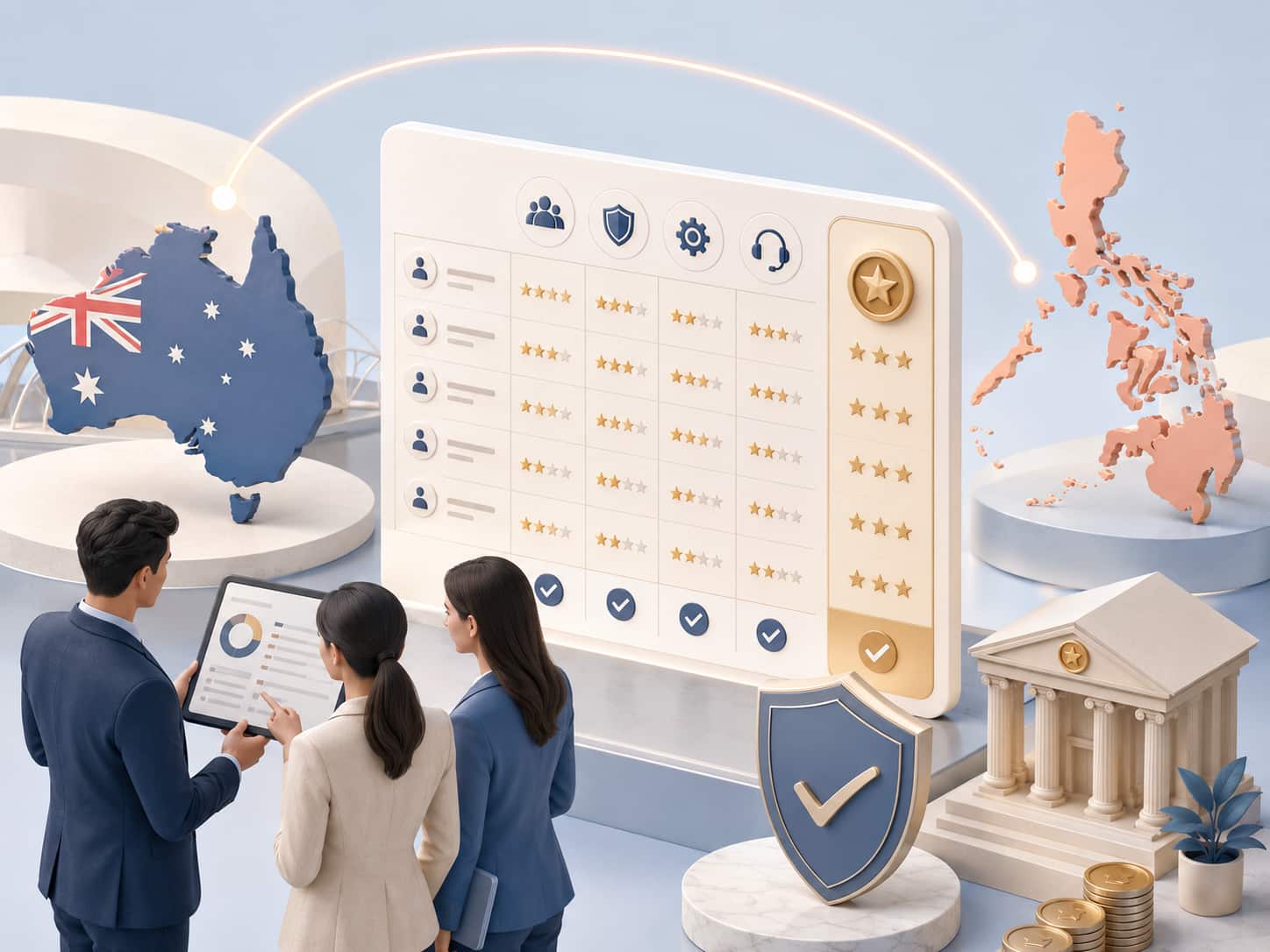
A global EOR provider usually helps companies hire employees across multiple countries through one platform or service model. A local EOR focuses on one country or region and is usually closer to local payroll, employment documentation, statutory contributions, and employee support.
| Comparison area | Global EOR provider | Local Philippines EOR |
| Best fit | Companies hiring across many countries | Companies hiring mainly or only in the Philippines |
| Main advantage | Multi-country coverage and centralised workflows | Local payroll, HR support, statutory handling, and employee coordination |
| Support model | Platform-led or regional support | Local account management and Philippine employment support |
| Cost model | Often varies by country, plan, and service scope | Often simpler for Philippines-only or PH-heavy teams |
| Compliance focus | Broad multi-country employment coverage | Philippine payroll, labour, benefits, tax, and statutory administration |
| Best question to ask | “Do we need global coverage?” | “Do we need stronger local execution?” |
A global EOR is not automatically worse than a local EOR. The better option depends on your workforce footprint, risk profile, budget, and support expectations.
For a broader comparison, see Employer of Record Providers in the Philippines.
The most common reasons companies leave global EOR providers
Companies rarely switch EOR providers because of one small issue. They usually switch when problems repeat and start affecting payroll confidence, employee trust, or operational control.
1. Support takes too long
Slow support is one of the biggest reasons companies leave global EOR providers.
Common signs include:
- payroll questions taking days to resolve
- no clear local point of contact
- employees being passed between support teams
- urgent issues handled through generic ticketing
- limited explanation when payroll or benefits issues occur
Support delays become more serious when they affect salary, statutory contributions, final pay, or employee benefits.
2. Costs are unclear
Companies often become frustrated when EOR invoices are difficult to understand.
Typical problems include:
- unclear admin fees
- unexplained pass-through charges
- FX or currency conversion uncertainty
- separate onboarding or offboarding charges
- benefits costs that are hard to reconcile
- limited visibility over employer statutory contributions
- unclear treatment of 13th month pay accruals
If the finance team cannot easily explain the total monthly cost per employee, the provider relationship becomes harder to manage.
For cost review, use EOR Pricing in the Philippines.
3. Payroll errors keep happening
One payroll mistake may be manageable. Repeated payroll errors are a serious warning sign.
Examples include:
- late salary payments
- incorrect deductions
- wrong allowances
- leave balances not reflected properly
- reimbursement delays
- incorrect final pay
- payslip errors
- confusion around 13th month pay
Payroll accuracy is one of the core reasons companies use an EOR. If payroll cannot be trusted, the EOR relationship needs review.
4. Local statutory proof is hard to obtain
In the Philippines, employers may need clear records for payroll, tax, and statutory contributions.
Companies may become concerned if they cannot easily obtain:
- payslips
- payroll registers
- SSS contribution records
- PhilHealth contribution records
- Pag-IBIG contribution records
- BIR withholding documentation
- 13th month pay records
- benefits enrolment proof
For finance, compliance, investor, or audit purposes, verbal assurances are not enough. A good EOR should be able to provide practical documentation.
5. Employee experience suffers
A poor EOR experience is not only a back-office issue. Employees notice when payroll is unclear, benefits are delayed, or HR questions are not answered.
Warning signs include:
- employees do not know who to contact
- payslips are confusing
- benefits information is unclear
- leave or payroll questions are slow to resolve
- employees lose trust in the employment setup
- managers spend too much time chasing EOR support
If the EOR is creating employee anxiety instead of reducing it, it may be time to reassess.
6. The provider is too global for a local problem
A global EOR may be strong for multi-country hiring, but less ideal when most of the company’s employees are in one country.
If your team is now Philippines-heavy, your needs may shift towards:
- local payroll expertise
- faster local HR support
- clearer statutory documentation
- benefits coordination
- employee communications
- local labour guidance
- local account management
That does not mean the global provider is poor. It may simply mean your operating model has changed.
7. The company needs a safer migration or local handover
Some companies leave global EOR providers when they realise the current setup is difficult to change, audit, or scale.
This can happen when:
- records are spread across systems
- employee data exports are incomplete
- contract terms are unclear
- offboarding steps are slow
- final pay responsibilities are uncertain
- benefits transition planning is weak
A provider switch should solve these problems, not create new ones.
Warning signs your EOR provider may no longer be the right fit
Use this checklist to assess whether the issue is temporary or structural.
| Warning sign | Why it matters | What to check |
| Payroll errors repeat | Reduces employee trust | Are errors isolated or recurring? |
| Support is slow | Creates operational risk | Is there a clear escalation path? |
| Costs are unclear | Makes budgeting harder | Can you explain total cost per employee? |
| Statutory proof is missing | Creates compliance uncertainty | Can the provider supply payroll and contribution records? |
| Employees are frustrated | Affects retention and morale | Are employees confident in payroll and benefits? |
| Local knowledge is weak | Slows issue resolution | Does the provider understand Philippine payroll and labour norms? |
| Offboarding is unclear | Creates risk during transition | Are final pay and records handled cleanly? |
| Data export is difficult | Makes switching harder | Can you access the documents needed for migration? |
If several of these are happening at once, a provider review is reasonable.
Should you switch EOR providers or fix the current relationship?
Switching is not always the best first move. In some cases, the issue can be fixed with better escalation, clearer reporting, or a revised service process.
Before switching, ask your current provider to clarify:
- who owns payroll support
- who handles employee questions
- how urgent issues are escalated
- what is included in the fee
- what proof documents are available
- how payroll errors are corrected
- how benefits issues are handled
- how final pay and offboarding work
If the provider can correct the issues quickly and consistently, staying may be better. If the same problems keep happening, switching becomes more justifiable.
When should you stay with your global EOR provider?
Staying with a global EOR provider may make sense if:
- your workforce is spread across many countries
- you need one global platform or provider
- your current payroll is accurate
- support response times are acceptable
- employees are satisfied
- statutory documents are easy to obtain
- costs are clear and predictable
- switching would create more disruption than benefit
A local EOR is not always better. It is usually better when the team is concentrated in one country and local execution matters more than global coverage.
What should you check before leaving a global EOR provider?
Before leaving a global EOR provider, review the commercial, payroll, legal, and employee impacts.
| Area to check | Why it matters | What to ask |
| Current agreement | Avoids surprise fees or delays | What notice period applies? |
| Employee contracts | Protects continuity | Who is the legal employer and what terms apply? |
| Payroll calendar | Prevents missed or duplicate payments | What is the final payroll date? |
| Final pay | Avoids disputes | Who handles final salary, unused leave, and reimbursements? |
| 13th month accrual | Required for Philippine employees | Has it been accrued, paid, transferred, or settled? |
| Statutory records | Supports compliance | Are SSS, PhilHealth, Pag-IBIG, and BIR records available? |
| Benefits | Avoids coverage gaps | When does HMO or benefits coverage end and restart? |
| Data handover | Enables clean onboarding | What payroll, HR, tax, and bank data can be exported? |
| Employee communication | Protects trust | When and how will employees be informed? |
Do not switch until the cutover plan is clear.
Cost comparison: global EOR vs local Philippines EOR
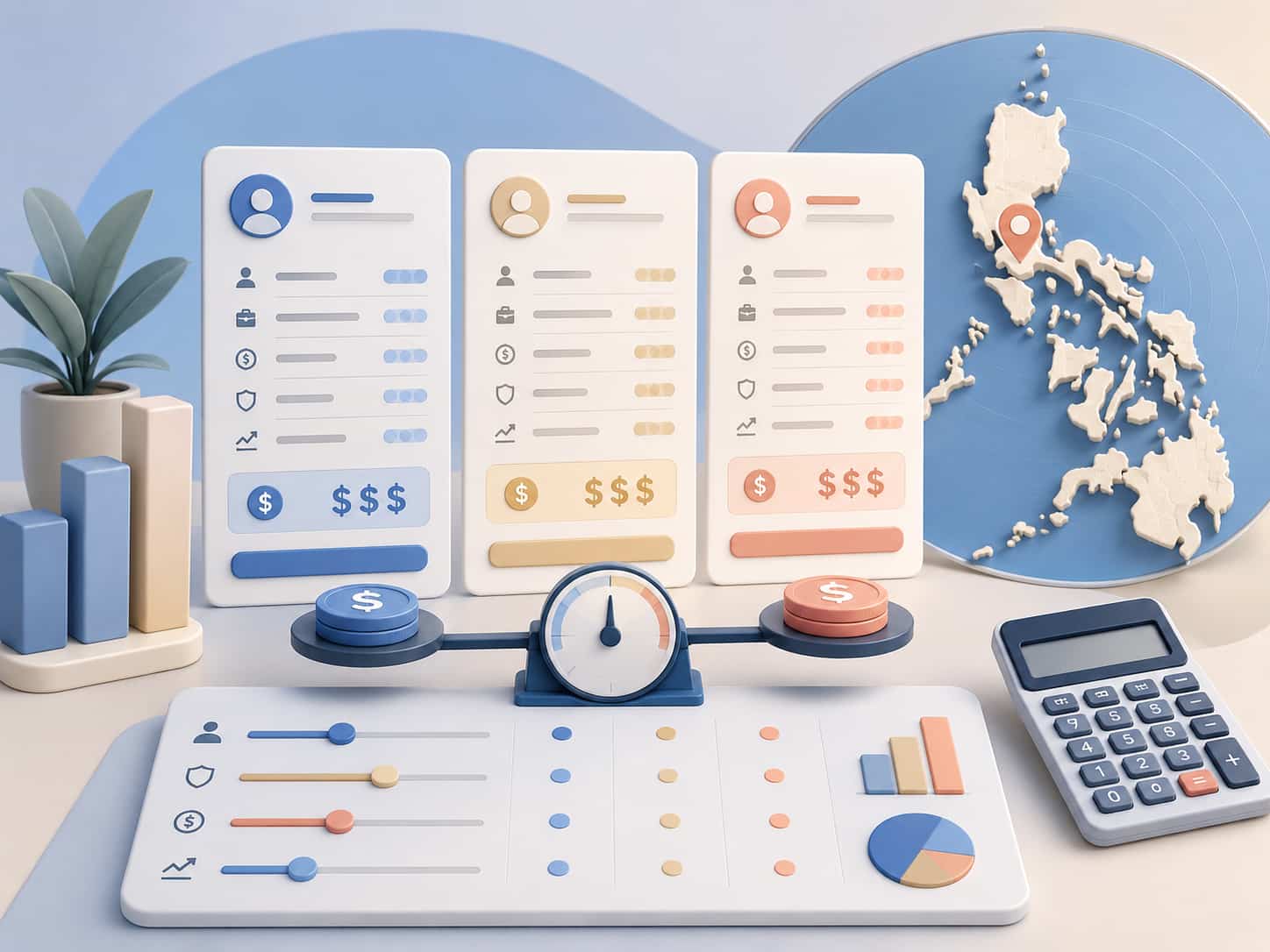
When comparing providers, review the full employment cost rather than only the headline monthly fee.
For a Philippines-heavy team, ask for a line-by-line cost model showing salary, employer contributions, 13th month accrual, benefits, EOR fee, FX assumptions, and transition charges.
| Cost item | What to compare |
| EOR or platform fee | Fee per employee, billing currency, inclusions, and service scope |
| Employee salary | Salary in PHP, AUD, USD, GBP, or other billing currency |
| Employer statutory contributions | SSS, PhilHealth, Pag-IBIG, and other employer-side items |
| 13th month accrual | Whether it is accrued monthly, billed separately, or included in estimates |
| HMO and benefits | Coverage, dependants, start date, and waiting periods |
| FX and billing currency | Conversion, spread, timing, and predictability |
| Transition costs | Onboarding fees, offboarding charges, final billing, or setup costs |
| Reporting and proof packs | Payroll registers, contribution summaries, and tax documentation |
The better question is:
“Which provider gives the right level of cost clarity, payroll support, statutory proof, and employee continuity for our Philippine team?”
How to leave a global EOR provider safely
A safe EOR switch should be treated as an employment continuity project, not just a vendor change.
Step 1: Confirm why you are switching
List the specific issues: support delays, hidden fees, payroll errors, missing proof, employee complaints, or lack of local support.
Step 2: Review your current contract
Check notice periods, exit fees, final billing, data handover, confidentiality obligations, and offboarding steps.
Step 3: Build an employee transfer file
Prepare employee names, roles, salaries, benefits, leave balances, bank details, government IDs, 13th month accruals, and payroll history.
Step 4: Choose a clean payroll cutover date
A month-end cutover is usually cleaner than a mid-month switch. The goal is to avoid missed salary, duplicate payments, incorrect deductions, and benefits gaps.
Step 5: Prepare employee communication
Explain what is changing, what stays the same, who the new legal employer is, when contracts will be issued, and who employees should contact.
Step 6: Issue new employment documents
The incoming EOR should prepare compliant employment documents, compensation details, benefits summaries, confidentiality clauses, and payroll forms.
Step 7: Validate first payroll
Before payment, check salary, allowances, deductions, statutory contributions, reimbursements, leave balances, 13th month accrual, bank details, and payslip format.
Step 8: Request a post-switch proof pack
Ask for signed employment documents, payroll register, payslips, statutory contribution summary, benefits confirmation, tax documentation status, leave records, and an issue log.
Suggested 30-day switching timeline
| Timeline | Action | Owner |
| Days 1–3 | Review current agreement, pain points, employee list, and payroll dates | Client HR / Finance |
| Days 4–7 | Compare new provider proposal, cost model, service scope, and migration plan | Client + incoming EOR |
| Days 8–10 | Confirm decision and cutover date | Client leadership |
| Days 11–15 | Prepare employee communications and data handover | Client HR + incoming EOR |
| Days 16–20 | Issue new contracts and collect employee documents | Incoming EOR |
| Days 21–25 | Confirm payroll setup, benefits, statutory handling, and bank details | Incoming EOR + client finance |
| Days 26–30 | Complete cutover, validate first payroll, and prepare proof pack | Incoming EOR |
Sample employee message for an EOR provider switch
Use clear, calm, neutral language.
We are updating our Philippines employment administration provider to improve local payroll support, HR coordination, and employment documentation. Your role, manager, day-to-day responsibilities, and agreed compensation are expected to continue. You will receive updated employment documents and a clear transition timeline. We will also share who to contact for payroll, benefits, and HR questions before the change takes effect.
Avoid blaming the outgoing provider unless there is a documented legal reason to do so. The message should focus on continuity.
Risks to avoid when leaving a global EOR provider
Avoid these mistakes:
- switching without checking notice periods
- comparing providers only on headline fee
- failing to align payroll cutover dates
- not explaining the change to employees
- losing track of leave balances
- missing 13th month accruals
- allowing benefits gaps
- assuming employee data will transfer automatically
- failing to document final pay responsibilities
- starting with the new EOR before contracts are signed
- failing to validate first payroll
- not requesting a post-switch proof pack
The switch should reduce risk, not create new uncertainty.
What to ask a new EOR provider before switching
Before choosing a new provider, ask:
- Have you migrated employees from another EOR before?
- Who becomes the legal employer in the Philippines?
- What is included in your monthly EOR fee?
- How do you handle SSS, PhilHealth, Pag-IBIG, BIR withholding, and 13th month pay?
- How do you prevent payroll gaps during cutover?
- What happens to HMO or benefits during the switch?
- What documents do employees need to sign?
- What proof pack do you provide after first payroll?
- What employee data do you need from the outgoing provider?
- How do you support employee questions during and after migration?
Why Smart Outsourcing Solution for Philippines EOR switching?
Smart Outsourcing Solution is a Philippines-first EOR and outsourcing partner for companies that want local employment support without setting up a Philippine entity.
For Philippines-heavy teams, SOS can support:
- local Philippine employment administration
- compliant employment contracts
- payroll processing and payslips
- SSS, PhilHealth, and Pag-IBIG handling
- BIR withholding support
- 13th month pay administration
- employee communication
- benefits coordination
- provider-to-provider migration support
- dedicated local account management
- clear Philippines EOR pricing
A strong local EOR should be able to provide a practical proof pack after migration, including signed employment documents, payroll registers, payslips, statutory contribution summaries, benefits confirmation, tax documentation status, and an issue log.
SOS is best suited for companies that want Philippines-specific employment administration, payroll support, statutory documentation, and employee coordination rather than a broad global EOR platform replacement.
To compare the local employment model, see Employer of Record Services in the Philippines.
Related resources
- Cheapest EOR Provider in the Philippines
- Contractor vs Employee in the Philippines
- Convert Contractors to Employees Philippines
- Employer of Record vs BPO Philippines
FAQs
Why do companies leave global EOR providers?
Companies usually leave global EOR providers because of recurring payroll errors, slow support, unclear fees, poor employee experience, weak local documentation, or a mismatch between global coverage and local support needs.
What are common problems with EOR providers?
Common problems include delayed support, confusing invoices, payroll mistakes, missing statutory proof, unclear benefits handling, poor employee communication, and difficult offboarding processes.
Is a bad EOR experience a reason to switch providers?
Yes, if the issues are recurring and affect payroll accuracy, compliance confidence, or employee trust. One isolated problem may be fixable, but repeated issues should trigger a provider review.
Should I switch EOR providers if my team is mainly in the Philippines?
It may be worth reviewing. If most employees are in the Philippines, a local EOR may provide stronger payroll support, clearer statutory documentation, and more direct employee coordination than a broad global platform.
How do I know if my EOR fees are unclear?
Your EOR fees may be unclear if you cannot easily separate salary, employer contributions, benefits, 13th month accrual, admin fees, FX, and pass-through costs.
Can I switch EOR providers without disrupting employees?
Yes. A provider switch can be managed safely if payroll cutover, employee communication, contract transfer, benefits continuity, and statutory documentation are planned before the change.
How long does it take to change EOR providers?
A well-prepared EOR switch can often be planned around a 30-day timeline, depending on notice periods, employee count, payroll timing, benefits setup, and data readiness.
What should I ask before choosing a new EOR provider?
Ask about migration experience, legal employer setup, pricing, payroll cutover, statutory handling, benefits continuity, employee communications, and post-switch proof packs.
Final takeaway
Companies leave global EOR providers when the provider no longer gives the right level of payroll accuracy, cost clarity, local support, employee experience, or compliance proof.
A global EOR may still be right for multi-country teams. But for Philippines-heavy workforces, a local EOR can be a better fit when the main priority is local payroll execution, statutory documentation, employee support, and safe provider switching.
The key is to switch only when the business case is clear and the migration is controlled. Review the current problems, check your contract, align payroll dates, communicate clearly, protect benefits continuity, validate first payroll, and request a post-switch proof pack.
Ready to review your EOR switch?
Planning to leave a global EOR provider and move employees to a local Philippines EOR? Contact Smart Outsourcing Solution to review your payroll cutover, employee communication plan, and compliance handover before making the switch.