How to Scale Offshore Teams in the Philippines (5 → 50+)
Author: Martin English, CEO & Founding Partner
Published: May 28, 2026
TL;DR
Scaling offshore teams from 5 to 50+ people is not primarily a hiring challenge — it is an operational scaling challenge.
The companies that successfully scale offshore teams in the Philippines usually:
- introduce leadership layers early
- standardise SOPs before rapid growth
- hire in structured batches instead of reactively
- organise teams by function
- implement KPIs and reporting systems before headcount accelerates
- use Employer of Record (EOR) support to reduce compliance and operational friction
Most offshore scaling failures happen when businesses increase headcount faster than management systems, communication structures, and operational processes can support.
If you are building an offshore team in the Philippines, the most sustainable path is:
- validate your first offshore hires
- document repeatable workflows
- add leadership capacity
- scale by department
- formalise performance and communication systems
- align hiring strategy with long-term operational structure
Related Guides:
Build Offshore Teams in the Philippines
Employer of Record Philippines
Hire Remote Teams in the Philippines
Why Companies Scale Offshore Teams in the Philippines
The Philippines has become one of the leading offshore hiring destinations for companies scaling customer support, operations, finance, sales, and technical teams.
Businesses choose to scale offshore teams in the Philippines because of:
- strong English communication skills
- high familiarity with Western business culture
- deep talent pools across support and operational roles
- scalable hiring capacity
- strong retention compared to many offshore markets
- lower operational costs relative to local hiring markets
Many companies begin with:
- executive assistants
- customer support representatives
- SDRs and sales support staff
- operations coordinators
- virtual assistants
As confidence and systems improve, teams often expand into:
- accounting and finance
- recruitment and HR support
- project coordination
- digital marketing
- software development
- customer success
- operations management
For a breakdown of the most commonly outsourced roles, see: Roles Companies Hire in the Philippines
The challenge is usually not talent availability. The challenge is building the operational structure required to scale efficiently.
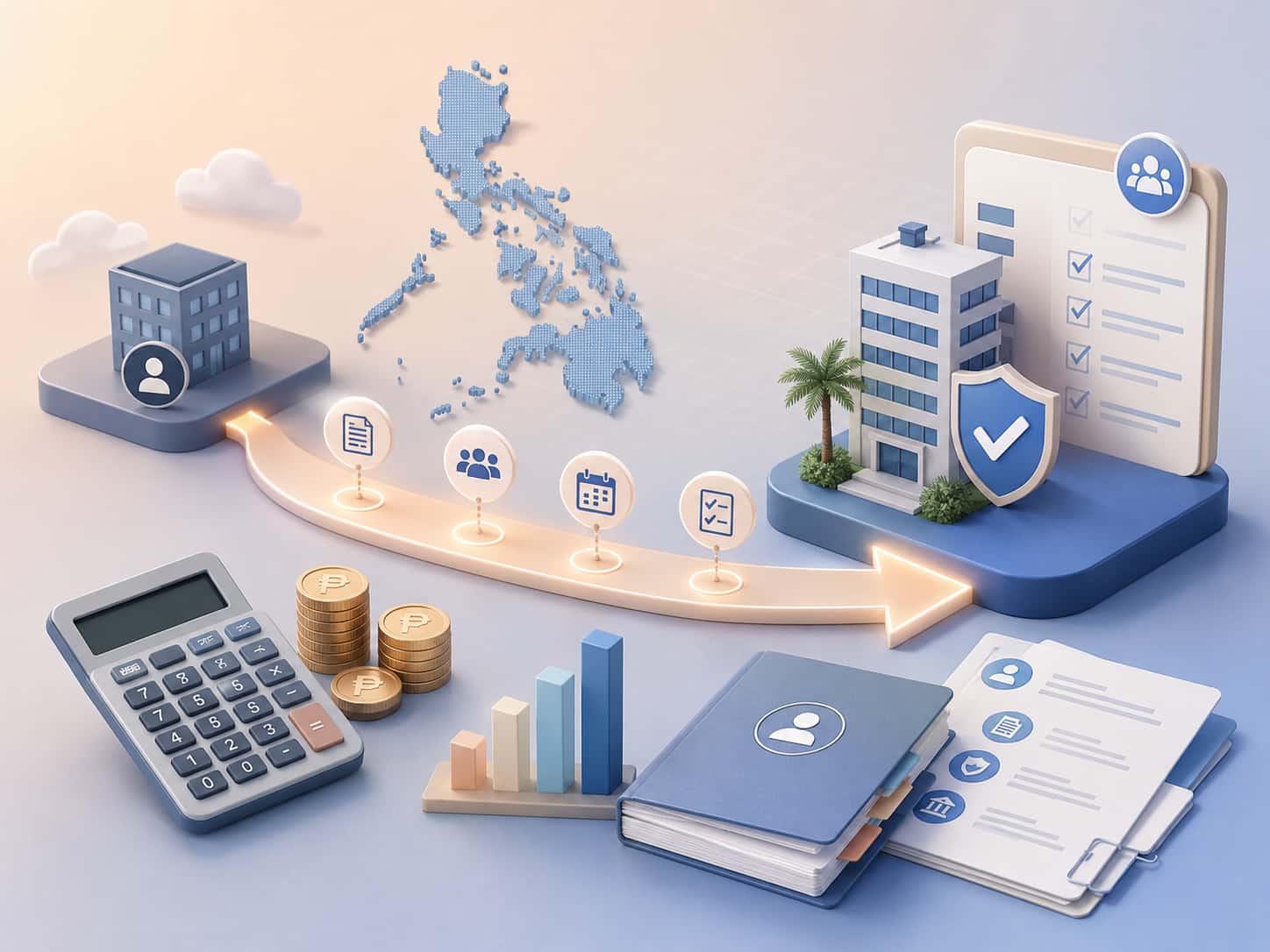
How to Scale Offshore Teams (5 → 50+)
Most successful offshore teams scale in predictable stages.
Each stage requires different management systems, communication structures, and hiring approaches.
Stage 1: Foundation (1–5 Offshore Staff)
Focus: Validate the Offshore Model
At this stage, businesses are testing:
- workflow compatibility
- communication effectiveness
- productivity
- role suitability
- timezone coordination
- management capacity
Typical Structure
- founder-led management
- minimal hierarchy
- direct communication
- individual contributors
- lightweight reporting
Key Priorities
- define role ownership clearly
- establish KPIs early
- create onboarding documentation
- document recurring workflows
- validate ROI from initial hires
Common Mistake
Hiring too quickly before responsibilities and expectations are clearly defined.
Goal
Prove the offshore model works operationally before scaling further.
Stage 2: Growth (5–15 Offshore Staff)
Focus: Build Structure Before Scaling Further
This is the stage where many offshore teams either stabilise or become operationally inconsistent.
Typical Structure
- teams grouped by function
- first team leads introduced
- onboarding becomes more structured
- recurring reporting systems implemented
- SOP documentation expands
Key Priorities
- establish leadership layers
- standardise onboarding
- improve communication consistency
- introduce accountability systems
- formalise reporting structures
Common Mistake
Adding more staff without increasing management capacity.
Goal
Transition from a collection of individuals into structured functional teams.
Stage 3: Scale (15–50+ Offshore Staff)
Focus: Build Systems That Support Long-Term Growth
Once offshore teams move beyond 15–20 staff, operational complexity increases rapidly.
At this stage, growth requires systems — not just additional hiring.
Typical Structure
- multiple operational departments
- layered leadership
- managers and department heads
- KPI dashboards
- workforce planning systems
- documented escalation procedures
Key Priorities
- process standardisation
- cross-functional coordination
- leadership development
- quality control systems
- workforce retention
- operational visibility
Common Mistake
Allowing teams to develop inconsistent processes across departments.
Goal
Create a scalable offshore operation that can continue growing without losing efficiency or visibility.
How Do I Build an Offshore Team in the Philippines?
The most effective offshore teams are built gradually and intentionally.
Companies that scale successfully usually follow a phased approach.
Phase 1: Identify Repeatable Work
The best offshore roles are usually:
- process-driven
- measurable
- operationally repeatable
- easy to document
- outcome-focused
Examples include:
- customer support
- operations administration
- appointment setting
- SDR support
- bookkeeping
- digital marketing coordination
Related hiring guides:
Phase 2: Hire Core Offshore Roles
Most companies begin with:
- executive assistants
- support representatives
- operations assistants
- finance support
- recruitment coordinators
- sales support staff
The goal is to build operational leverage before scaling aggressively.
If you are still deciding between staffing models, see: Remote Team Staffing Philippines Comparison.
Phase 3: Build Functional Structure
As headcount increases:
- divide staff into departments
- introduce reporting lines
- add team leads
- standardise communication systems
- define escalation processes
This is where offshore operations become sustainable rather than reactive.
Phase 4: Formalise Operational Systems
Scaling beyond 15–20 people typically requires:
- documented SOP libraries
- onboarding systems
- performance dashboards
- HR support systems
- structured QA processes
- workforce planning
- compliance management
Without operational systems, scaling becomes increasingly unstable.
Best Way to Hire Offshore Staff in the Philippines
The best offshore hiring model depends on:
- growth stage
- operational maturity
- legal infrastructure
- compliance capability
- hiring speed requirements
The two most common approaches are direct hiring and Employer of Record (EOR).
Direct Offshore Hiring
Direct hiring means establishing your own local Philippine entity and employing staff directly.
Best For
- mature offshore operations
- large long-term teams
- companies with internal HR and legal support
- businesses planning permanent Philippine operations
Advantages
- full operational control
- direct employment relationships
- long-term infrastructure ownership
- internal process control
Challenges
- local entity setup
- payroll administration
- tax compliance
- HR compliance management
- benefits administration
- labour law obligations
Employer of Record (EOR) Philippines
An Employer of Record (EOR) allows businesses to hire staff legally in the Philippines without establishing a local entity.
The EOR becomes the legal employer while the client manages day-to-day operations.
Related guides:
Hiring in the Philippines EOR Guide
EOR vs Own Entity Philippines
Best For
- fast-growing offshore teams
- international companies
- early-stage offshore expansion
- businesses reducing compliance complexity
- companies scaling from 5 → 50+ staff quickly
Advantages
- faster hiring timelines
- reduced compliance risk
- payroll and benefits handled locally
- simplified employment setup
- easier workforce scaling
- reduced administrative overhead
Challenges
- ongoing provider costs
- reliance on external infrastructure
- less direct legal ownership
For many companies, EOR provides the fastest and lowest-friction path to offshore scaling.
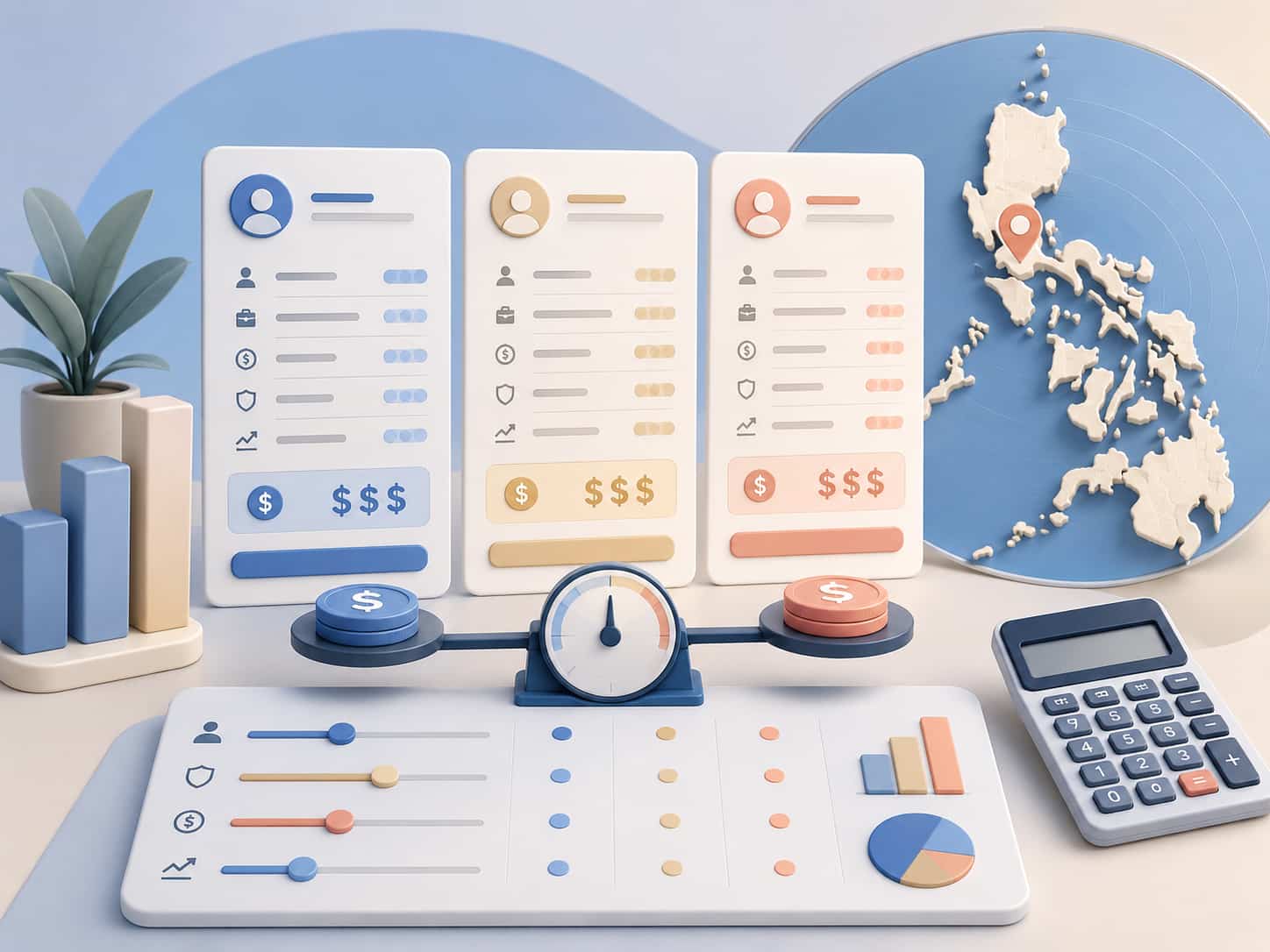
Offshore Hiring Philippines vs EOR: Which Is Better?
The right structure depends on your operational goals.
Direct Hiring Is Often Better When:
- you already operate locally
- you need full infrastructure ownership
- you have internal compliance capability
- your offshore operation is highly mature
EOR Is Often Better When:
- speed matters
- you are scaling quickly
- you want lower compliance exposure
- you want to avoid entity setup
- you are validating offshore expansion first
Many companies:
- start with EOR
- scale operationally
- transition to direct entities later if needed
This reduces risk while preserving long-term flexibility.
For a deeper comparison, see:
When Should You Add Management Layers?
One of the biggest offshore scaling mistakes is delaying leadership hires.
| Team Size | Recommended Structure |
| 1–5 | Individual contributors |
| 5–8 | First team lead |
| 10–15 | Multiple team leads |
| 15–25 | Early management layer |
| 25–50+ | Structured departments and managers |
Leadership capacity should scale alongside headcount. If leadership does not scale, operational visibility declines rapidly.
How to Structure Offshore Teams as You Scale
High-performing offshore operations are usually organised by function, not by availability.
Example Offshore Team Structure
- Customer Support Team
- Operations Team
- SDR / Sales Support Team
- Finance Team
- Marketing Team
- Technical / Development Team
- Recruitment Team
Each department should have:
- defined ownership
- measurable KPIs
- reporting systems
- documented workflows
- dedicated leadership
Functional structure improves:
- accountability
- quality control
- operational visibility
- communication efficiency
- management scalability
Communication Systems for Scaling Offshore Teams
Communication systems that work for 3 people often fail at 20.
Communication structure must evolve as teams scale.
Early-Stage Communication
- direct founder communication
- informal updates
- flexible coordination
- lightweight meetings
Scaling Communication Systems
- department meetings
- documented communication channels
- structured reporting
- escalation systems
- cross-functional coordination
- operational dashboards
Without communication structure, scaling creates confusion and duplication.
Useful operational resource:
Tools for Offshore Teams
Performance Management at Scale
Once offshore teams exceed 10–15 staff, performance visibility becomes critical.
Important Metrics
- productivity
- turnaround time
- attendance and reliability
- quality assurance
- customer satisfaction
- SLA performance
- operational efficiency
Best Practices
- role-specific KPIs
- monthly performance reviews
- manager accountability
- QA scorecards
- operational dashboards
- coaching systems
Scaling without performance systems usually reduces efficiency over time.
Common Risks When Scaling Offshore Teams
Most offshore scaling failures are operational rather than hiring-related.
Common Risks
- hiring faster than systems can support
- weak middle management
- poor onboarding consistency
- unclear SOPs
- communication breakdowns
- compliance issues
- low operational visibility
- treating offshore teams as secondary teams
Scaling amplifies operational weaknesses rather than fixing them.
Related resources:
Typical Timeline: Scaling From 5 → 50+
Timeline depends heavily on:
- hiring model
- operational maturity
- leadership capacity
- onboarding systems
- hiring velocity
Typical Scaling Timeline
- initial setup: 1–2 months
- early growth (5–15 staff): 3–6 months
- structured scale (15–50+ staff): 6–12 months
Aggressive scaling is possible, but only when operational systems already exist.
Signs You Are Ready to Scale
You are usually ready to scale offshore operations when:
- workflows are repeatable
- KPIs are stable
- onboarding is documented
- communication systems are functioning consistently
- managers have available capacity
- initial offshore hires show measurable ROI
Scaling before systems are stable usually creates avoidable inefficiencies later.
Frequently Asked Questions
How do I scale offshore teams effectively?
Scale systems before headcount. Build onboarding, SOPs, communication structures, KPIs, and leadership layers before aggressive hiring.
What is the biggest mistake when scaling offshore teams?
The most common mistake is increasing headcount without improving operational structure and management capacity.
What roles are easiest to scale offshore first?
Customer support, SDR support, operations coordination, bookkeeping, virtual assistants, and marketing support are often the easiest early-stage offshore roles to scale.
When should I add a team lead?
Most companies should introduce their first offshore team lead between 5–8 staff members.
Is EOR better than direct hiring in the Philippines?
For many growing companies, EOR is the faster and lower-risk option during early offshore expansion because it simplifies compliance, payroll, and local employment administration.
How long does it take to build an offshore team in the Philippines?
Many companies can build an initial offshore team within 1–3 months. Scaling from 5 → 50+ staff often takes 6–12 months with structured operational planning.
Is scaling offshore teams risky?
The biggest risks usually come from weak systems, unclear communication, poor management structure, and compliance gaps — not offshore hiring itself.
Case Studies
Scaling Offshore Teams?
If you are planning to grow your offshore team from 5 → 50+ staff, Smart Outsourcing Solution can help you:
- structure offshore hiring properly
- reduce compliance risk
- implement scalable operational systems
- hire through EOR or direct team models
- build leadership and reporting structures
Contact the team for all things EOR and see how SOS can help you with scaling offshore teams.