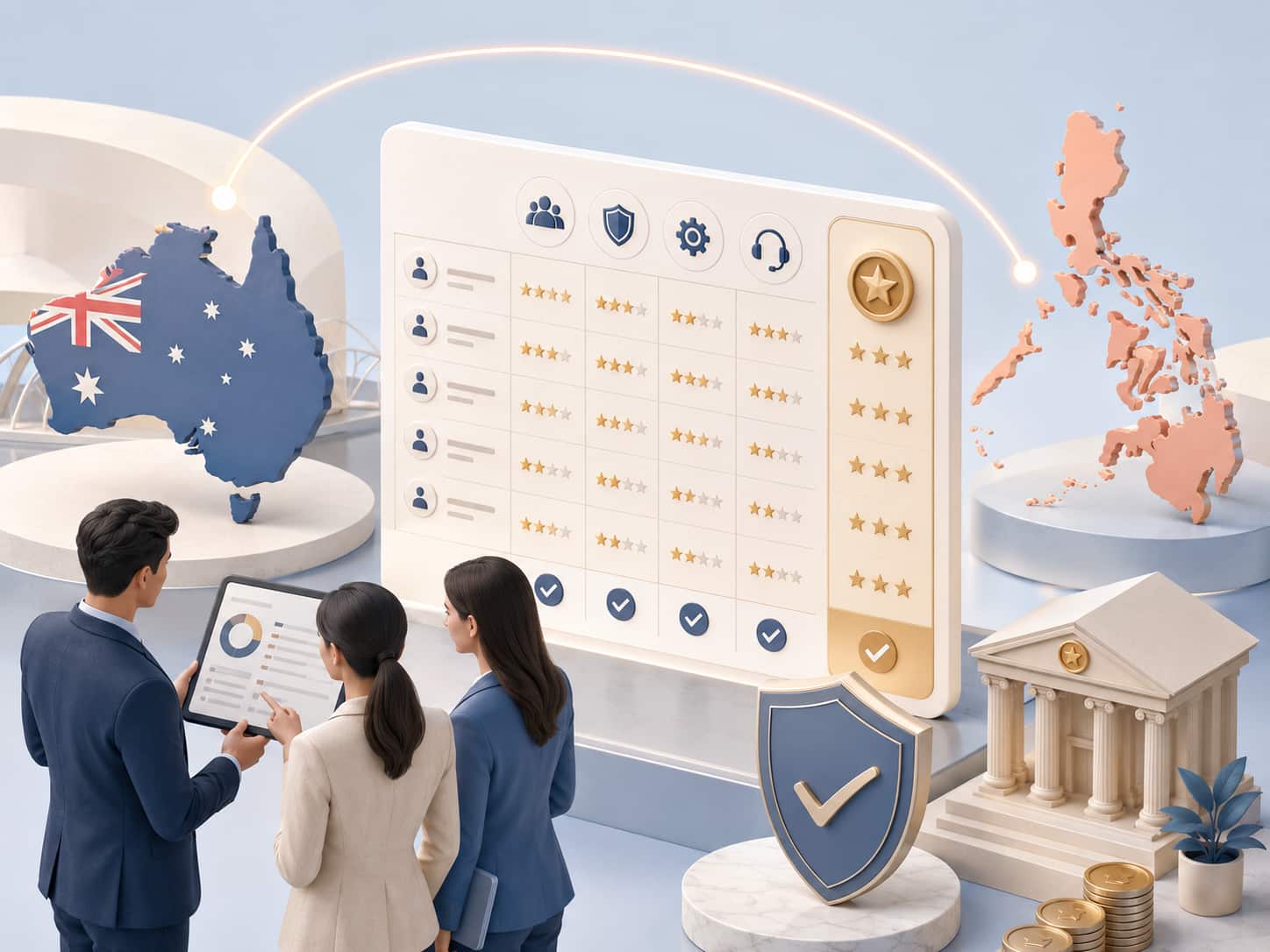
Remote. Misclassified. Fired. She Fought Back — and Changed the Rules
Author: Phil Murphy, COO & Founding Partner
Disclosure: This article is for informational purposes only and does not constitute legal or tax advice.
Remote hiring can make global teams feel simple. A company finds skilled talent in the Philippines, agrees a contractor rate, gives them access to tools, and starts working together.
But if that person works full-time hours, follows your schedule, reports to your managers, uses your systems, and depends mainly on your company for income, the contractor label may not match reality.
That is where misclassification risk begins.
This guide explains what happens when remote workers are misclassified, how to spot the red flags, and how to fix high-risk contractor setups by moving Filipino contractors into employment through a Philippines Employer of Record.
Need the full conversion process? Start here:
Convert Contractors to Employees Philippines
TL;DR: What does remote misclassification mean?
Remote misclassification happens when a worker is called a contractor or freelancer on paper but treated like an employee in practice.
The risk increases when the worker:
- works fixed hours
- works full-time or close to full-time
- works mainly or only for one company
- uses company tools and systems
- reports to company managers
- attends internal meetings
- follows company KPIs or processes
- performs core recurring work
- receives fixed monthly pay
- cannot send a substitute
If a remote Filipino worker already looks like an employee, the safer fix is usually to convert them into proper employment through a Philippines EOR or local entity.
An EOR helps by providing local employment documents, payroll, payslips, statutory contribution handling, benefits or HMO coordination, 13th month treatment, and HR records.
The case lesson: when “contractor” does not match reality
The old version of this article used a clear warning story: a remote worker was labelled as a contractor, worked like an employee, was dismissed, and fought back. The lesson is still the same.
Companies can call someone a contractor, but the real question is how the relationship works day to day.
Ask:
- Did the worker follow company hours?
- Did they work like part of the team?
- Did they report to a company manager?
- Did they use company tools?
- Did they perform core work?
- Were they dependent on the company?
- Was dismissal handled informally because they were “just a contractor”?
If the answer is yes, the arrangement may be harder to defend.
The point is not that every remote contractor must become an employee. The point is that long-term, controlled, employee-like work needs a proper structure.
What is contractor misclassification risk in the Philippines?
Contractor misclassification risk is the risk that someone labelled as a freelancer or contractor is treated like an employee in practice.
This can create exposure around:
- back pay
- unpaid benefits
- 13th month treatment
- statutory contributions
- tax or withholding questions
- termination disputes
- weak HR records
- employee complaints
- investor or audit questions
- client due diligence issues
- reputational damage
The live page already explains the core risk well: if you control how, when, and where a worker performs the work, the relationship may look more like employment than freelancing. (Smart Outsourcing Solution)
For a deeper classification guide, read:
Contractor vs Employee in the Philippines
Red flags that a remote contractor may be misclassified
Use these signals to review Filipino freelancers, contractors, VAs, support agents, developers, finance assistants, and remote staff.
| Red flag | Why it matters |
| Fixed hours | Suggests company control over schedule |
| Full-time workload | Looks less like project work and more like employment |
| One main client | Shows economic dependence |
| Company tools | Indicates integration into the business |
| Internal meetings | Looks like team membership |
| Manager supervision | Suggests employee-style control |
| KPIs and performance reviews | Similar to employee management |
| Core recurring work | Shows the role is part of business operations |
| Fixed monthly pay | Can look salary-like |
| Long tenure | Contractor status becomes harder to defend over time |
| No substitution right | Specific person is required, like an employee |
Several red flags together matter more than one signal alone.
Remote contractor vs remote employee: quick comparison
| Area | Remote contractor | Remote employee through EOR |
| Work model | Independent service provider | Locally employed worker |
| Best for | Short, project-based work | Long-term, core, controlled roles |
| Pay | Invoice, retainer, or project fee | Payroll |
| Proof | Contract and invoices | Employment agreement, payslips, payroll records |
| Benefits | Usually not structured | Addressed in employment package |
| 13th month | Usually not structured | Included in employment planning |
| Statutory contributions | Usually self-managed | Handled through employment setup |
| Management control | Should be limited | Can be managed like part of the team |
| Risk if employee-like | Higher | Lower when properly employed |
| Best fix for high-risk roles | Restructure or convert | EOR or local entity employment |
Why EOR is a practical fix for misclassification risk
An Employer of Record gives companies a way to employ Filipino workers locally without opening a Philippine entity.
The EOR becomes the legal employer in the Philippines and usually handles:
- employment agreements
- payroll
- payslips
- statutory contribution administration
- 13th month treatment
- benefits or HMO coordination
- HR records
- onboarding
- offboarding support
The client company continues managing:
- daily work
- tools
- priorities
- KPIs
- performance expectations
- team structure
That is why EOR is often the practical fix for high-risk contractor setups: same worker, same work, cleaner structure.
How do I convert Filipino contractors into employees?
To convert Filipino contractors into employees, identify who already works like an employee, choose an employment pathway, define the employment package, move the worker onto payroll, and keep proof of the conversion.
Contractor-to-employee conversion checklist
- List all Filipino contractors and freelancers.
- Identify who works full-time or close to full-time.
- Check who works mainly or only for your company.
- Review roles, tenure, pay, tools, and manager control.
- Prioritise high-risk, high-value workers.
- Choose the employment pathway: EOR or Philippine entity.
- Confirm job title, salary, schedule, and manager.
- Define benefits, HMO, leave, and 13th month treatment.
- Prepare employment documents.
- Set the final contractor invoice date.
- Set the first payroll date.
- Move the worker onto payroll.
- Keep a conversion proof pack.
For the full step-by-step process, read:
Convert Contractors to Employees Philippines
How do I move Filipino freelancers onto payroll?
Moving Filipino freelancers onto payroll is a payroll transition, not just a contract update.
Before the first payroll cycle, confirm:
- final freelancer invoice date
- first payroll date
- salary package
- gross-to-net impact
- payroll frequency
- bank details
- tax or government information
- SSS, PhilHealth, and Pag-IBIG setup
- benefits or HMO eligibility
- 13th month treatment
- payslip access
- payroll approval process
- payroll support contact
The goal is to avoid confusion between the old invoice amount and the new employment package.
For workers, the move should be explained clearly: old invoices stop, payroll starts, payslips are issued, and benefits or statutory items are handled through the new employment setup.
Benefits, HMO, and 13th month after conversion
Once a remote contractor becomes an employee through an EOR, the employment package should clearly explain:
- base salary
- payroll frequency
- statutory contributions
- 13th month treatment
- paid leave
- HMO or health benefits, if offered
- dependent coverage, if offered
- allowances, if any
- tax or withholding treatment
- payslip format
- certificate of employment process
- final pay process if employment ends
This is where many transitions become sensitive.
Workers may focus on take-home pay. Companies may focus on risk. A good conversion explains both the pay impact and the added structure.
For pay-specific messaging, use:
FAQ: Will My Take-Home Pay Change?
What should be in a misclassification proof pack?
If you convert a contractor into EOR employment, keep a proof pack showing what changed and why.
Include:
- contractor risk review
- old contractor agreement
- final invoice or payment record
- new employment agreement
- salary and benefits summary
- payroll start date
- first payslip
- statutory setup or remittance confirmation
- 13th month treatment
- HMO or benefits confirmation
- worker acknowledgement
- internal approval record
- first payroll issue log
This gives HR, finance, legal, founders, investors, auditors, and enterprise clients a clearer record.
What if you keep contractors instead of converting?
Keeping contractors can still be appropriate when the work is genuinely independent.
A contractor model may be suitable for:
- short-term projects
- one-off deliverables
- independent specialists
- workers with multiple clients
- limited-scope tasks
- low-control work
- non-core services
But if the person is long-term, full-time, managed by your company, and doing core recurring work, the setup should be reviewed.
The risk is not that remote work is wrong. The risk is pretending employment-like work is independent contracting.
How Smart Outsourcing Solution helps
Smart Outsourcing Solution helps companies reduce misclassification risk by converting Filipino contractors into compliant EOR employees.
SOS supports:
- contractor risk review
- conversion planning
- employment package design
- payroll transition
- benefits and HMO coordination
- 13th month treatment
- statutory contribution administration
- employment documentation
- worker communication support
- proof pack preparation
- local Philippines HR support
For companies without a Philippine entity, SOS provides a practical path from contractor risk to local employment.
Start with the full conversion guide:
Convert Contractors to Employees Philippines
Final takeaway
Remote hiring is not the problem.
The problem is when a worker is remote, full-time, managed like an employee, dependent on one company, and still labelled as a contractor.
If the working relationship already looks like employment, the structure should catch up.
A Philippines EOR gives companies a practical fix: move high-risk contractors into local employment, keep the same person and the same work, and add payroll, payslips, statutory handling, benefits, 13th month treatment, HR records, and proof.
Next step:
Read the full guide: Convert Contractors to Employees Philippines
Or speak with Smart Outsourcing Solution about reviewing your Filipino contractor setup.
FAQs
What does remote misclassification mean?
Remote misclassification means a worker is labelled as a contractor or freelancer but treated like an employee in practice. This can happen when they work fixed hours, report to managers, use company tools, perform core work, and work mainly for one company.
What is contractor misclassification risk in the Philippines?
Contractor misclassification risk is the risk that someone labelled as a contractor is treated like an employee in reality. It can create issues around back pay, benefits, 13th month treatment, statutory contributions, tax handling, termination disputes, and compliance proof.
What are the warning signs of misclassification?
Warning signs include fixed hours, full-time work, one main client, company tools, internal meetings, manager supervision, KPIs, core recurring work, fixed monthly pay, long tenure, and no right to substitute.
How does an EOR reduce misclassification risk?
An EOR reduces risk by employing the worker locally in the Philippines, issuing employment documents, running payroll, providing payslips, administering statutory contributions, supporting benefits, and keeping HR records.
How do I convert Filipino contractors into employees?
Identify high-risk contractors, choose an EOR or local entity pathway, define the employment package, prepare documents, set final invoice and first payroll dates, move the worker onto payroll, and keep a conversion proof pack.
How do I move Filipino freelancers onto payroll?
Confirm the final freelancer invoice date, first payroll date, salary package, gross-to-net impact, bank details, government information, statutory setup, benefits, 13th month treatment, and payslip access before payroll begins.
What happens to benefits and 13th month after conversion?
Benefits and 13th month treatment should be explained in the employment package. The EOR or company should confirm how salary, deductions, benefits, HMO, statutory contributions, and 13th month will work before the first payroll.
Does every remote contractor need to become an employee?
No. Genuine project-based, independent contractors can remain contractors. Conversion is most important for long-term, full-time, core, controlled, or economically dependent workers.
What proof should companies keep after conversion?
Keep the contractor risk review, old contractor agreement, final invoice, new employment agreement, salary and benefits summary, payroll start date, first payslip, statutory setup confirmation, benefits confirmation, and worker acknowledgement.