What is a PEO in the Philippines? (Complete 2026 Guide)
Author: Martin English, CEO & Founding Partner
TL;DR
A PEO in the Philippines is a payroll and HR support model for companies that already have a Philippine legal entity.
Your company remains the legal employer. The PEO helps administer payroll, payslips, statutory workflows, HR documentation, benefits coordination, reporting, and compliance processes.
If you do not have a Philippine entity, you usually need an Employer of Record, not a PEO.
| Situation | Best Fit |
| You already have a Philippine entity | PEO |
| You want payroll and HR admin support | PEO |
| You want your company to remain the legal employer | PEO |
| You do not have a Philippine entity | EOR |
| You want to hire in the Philippines without setting up a company | EOR |
| You are deciding whether to use EOR or open an entity | EOR vs entity setup analysis |
Smart Outsourcing Solution positions its PEO support at US$99 per employee per month for companies with an existing Philippine entity. For companies without a Philippine entity, SOS offers EOR service at US$190 per employee per month.
For the broader entity decision, read EOR vs Entity Setup Philippines.
What Is a PEO in the Philippines?
A Professional Employer Organization, or PEO, is a partner that helps companies administer payroll and HR operations for employees in the Philippines.
In the Philippine context, PEO support usually assumes that your company already has a local entity. Your company remains the legal employer. The PEO supports the operational layer.
| PEO Support Area | What It Covers |
| Payroll administration | Payroll calendars, calculations, payslips, payroll records, and approvals |
| Statutory workflows | SSS, PhilHealth, Pag-IBIG, and payroll-related compliance administration |
| BIR-related payroll support | Withholding, payroll documentation, and reporting support |
| HR documentation | Onboarding files, employee records, letters, contracts, and offboarding documents |
| Benefits coordination | HMO, eligibility, enrolment, changes, and exits if applicable |
| Reporting | Payroll summaries, finance exports, and evidence packs |
| Change control | Salary changes, allowances, deductions, retro pay, and approvals |
A PEO helps you run employment administration more cleanly. It does not remove your company’s role as legal employer.
Do You Need a Philippine Entity to Use a PEO?
Yes. In the Philippines, PEO support is generally for companies that already have a Philippine entity.
That means your company has the local structure needed to employ workers, fund payroll, manage employer obligations, and remain the legal employer.
If you do not have a Philippine entity, a PEO is usually not the right model. You would usually need an Employer of Record instead.
| Question | If Yes | Better Fit |
| Do you already have a Philippine entity? | Yes | PEO |
| Do you want your company to remain legal employer? | Yes | PEO |
| Do you need payroll and HR operations support? | Yes | PEO |
| Do you want to hire without opening a company? | Yes | EOR |
| Do you need the provider to legally employ workers? | Yes | EOR |
The current SOS page explains this distinction directly: PEO requires a local entity, while EOR does not.
PEO vs EOR in the Philippines
PEO and EOR are often confused, but they solve different problems.
| Factor | PEO Philippines | EOR Philippines |
| Local entity required | Yes | No |
| Legal employer | Your company | EOR provider |
| Best for | Companies with a Philippine entity | Companies without a Philippine entity |
| Main purpose | Payroll and HR administration support | Legal employment without entity setup |
| Payroll | PEO supports your payroll operations | EOR administers payroll under its employment structure |
| Statutory workflows | PEO supports your entity’s workflows | EOR administers employment-related workflows |
| Contracts | Your company owns contracts, with support | EOR-supported employment documentation |
| Control | Higher | Moderate |
| Operating responsibility | Higher | Lower |
| SOS fee anchor | US$99/employee/month | US$190/employee/month |
The simple rule:
PEO supports an entity you already have. EOR helps you hire without one.
PEO vs Entity Setup
PEO is not the same as entity setup.
Entity setup means your company opens or already owns a Philippine legal entity. PEO support can then help operate the employment administration under that entity.
| Model | Local Entity Required? | Legal Employer | Best For |
| PEO | Yes | Your company | Companies with a Philippine entity that need payroll and HR support |
| EOR | No | EOR provider | Companies hiring without a Philippine entity |
| Own entity | Yes | Your company | Long-term local operations with full control |
If you are deciding whether to use an EOR or open your own Philippine company, read EOR vs Entity Setup Philippines.
When Should You Use a PEO in the Philippines?
Use a PEO when:
- You already have a Philippine entity
- You want your company to remain the legal employer
- You need payroll administration support
- You want help with payslips, payroll calendars, and payroll records
- You need statutory workflow support for SSS, PhilHealth, Pag-IBIG, and payroll-related BIR processes
- You want HR documentation and benefits workflows handled more consistently
- You need finance-ready payroll reports and evidence packs
- You want to scale employment administration without building a full internal local payroll team
PEO is best when the legal employment structure already exists and the main problem is operational execution.
When Should You Not Use a PEO?
Do not use PEO as your starting model if:
- You do not have a Philippine entity
- You want to hire in the Philippines without incorporating
- You need another company to act as legal employer
- You are testing the Philippine hiring market before entity setup
- You are converting contractors into employees but do not have a local employer structure
- You want to avoid local payroll and statutory employer responsibility
In those cases, use an EOR.
For companies without a Philippine entity, SOS’s EOR service is the more relevant model.
What Does a PEO Usually Cover?
A PEO can support a broad range of employment administration workflows.
| Function | PEO Support |
| Payroll calendar | Cutoffs, pay dates, payroll-cycle coordination |
| Payroll calculation | Salary, allowances, deductions, retro pay, payroll variance support |
| Payslips | Payslip preparation and employee payroll records |
| Statutory workflows | SSS, PhilHealth, Pag-IBIG, and payroll-related administration |
| BIR-related payroll support | Payroll withholding documentation and support |
| HR records | Employee files, onboarding records, offboarding records |
| Benefits administration | HMO enrolment, employee changes, exits, eligibility lists |
| 13th-month handling | Accrual and processing support |
| Reporting | Payroll summaries, finance exports, variance reports |
| Evidence packs | Approval trails, remittance records, payroll registers, audit files |
The best PEO support is not just payroll processing. It gives Finance and HR a repeatable, auditable operating rhythm.
What Does SOS PEO Support Include?
SOS PEO support is designed for companies that already have a Philippine entity and need local payroll and HR administration support.
| Included in SOS PEO Support | What It Covers |
| Payroll administration | Payroll runs, calculations, records, and salary processing support |
| Payslips | Payslip preparation and payroll documentation |
| Statutory workflow support | SSS, PhilHealth, Pag-IBIG, and payroll-related administration |
| BIR-related payroll support | Payroll withholding and documentation workflows |
| Employment administration | Contracts, onboarding records, time-off records, and separation documentation |
| Benefits coordination | 13th-month support, statutory benefits, and HMO coordination if applicable |
| HR tooling and records | Payroll calendars, cutoffs, audit trails, and employee records |
| Local support | Philippines-focused payroll and HR coordination |
Salary, employer statutory contributions, 13th-month pay, benefits, allowances, equipment, FX, and other employee costs are separate from the PEO administration fee.
PEO Cost Breakdown
PEO pricing should be separated from employee costs.
| Cost Layer | What It Means |
| Employee salary | The employee’s gross monthly pay |
| Employer statutory contributions | Employer-side payroll obligations |
| 13th-month pay | Mandatory employee compensation, usually accrued |
| Benefits / HMO | Employer-funded benefits if offered |
| Equipment / allowances | Optional or role-specific employee support |
| PEO service fee | Provider fee for payroll, HR admin, reporting, and support |
| Pass-through costs | Bank fees, special processing, legal add-ons, or non-standard items if applicable |
SOS positions PEO support at US$99 per employee per month. This is the administration fee, not the employee’s total employment cost.
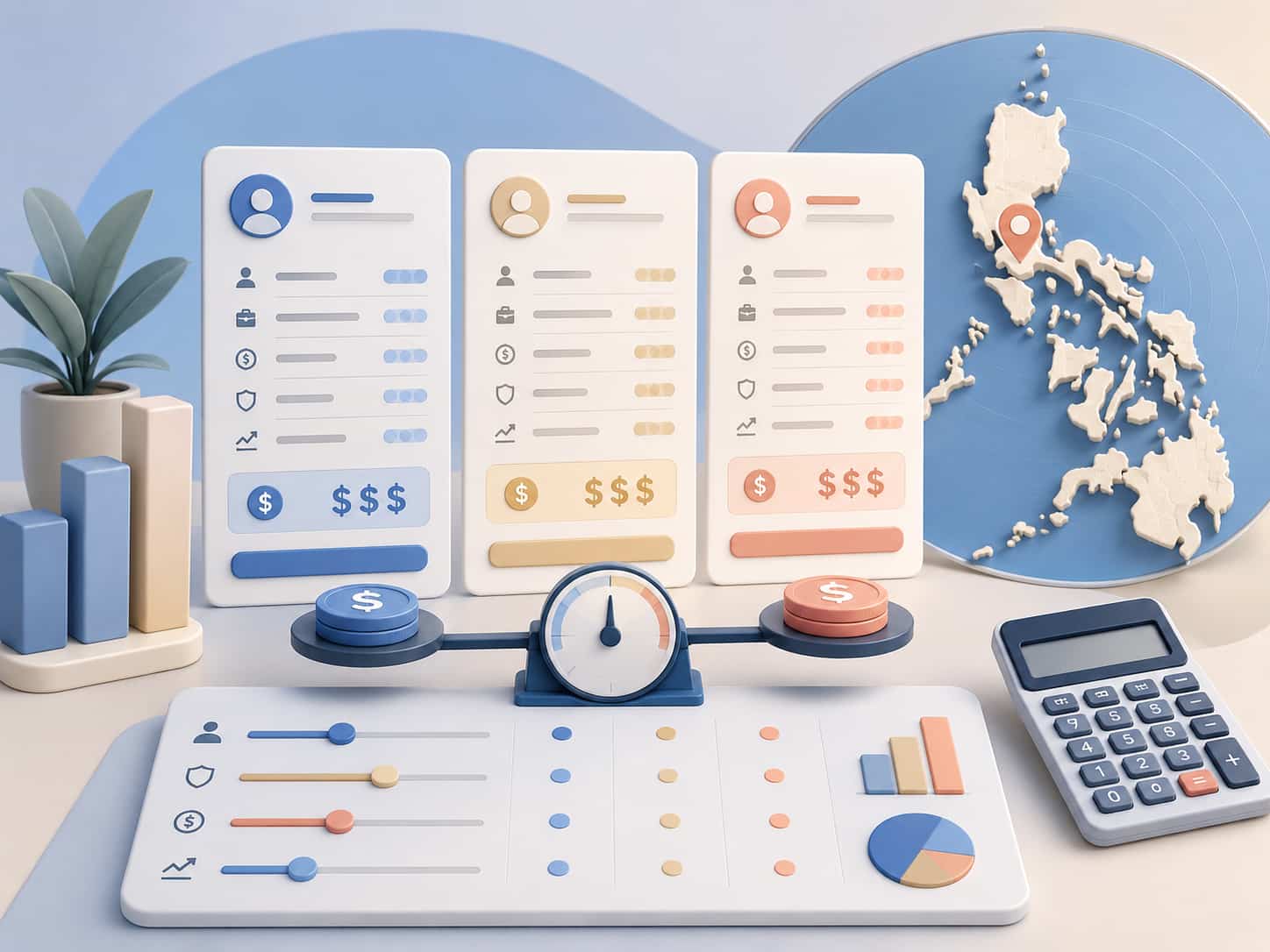
PEO vs EOR Cost Comparison
| Cost Component | PEO Support | EOR |
| Local entity required | Yes | No |
| Legal employer | Your company | EOR provider |
| Employee salary | Funded by your company | Funded by client through EOR |
| Employer statutory costs | Funded by your company | Funded by client through EOR |
| 13th-month pay | Funded by your company | Funded by client through EOR |
| Benefits / HMO | Funded by your company | Funded by client through EOR |
| Payroll administration | PEO fee | EOR fee |
| Employment contracts | Your company, with support | EOR-supported |
| SOS fee anchor | US$99/employee/month | US$190/employee/month |
The PEO fee is lower because your company remains the legal employer. The EOR fee is higher because the provider supplies the legal employment layer.
Local PEO vs Global EOR Provider
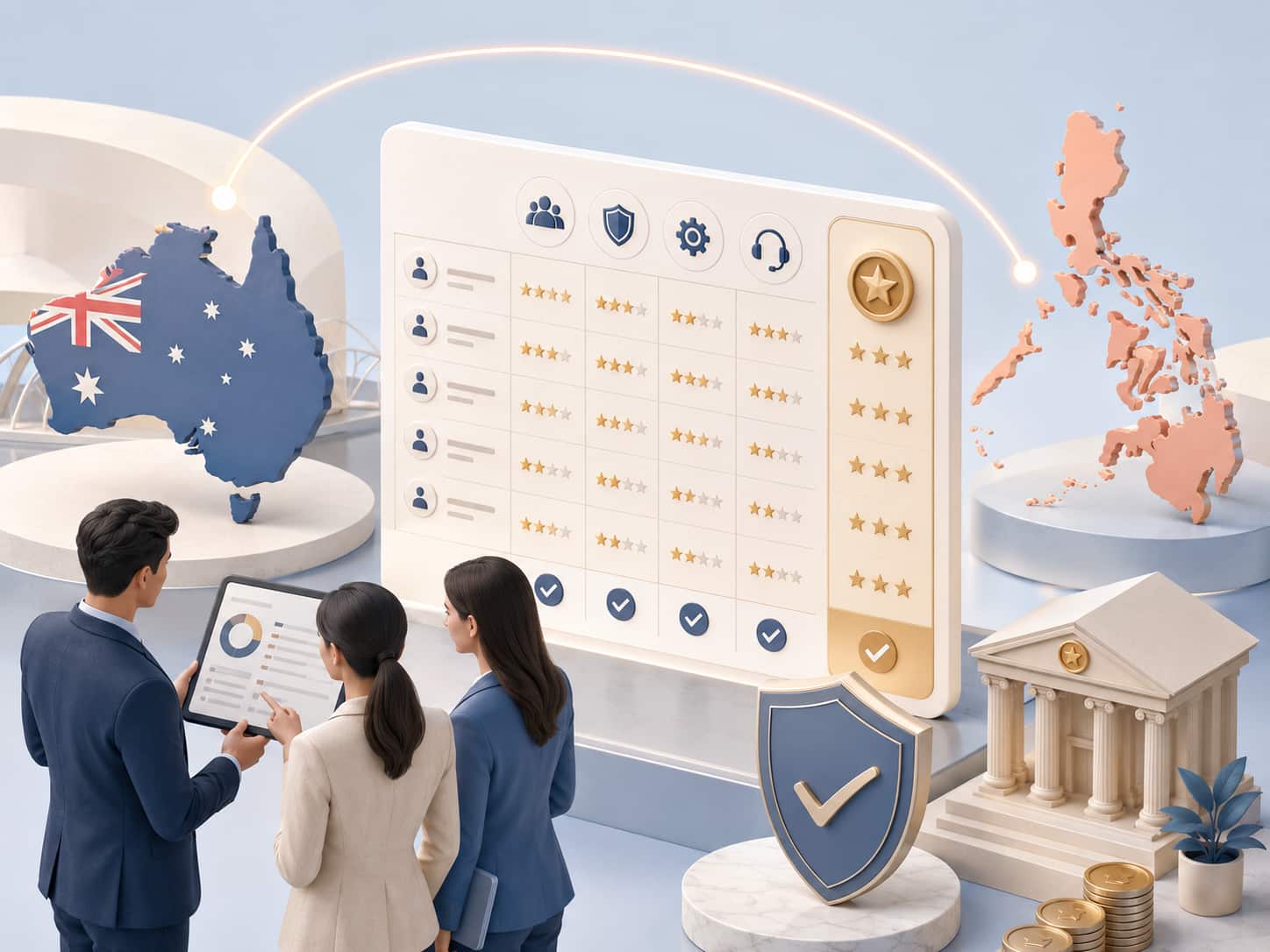
A company comparing “PEO Philippines” may actually be comparing local PEO support against global EOR providers.
| Factor | Local Philippines PEO / EOR | Global EOR Platform |
| Best for | Philippines-focused hiring or entity operations | Multi-country hiring |
| Local payroll depth | Usually stronger for PH-specific workflows | Varies by country model |
| Provider fee | Often lower | Often higher |
| Platform depth | Usually simpler | Usually stronger |
| Support model | More local and direct | More platform-led |
| Country coverage | Philippines-focused | Many countries |
| Best buyer | Companies focused on Philippine payroll, HR, and cost clarity | Companies hiring across many countries |
Use a global platform if your main priority is multi-country standardisation. Use a local provider if your priority is Philippine payroll depth, direct local support, and cost clarity.
Provider and Model Comparison Table
| Provider / Model | Published or Stated Fee | Best Fit | Notes |
| Smart Outsourcing Solution PEO | US$99 per employee/month | Companies with a PH entity | Payroll and HR administration support |
| Smart Outsourcing Solution EOR | US$190 per employee/month | Companies without a PH entity | Local EOR service for Philippines hiring |
| Global EOR platforms | Often higher published EOR fees | Multi-country hiring | Useful when you need one global system |
| Payroll-only provider | Custom | Narrow payroll administration | May not include broader HR, benefits, and evidence support |
| Own entity with internal team | Fixed overhead | Larger local operations | Highest control, highest responsibility |
For full provider comparison intent, link to Best EOR Providers Philippines.
Decision Criteria: PEO, EOR, or Entity Setup?
| Question | If Yes | Likely Fit |
| Do you already have a Philippine entity? | Yes | PEO |
| Do you need payroll and HR admin support? | Yes | PEO |
| Do you want your company to remain legal employer? | Yes | PEO |
| Do you need to hire without opening a company? | Yes | EOR |
| Are you testing the Philippines before incorporation? | Yes | EOR |
| Are you converting contractors into employees with no entity? | Yes | EOR |
| Do you expect a stable team for 2–3+ years? | Yes | Compare EOR vs entity |
| Are you approaching 25–40+ employees? | Yes | Model entity setup |
| Do you need full local control over banking, policies, and employer brand? | Yes | Entity setup may fit |
Use PEO when your company already has the entity. Use EOR when you need to hire without one. Consider entity setup when the team is large, stable, and long-term.
How to Start With a PEO in the Philippines
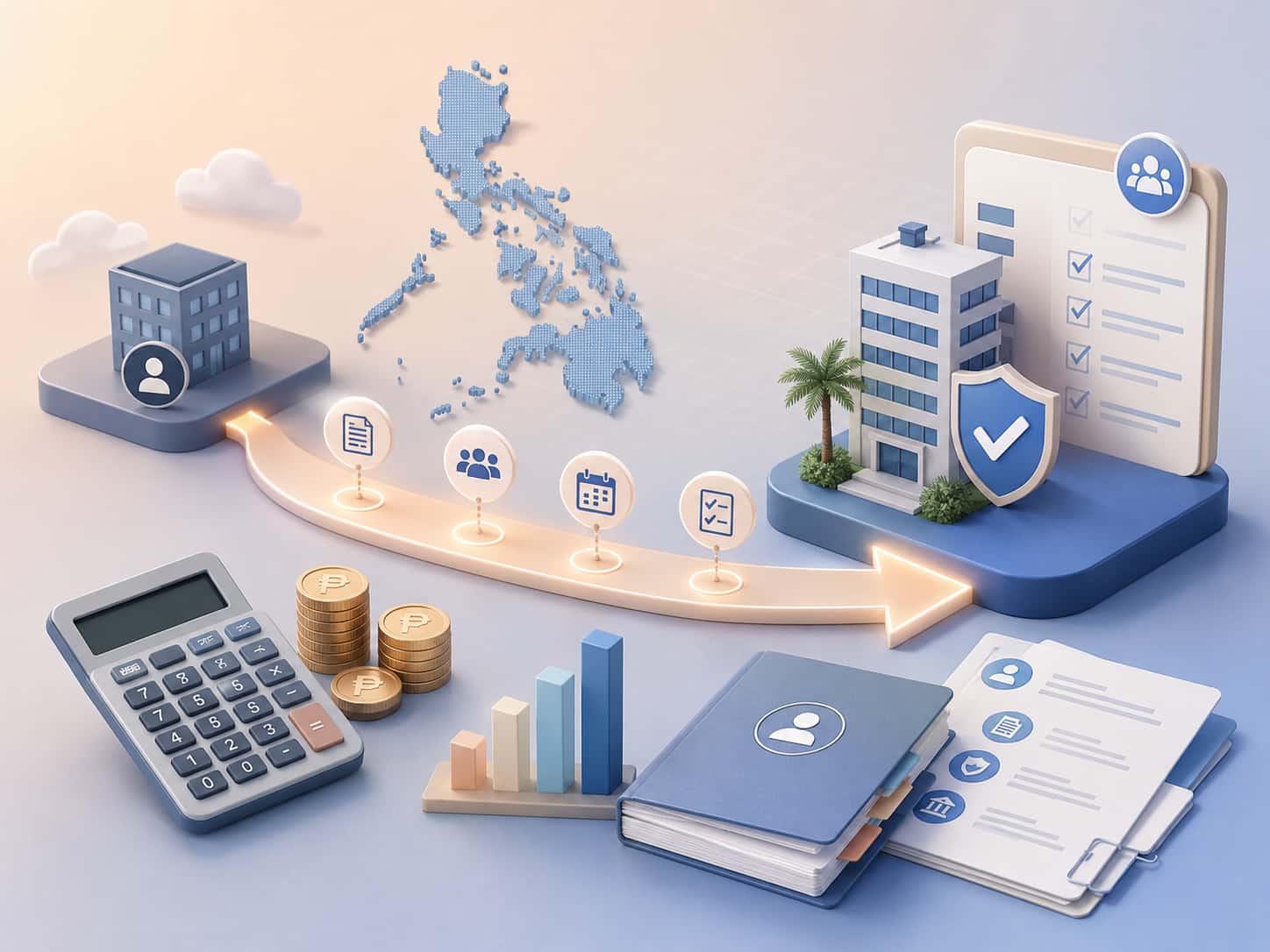
A practical PEO onboarding process looks like this:
| Step | Action |
| 1 | Confirm your Philippine entity status |
| 2 | Confirm payroll calendar, pay dates, and cutoffs |
| 3 | Prepare employee records and compensation data |
| 4 | Map statutory workflows and benefits requirements |
| 5 | Set approval rules for payroll changes |
| 6 | Run a payroll dry run or validation cycle |
| 7 | Confirm reporting and evidence pack requirements |
| 8 | Go live with monthly payroll and HR administration support |
Before signing, ask the provider exactly what is included, what is excluded, what evidence is delivered, and who remains accountable for each workflow.
Why Smart Outsourcing Solution Fits the PEO Use Case
Smart Outsourcing Solution is a strong fit for companies that already have a Philippine entity and need practical payroll and HR operations support.
SOS fits this use case because it offers:
- Philippines-focused PEO support
- Transparent fee anchors for PEO and EOR
- Payroll and statutory workflow support
- HR documentation and benefits coordination
- Evidence-first payroll operations
- Local support for SSS, PhilHealth, Pag-IBIG, payroll records, and 13th-month handling
- Clear model separation: PEO if you have an entity, EOR if you do not
If you do not yet have a Philippine entity, SOS’s EOR model is the better fit.
FAQs
What is a PEO in the Philippines?
A PEO in the Philippines is a payroll and HR support partner for companies that already have a Philippine entity. Your company remains the legal employer, while the PEO helps administer payroll, payslips, statutory workflows, benefits coordination, HR documentation, reporting, and evidence packs.
Do I need a Philippine entity to use a PEO?
Yes. PEO support is for companies that already have a Philippine entity. If you do not have a local entity and want to hire employees in the Philippines, you usually need an Employer of Record instead.
What is the difference between PEO and EOR in the Philippines?
A PEO supports your existing Philippine entity with payroll and HR administration. An EOR legally employs workers on your behalf when you do not have a Philippine entity. Use PEO if you already have an entity. Use EOR if you need to hire without one.
How can I hire in the Philippines without a local entity?
Use an Employer of Record. The EOR becomes the legal employer and handles employment contracts, payroll, payslips, statutory administration, 13th-month handling, and employment documentation while your company manages the employee’s day-to-day work.
Should I use an EOR or open an entity in the Philippines?
Use an EOR if you want to hire quickly without opening a company. Consider opening an entity if your Philippine team is stable, long-term, large enough to justify fixed overhead, and your company is ready to manage local payroll, tax, HR, accounting, and compliance.
How much does SOS PEO support cost?
SOS positions PEO support at US$99 per employee per month for companies with an existing Philippine entity. Salary, employer statutory contributions, 13th-month pay, benefits, and pass-through employment costs are separate.
How much does SOS EOR cost?
SOS positions EOR service at US$190 per employee per month for companies hiring in the Philippines without a local entity. Salary, employer statutory contributions, optional HMO, equipment, allowances, and other pass-through costs are separate.
What does a PEO handle?
A PEO can handle payroll administration, payslips, statutory workflow support, HR documentation, benefits coordination, payroll reporting, change-control workflows, and evidence packs. Your company remains the legal employer.
Is PEO the same as payroll outsourcing?
No. Payroll outsourcing is usually narrower. PEO support can include payroll plus HR administration, benefits workflows, compliance support, reporting, and evidence packs.
Can I move from EOR to PEO later?
Yes. Many companies start with EOR to hire without an entity, then move to PEO support after opening a Philippine entity. The transition should align contracts, payroll calendars, benefits, statutory records, and evidence continuity.
Choose the Right Philippines Employment Model
Tell us whether you already have a Philippine entity, your target headcount, current payroll setup, and hiring timeline.
We’ll help compare:
- PEO vs EOR fit
- Whether entity setup is worth modelling
- Payroll and HR administration needs
- Salary and statutory costs
- 13th-month handling
- Evidence pack requirements
- SOS monthly service fee model
Speak with a specialist and get a quote
Read EOR vs Entity Setup Philippines
View EOR Pricing Philippines
Recommended Reads
- EOR vs Entity Setup Philippines
- PEO vs EOR Philippines
- PEO Support Philippines: The Operations Playbook
- EOR Pricing Philippines
- Employer of Record Philippines
- Hire Employees in the Philippines Without Setting Up a Company
- EOR vs PEO vs Entity Setup
- Top PEO Providers in the Philippines
- Best EOR Providers Philippines
- Talent & Salary Benchmarks Philippines
- Salary Guide Philippines